Two weeks after paying off my 2024 BMW, I came home to an empty driveway. I called my dad in a panic. He laughed and said, “We gave it to your sister. You are single. She has a baby on the way.” I did not argue. I filed a police report instead.
The sense of accomplishment I felt when I made that final car payment was impossible to describe. Five years of strict budgeting, overtime shifts at the hospital, and declining invitations to vacations and dinners had finally paid off. My 2024 BMW was not simply a vehicle. It represented proof that at thirty one years old I could set a goal and reach it entirely on my own.
I still remembered the day I drove it off the lot. My younger sister Alyssa Harper rolled her eyes when I sent family photos of the car and joked that sports sedans were impractical. My mother Barbara Harper asked whether I really needed something so expensive. My father Edward Harper seemed proud at the time, though later I wondered whether that reaction had been genuine.
The night everything fell apart began like any ordinary Tuesday. I finished a long shift in the cardiac unit at Riverside Medical Center in Seattle, Washington, changed out of my scrubs, and headed to the parking garage. My phone buzzed with a message from my friend Taylor Bennett asking if I wanted to get drinks, but I was exhausted and decided to go home instead.
Traffic through downtown Seattle was light that evening. I stopped at a small Thai restaurant near my apartment and ordered pad see ew for dinner. The cool autumn air had a crisp feeling that usually lifted my mood.
Everything seemed perfectly normal.
My apartment complex had assigned parking spots, and mine was located near the entrance. As I pulled into the lot I immediately noticed the empty space where my car should have been. At first I assumed I had simply forgotten where I parked that morning because long hospital shifts sometimes left my brain foggy.
I drove around the parking lot twice.
The truth finally hit me. My car was gone.
My hands trembled as I dialed emergency services. The dispatcher listened carefully and assured me an officer would arrive soon to take a report. While waiting outside in the cooling air with my takeout bag in my hands, I decided to call my father. When I purchased the car he had helped me research security features, so I thought he might have advice about tracking systems or insurance claims.
He answered on the third ring.
“Hello, sweetheart,” he said casually.
“Dad, someone stole my car,” I said. “I just got home and it is gone.”
There was a pause.
Then he laughed.
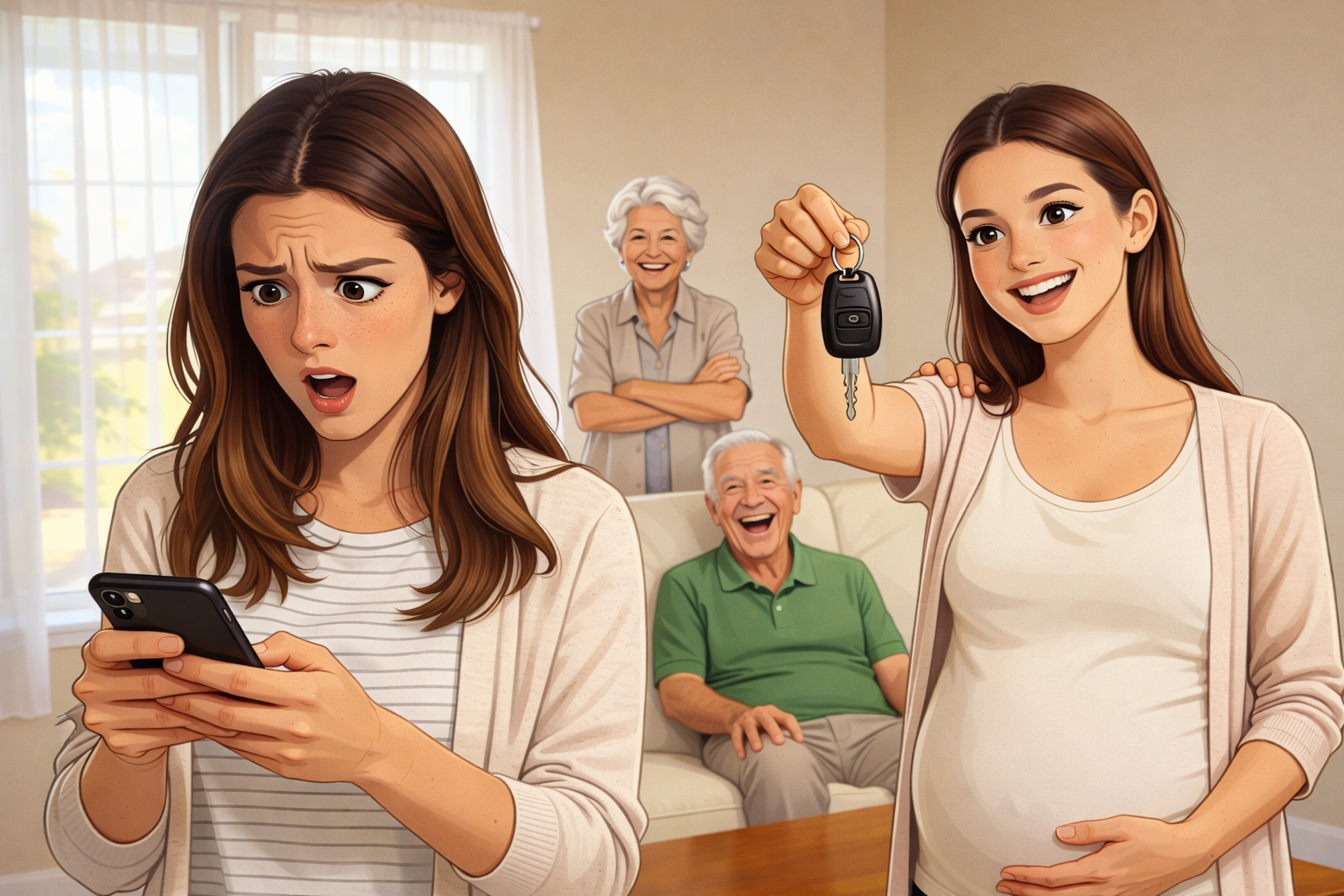
“Nobody stole your car,” he replied. “Your mother and I gave it to Alyssa. She needs it more than you.”
For several seconds I could not understand the words I had just heard.
“What do you mean you gave it to her?” I asked slowly.
“Your sister is having a baby soon,” he said. “You are single and live close to the hospital. She needs reliable transportation.”
“But that car belongs to me,” I said. “I paid it off two weeks ago.”
“Do not be dramatic,” he answered. “We are family. Families share resources.”
“She does not even have a driver’s license,” I said.
“She lost it years ago after her second driving offense,” he admitted, “but her boyfriend Dylan Cooper can drive it.”
My confusion turned into anger.
“How did you even get the car?” I demanded.
“Your mother still had the spare key you gave her last year when you attended that medical conference,” he said.
The betrayal hurt more than the theft.
“That key was for emergencies,” I said. “You had no right to take my car.”
“You spend money on yourself anyway,” he replied coldly. “You can make this sacrifice.”
The call ended with him hanging up before I could respond.
A police officer named Officer Linda Torres arrived shortly afterward. She was calm and professional while writing down details about the car including the model, color, license plate, and VIN number. When she asked if I suspected anyone, I hesitated briefly before explaining that my parents had taken it and given it to my sister.
“Do you want to press charges?” she asked.
“Yes,” I said firmly.
The following morning Officer Torres called to say the car had been found at Alyssa’s house. She had been cited for possession of a stolen vehicle and I could retrieve it with proof of ownership.
When I arrived at the house Alyssa stormed outside.
“You called the police on me?” she shouted.
“You took my car,” I answered.
“Mom and Dad said it was mine,” she argued.
“The title says otherwise,” Officer Torres explained.
I drove the BMW home and cleaned every trace of their belongings from inside the car. I found fast food wrappers, receipts from gas stations, and even a baby pacifier wedged between the seats.
They had already imagined raising their child with my car.
The next few days brought a storm of angry messages from family members who believed my parents’ version of events. My aunt Elaine Carter called trying to convince me to forgive them because Alyssa was pregnant.
“Family unity matters,” she insisted.
“Family unity should not involve stealing,” I replied before ending the call.
Work became my refuge during that time. At the hospital my duties were clear and logical. Patients needed care and I provided it.
One afternoon my coworker Olivia Grant noticed I seemed distracted.
“What happened?” she asked.
When I told her the story she shook her head in disbelief.
“Some people will take everything you have if you let them,” she said.
Her words stayed with me.
Two weeks later my parents hired a lawyer and sent a letter accusing me of causing emotional distress to Alyssa. They claimed my police report had endangered her pregnancy.
Instead of backing down I contacted an attorney named Peter Sullivan.
He read their letter and calmly explained that it was simply intimidation.
“They have no legal case,” he said. “They are hoping you will be scared.”
Around the same time I began therapy with Dr. Rachel Kim, a specialist in family conflict. She helped me recognize a pattern that had existed for years.
“Alyssa was protected from consequences,” she explained during one session. “You were expected to manage everything alone.”
Her insight matched memories from my childhood. Whenever Alyssa struggled our parents defended her, while I was told to work harder and be responsible.
Eventually even my grandmother Evelyn Harper contacted me.
“Your parents acted foolishly,” she said bluntly. “You did the right thing.”
Her support gave me strength.
Months passed and the legal pressure continued until one day my father sent an email to the entire extended family. In the message he admitted that he and my mother had taken my car without permission and apologized for dismissing my concerns.
Later my grandmother invited everyone to dinner so we could talk face to face.
My parents looked exhausted when I arrived.
My father finally spoke first.
“I was wrong,” he said quietly. “I let my concern for Alyssa blind me to the fact that I was stealing from you.”
My mother added, “I gave them the spare key. I helped plan everything.”
I asked the question that had haunted me for years.
“Why am I always expected to sacrifice for her?”
My mother began crying.
“You were always strong and independent,” she said. “We relied on that strength too much.”
The conversation lasted hours. Although forgiveness did not come instantly, we agreed to begin family counseling and resolve the legal matter.
Over time relationships slowly improved. I continued therapy while maintaining clear boundaries. My BMW remained parked safely in my assigned spot each evening.
Whenever I stepped out of the car after work I remembered the empty driveway that started everything and the lesson it taught me.
Family relationships can be complicated, but respect must always exist alongside love.
If someone tries to take what you have earned, even if that person shares your last name, you have the right to stand up for yourself.
Sometimes the hardest decision is also the right one.