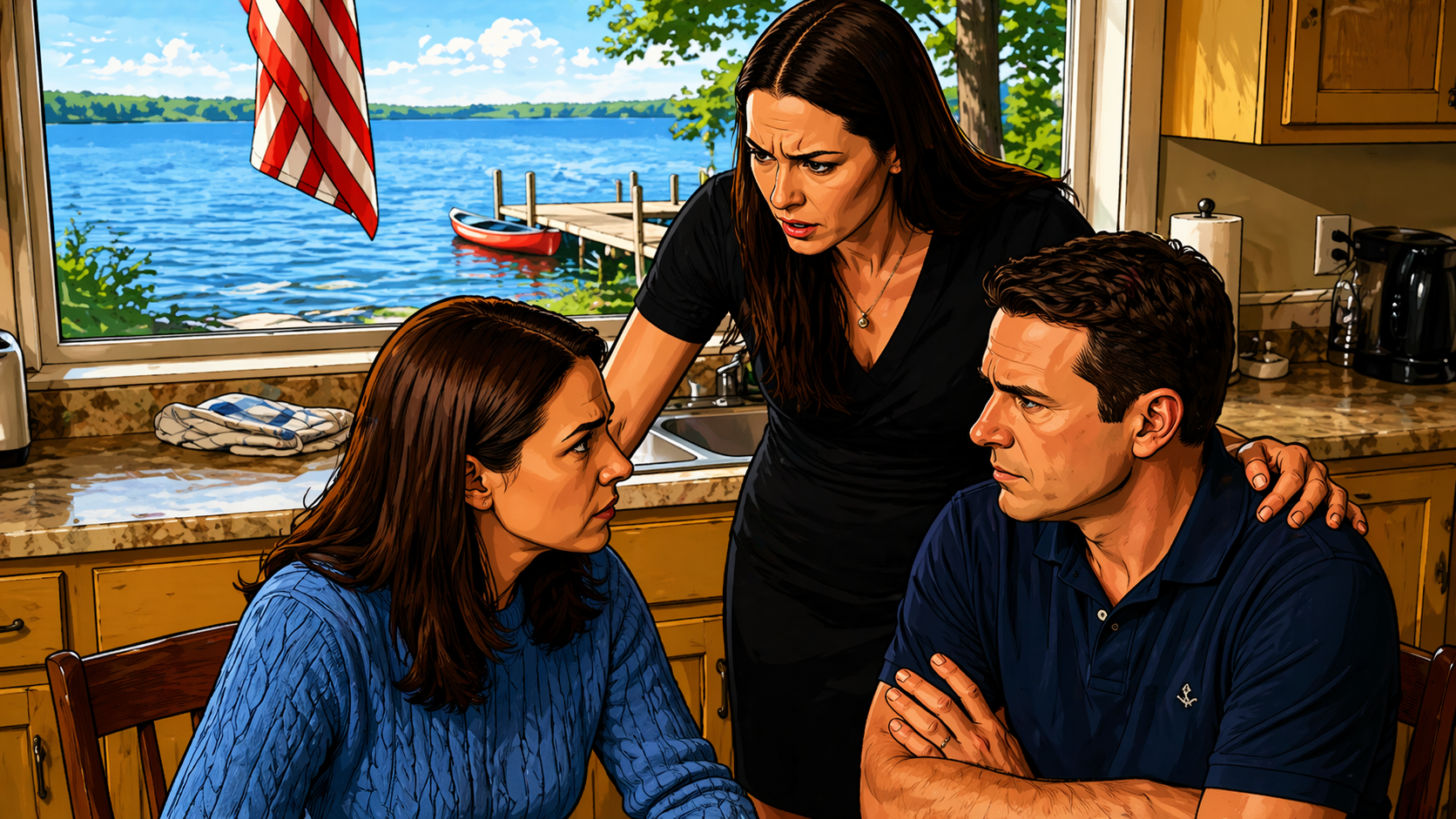
Two days after Grandma’s funeral, I was still in her kitchen. Then my brother texted: “We’re in the Maldives. We can’t access Grandma’s account.” I said nothing. Good thing I moved Grandma’s $235,000. He panicked when…
Honestly, after the way those first moments unfolded, I felt a deep revulsion for people whose souls have been hollowed out by money and class arrogance. There is something almost absurd about watching people sneer at a decent woman as if she were a gold digger, especially when they are the ones bowing down to cash. Some kinds of cruelty go beyond ordinary meanness; they collapse into something uglier, particularly when a family uses humiliation to bully the person they think is safest to hurt.
They imagine they are protecting their assets, guarding their little kingdom, and preserving their comfort. In reality, people like that are often throwing away the very lifeline holding their household together. They are the kind of people who do not understand what they truly have until the silence in the room changes shape.
The Promotion and the Leftovers
My daughter-in-law got a promotion. She took the whole family out to celebrate, but she did not invite me. A few hours later, she texted me:
“Mother-in-law, remember to heat up the leftovers in the fridge. Don’t waste them.”
I simply wrote back, “Okay.” Then I quietly packed my bags and left. That night, when they came back laughing and a little tipsy, they opened the door, and what they saw inside stopped them cold.
It was 9:30 at night when my phone vibrated on the kitchen table. I was sitting there staring at a bowl of instant soup I did not even want anymore. The house smelled like floor cleaner, lemon polish, and loneliness. I had spent the whole afternoon cleaning every corner, ironing my son Daniel’s shirts, and folding my grandchildren’s clothes. My hands still smelled faintly of bleach.
I picked up the phone, thinking maybe it was Daniel telling me they were on their way home—maybe saying there was still a seat for me at the table where they were celebrating. But it was Emily.
“Mother-in-law, remember to heat up the leftovers in the fridge. Don’t waste them.”
I read those words once, then twice, then a third time. Something inside my chest broke in total silence, the way a porcelain cup shatters before the sound reaches you. It was not just the text; it was the tone. The quiet mockery tucked into every word. It was the knowledge that while I was sitting alone in a house I had helped pay for, they were clinking glasses at the Skyline Grill—the kind of place where the cheapest entrée started at eighty-five dollars.
The Instagram Reality
I opened Instagram, even though I should not have. There they were. Daniel in his white shirt—the one I had ironed that morning. Emily in a fitted red dress, smiling like she owned the room. My grandchildren making faces over plates of shrimp and fries. My sister-in-law, my brother-in-law, even Emily’s mother. Everyone but me.
The caption read: “Celebrating my queen’s promotion, regional manager at 34. Here’s to women who never stop.” Hundreds of likes were already rolling in. I closed the app. I left the phone on the table. I looked at my soup getting cold.
And then something strange happened. I did not cry. I did not scream. A cold, steady calm came over me, as if my body had accepted something my mind was still trying to understand. I stood up slowly, walked to my room, and opened the closet.
What they did not know—what no one at that shining table full of laughter could have imagined—was that I had been preparing for this moment for months. This time, I was not going to heat up their leftovers. This time, I was going to disappear.
How We Got Here: The Down Payment
To understand why I made that choice, you have to understand how I got there. Three years and four months earlier, I buried my husband, David. Pancreatic cancer took him in six months. After the funeral, I was left alone in our old suburban house on the edge of San Antonio. But once David was gone, the silence became unbearable.
Daniel came to see me two weeks later. Emily was with him, coral nails perfect as ever. Daniel smiled that careful smile he had used since boyhood whenever he wanted to ask me for something.
“Mom,” he said, “Emily and I are looking for a bigger house for the kids, but prices are impossible right now.” Emily nodded, adding, “The down payment for the house we want is sixty-eight thousand. We’ve been saving, but we only have half.”
They did not need to say more. “How much do you need?” I asked.
Daniel looked down. “If you sold this house, Mom, you could come live with us. You wouldn’t be alone. The kids adore you.” Emily smiled then, warm and polished. “It would be perfect, Mother-in-law. You help with the children. We take care of you. A real family.”
That word did it. Family.
I sold my home for $120,000. I gave Daniel $68,000 for the down payment and put the rest into savings. What I did not do was insist on being put on the deed of the new house right away. Daniel told me it was unnecessary. And I, like a fool, trusted him.
Life as a Servant
The new place was in a gated subdivision called North Alpine Estates. Modern, clean, and somehow cold. The first few months were bearable, but soon a pattern emerged. I was the one who got up at five to make coffee and breakfast. I combed hair, packed lunches, and walked the kids to the bus.
Emily would leave in an expensive suit, and Daniel would follow. I stayed behind to scrub sinks and mop floors. Every afternoon, Emily inspected the house like a health inspector.
“Mother-in-law, the mirrors have spots.”
“Mother-in-law, Michael’s shirt wasn’t ironed right.”
“Mother-in-law, why did you use so much detergent?”
Never “Beatrice.” Never “Betty.” Just “Mother-in-law,” as if it were a title for a servant. One day, our granddaughter Sarah said, “Grandma, I love you more than Mommy.” That night, I heard shouting through the wall.
“Your mom? Or the maid who doesn’t pay rent?” Emily screamed at Daniel. I waited for my son to defend me. He did not. That was the night I realized I was no longer family; I was a burden they tolerated.
The Secret Notebook and the Deed
I went upstairs and took the suitcase out of the closet. I had been preparing for six months—saving documents, recording conversations, and building a case. I went to the back of the closet and moved a stack of boxes. Behind them was a spiral notebook.
Everything was in that notebook. Every dollar I had invested in that house:
Down payment: $68,000.
Appliances and furniture: $16,730.
Repairs and remodels: $18,950.
Monthly mortgage contributions: $33,120 ($920 a month from my pension).
Total invested: $136,800.
But the most important thing was the manila envelope at the bottom. Inside were the original deed papers. When we bought the house, the title officer advised us to leave it in my name first since I was putting down the initial payment. Daniel had agreed, saying we’d transfer it “later.” Later never came.
Property Owner: Beatrice Torres Mendoza. Only my name.
I reached for my phone and dialed my niece, Megan, a razor-sharp family-law attorney.
“Aunt B, are you telling me that house is legally in your name, and they don’t even realize it?” Megan asked.
“That’s exactly what I’m telling you.”
“This is gold,” she said. “You have a rock-solid case.”
I then called Linda, my old neighbor. “Is the room still available? Can I move in tomorrow?”
“Come whenever you want,” Linda said. “I’ll be waiting.”
The Evidence of Betrayal
I had also bought a digital recorder six months earlier. Because once people decide you are invisible, they stop lowering their voices. I had seventeen recordings.
File One: Emily telling her sister I was like a “live-in maid” she didn’t have to pay.
File Two: Emily telling Daniel that when I die, my pension ends, so I’ve “served my purpose.”
File Three: Emily bragging to friends that I live there for free and it’s my way of “paying” to stay with them.
I copied everything to a flash drive. At 11:28 p.m., I carried my suitcase downstairs. I left a letter on Daniel’s pillow:
“Daniel, for three years I lived in this house like an invisible maid. Tonight, while you celebrated and Emily texted me to heat up leftovers, I made a decision. I will no longer be the ghost of this family. You will find documents on your nightstand. Read them carefully.”
I attached a note to the deed envelope: “This house is in my name. It always was. I have proof of every dollar I invested: $136,800. See you at the title office.”
The Homecoming
Daniel and Emily came home at 1:23 a.m., tipsy and laughing. When they flipped on the lights, they realized the house was different. I had taken the things that were mine—the Persian rug, the coastal paintings, my Italian coffee maker.
Daniel ran to my room and found it empty. Then he saw the letter and the deed.
“No,” he whispered. “No, no, no.”
Emily snatched the papers. “This can’t be real! You told me—”
“She paid the down payment,” Daniel said hollowly. “The house is in her name. It always was.”
Emily paced like a trapped animal, but Daniel snapped. “Was humiliating her funny to you? You sent that text, Emily. That damned text about leftovers.” For the first time in years, my son defended my honor. Too late, but he finally did.
The Restorative Justice
On Monday morning, we met at the title office. Megan, my lawyer, was there with the notebook and the flash drive.
“My client invested $136,800,” Megan stated. “We can seek immediate eviction and rent claims.”
Daniel looked destroyed. “I listened to the recordings,” he said to me. “Every one of them destroyed me.”
Emily began to cry. She finally admitted the truth: she had been jealous of me and used me to feel powerful.
I didn’t want to destroy them, but I wanted them to learn. We reached an agreement:
A 60/40 ownership split. I kept sixty percent.
The Strangers Lesson: I was not moving back. Instead, I leased my share of the house to a family I chose—Teresa, a widowed teacher, and her two children.
Shared Living: Daniel and Emily had to coexist with strangers in “their” house. They had to share the kitchen, the living room, and the dining room.
Therapy: Daniel and I would attend therapy together for six months.
A New Chapter
Justice is not always destruction. Sometimes, it is forcing people to live inside the consequences of their actions.
Teresa and her kids moved in on April 1st. They brought life back to the house. Emily had to learn to share her kitchen. She had to learn to be a tenant in a home she thought she owned. Over time, she changed. She sat down with Teresa’s daughter to help with math. She cried when she was thanked, realizing how long it had been since she had been sincere.
Daniel and I rebuilt our bond through therapy. He started calling just to ask if I had eaten. He showed up with flowers, “just because.”
Eventually, Emily offered to buy out my sixty percent over five years. I said yes. I now live in a small apartment downtown, teaching knitting classes and walking with Linda. I have my dignity, my independence, and my peace.
True wealth is not measured by what you own. It is measured by what you refuse to let people take from you.
I am Beatrice Torres Mendoza. I got my soul back. And no one will ever steal it from me again.
Hard Lessons to Remember:
Do not be intimidated by status. The real measure of a person is how they treat those who depend on them.
Set boundaries early. What you excuse in the beginning becomes the structure of your life.
Know when to step away. Some situations do not heal through endurance; they only repeat until you end the cycle.
Power without character never lasts. And when it falls, it falls fast.