 That remains one of the choices I am proudest of. Adults love to pressure children into symbolic healing because children are easier to ask than accountability is. I refused that script. Tyler was hurt by people who should have protected him. He does not owe them access to prove he is healthy.
He is healthy because his no is respected.
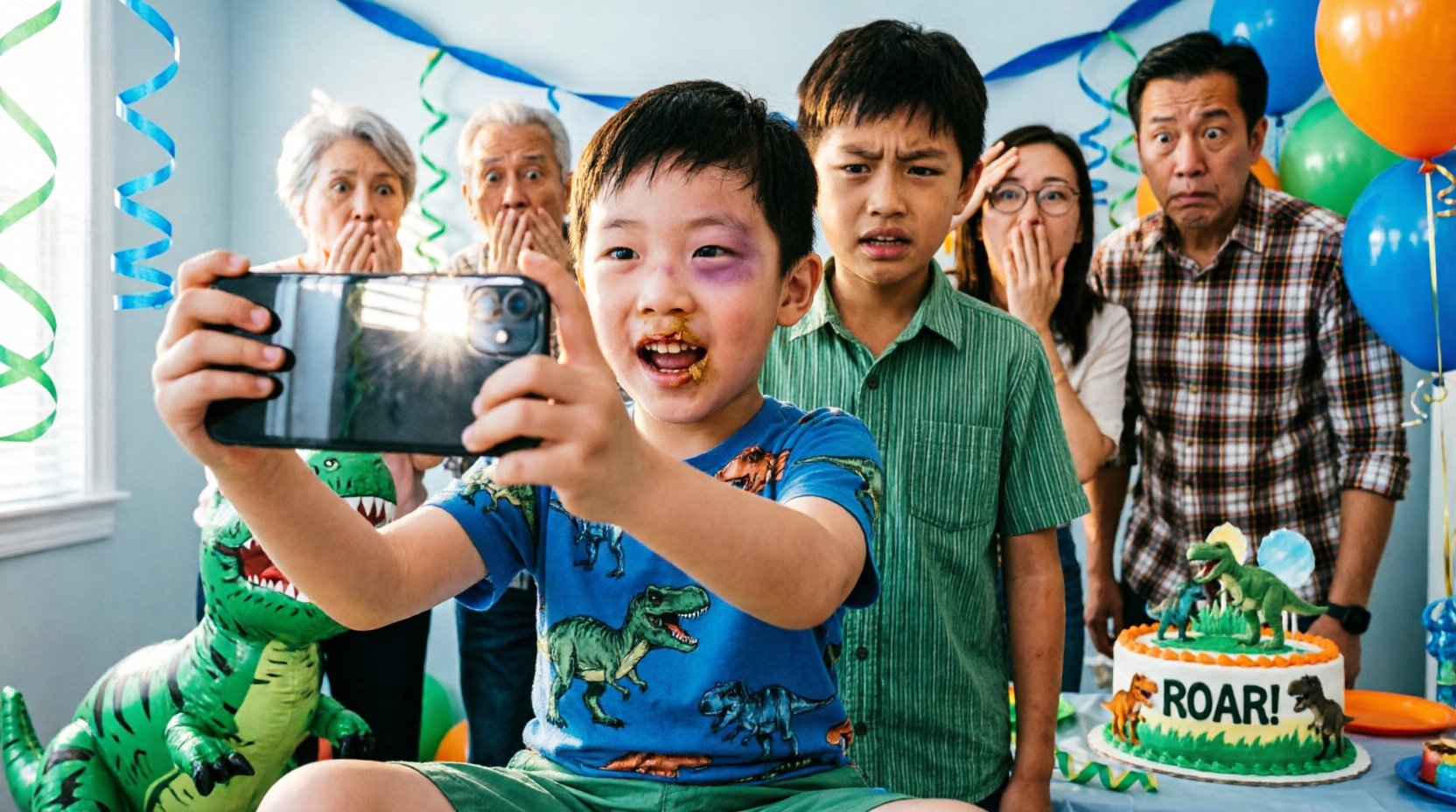
Sometimes I think back to that room at the community center as if I could walk through it again. The smell of pizza gone lukewarm. Blue balloons tugging at curling ribbons. The ugly buzz of the lights. My father’s hand on my shoulder. My son’s blood on his lip. The sound of people laughing when they should have moved.
Then the other sound.
Tyler’s small, steady voice:
Should I show everyone what really happened?
That was the hinge.
The moment the old family machine jammed because one child refused to enter it quietly.
He saved himself that day, yes. But he saved me too. Not in some grand heroic way he should have had to carry. In a brutally simple one. He showed me what happens when truth is placed on the table and I either protect it or betray it.
I chose right.
After that, my job was to keep choosing right over and over, in the boring places and the dramatic ones. Court filings. Blocked numbers. Birthday guest lists. Pharmacy aisle conversations. Every single time the old script tried to slide back under the door.
This past weekend, Tyler and I cleaned out a closet and found the old phone.
The phone.
Black case cracked in one corner. Sticky from years in a box with dead batteries, tangled chargers, and random instruction manuals. Tyler held it up and laughed. “This thing looked huge when I was six.”
“It practically was.”
We sat on the floor sorting junk into piles—keep, trash, donate—while afternoon light came through the blinds in warm stripes. The house smelled like dust and lemon polish and the banana bread I’d made that morning. Tyler turned the dead phone over in his hands.
“Do you still have the video somewhere?”
“Yes.”
“Good.”
He set the phone down and reached for a roll of old tape. “Not because I want to watch it,” he said. “Just because it’s proof I wasn’t crazy.”
I looked at him. Twelve years old. Wise in ways I still wish he never needed to be.
“You were never crazy.”
“I know,” he said. Then he smiled, quick and easy. “But it’s nice to have receipts.”
I laughed so hard I had to sit back against the wall.
That’s him, exactly. Funny. Clear-eyed. Warm without being naive.
That night we ordered Thai takeout, and he spent dinner telling me about a science fair idea involving erosion, miniature cliffs, and a probably unsafe amount of water in the garage. At one point he said, “When I have kids someday, if they tell me something happened, I’m believing them first.”
I set down my fork.
“That’s a very good rule.”
He shrugged. “Seems obvious.”
Maybe that’s the happiest ending I can give you.
Not that justice was perfect. It wasn’t.
Not that everyone became good. They didn’t.
Not that family healed in some glowing, cinematic way.
The happy ending is that my son grew into a person who thinks protection should be obvious.
The happy ending is that he knows love does not laugh at your pain.
Love does not shove your mother aside.
Love does not demand your silence so the room can stay comfortable.
Love listens. Love acts. Love believes.
And once you know that in your bones, the people who offered you less stop looking like home.
So no, I did not forgive the people who betrayed my son.
I did something better.
I believed him.
I chose him.
And then I built the rest of our life around never making him ask for that twice.