My son sold his late daddy’s pickup to a stranger for $1,100 and kept every penny for his trouble. “That old thing was junk, Mom. You never even drove it.” I let it go, like I let everything go.
My husband, Lowell, lost things his whole life. He never admitted it. If I couldn’t find my car keys or my good gloves, he’d call from the den, “Check the glove box, Glennie!” It was his joke. Forty-nine years together, and he still used it.
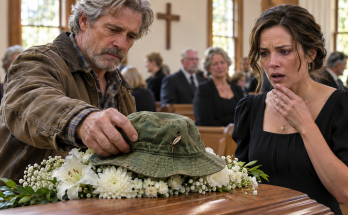
Lowell died last January in the hospital in Grayling, after his second stroke. He couldn’t talk near the end. He squeezed my hand and looked at me as if he had something to say, but I couldn’t tell what it was. I’m Glenda. I was seventy-nine, and I’d spent forty years selling Avon door to door around Houghton Lake.
I can still remember which ladies on my route liked Skin So Soft. Lowell used to tell me, “Glennie, you could sell ice to a snowman.” He squeezed a nickel till it hollered, wore the same brown coat for twenty winters, and said the old davenport still sat fine whenever I mentioned getting a new one.
I loved that about him, even when it got on my nerves. There was comfort in knowing exactly what he’d say. I didn’t know how much I’d miss hearing it until the house went quiet.
Our son, Rhett, drove up from Lansing for the funeral and stayed a week.
He went through drawers and bank papers. He even went through Lowell’s tackle box. I stood in the doorway once and watched him turn over the little tins of hooks and sinkers.
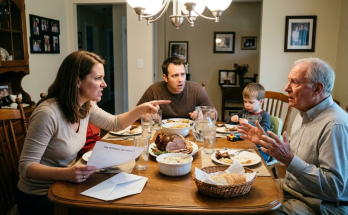
“Mom, Dad didn’t leave you anything but this house,” he told me. “And you can’t keep it up on Social Security. You know you can’t.”
He wanted me to move into his basement in Lansing, next to the furnace. I said I’d think about it. I didn’t want to argue with him while we were still dealing with Lowell’s things, and I wasn’t ready to admit how angry his words made me.
My grandchildren’s school pictures were still stuck to the refrigerator under bait shop magnets. I’d look at those pictures while I made coffee and think that I wasn’t ready to take them down and pack them into a box. That was a small thing, maybe. It felt like the whole decision.
In the spring, Rhett came back and said he’d handle Lowell’s truck. It was a green Chevy with rust over both wheel wells. It had a stick shift I never learned to drive. Lowell used it for the VFW and the bait shop, and not much else.
Rhett put it on the internet on a Friday. By Sunday, it was gone. I watched through the front curtain as a young man counted cash into Rhett’s hand in my driveway. Rhett folded the bills into his own wallet when the buyer left.
“For my trouble,” he said when he came inside. “You know what gas costs, driving up here.”
“That was your daddy’s truck,” I said.
“That old thing was junk, Mom. You never even drove it.”
I was furious, but I didn’t say what I wanted to say. I let it go. I had done that for years, and by then it came as naturally as setting the coffee pot the night before.
My sister Fern called that evening. She never did have much patience for a pretty excuse.
“Glenda, he’s going to sell that house out from under you next. You know he is.”
“He’s my boy, Fern.”
“He’s a boy who pocketed eleven hundred dollars off his dead daddy’s truck.”
I didn’t have an answer. I sat in Lowell’s recliner until the late news went off, my hands wrapped around a cup I’d forgotten to drink from. Maybe Rhett was right. Maybe an old woman alone ought to go where she was told. I’m ashamed to admit I thought that.
Three weeks after the truck was sold, somebody knocked on my door on a Thursday afternoon. A young man in a marina jacket stood there with his cap in his hands. I’d seen him once before, counting money into Rhett’s hand.
“Ma’am, are you Glenda?” he asked. “Glenda Hoyt?”
“Depends who’s asking,” I said. “If you’re selling something, I sold Avon for forty years. I’ll outlast you.”
He laughed, but he still looked nervous. “I’m Corey. I bought the green Chevy.”
“Is something wrong with it?”
“No, ma’am. It runs great. I finally cleaned out the glove box this week.”
He held out a yellow envelope, soft at the corners. Corey told me he’d found it under old road maps, napkins, and a tire gauge.
On the front, in Lowell’s big crooked capitals, was the word “Glennie.”
My knees nearly gave way. Corey held the envelope out more carefully.
“I figured it wasn’t mine to open,” he said. “Your address was on the registration.”
“Most folks would’ve kept it.”
“My grandma would’ve skinned me.”
I asked him inside. I didn’t want to open that envelope alone. He sat at my kitchen table and turned his cap around and around in his hands. I set it beside the sugar bowl, then got my good scissors from the drawer.
“Check the glove box, Glennie,” I said out loud.
Corey looked at me as if I’d lost my mind. Rhett had gone through every drawer in my house. He never thought to look in the one place Lowell had told me about a thousand times.
I cut along the top of the envelope. Inside was a little blue savings book from the credit union and a letter folded in thirds. Lowell never wrote me a letter in forty-nine years. Not even a birthday card. In his big crooked capitals, the first line said, “Glennie, whatever Rhett tells you, don’t let him talk you into signing our house over to him.”
I read the sentence twice. My fingers had started trembling, so I put the letter flat on the table and held it down with my palm.
“Is that what he wanted?” Corey asked quietly.
“I don’t know yet,” I said. “But I’m going to find out.”
The next line said the money in the blue book was meant for me. Lowell had kept it in the truck because he knew Rhett was going through the bank papers at home. The savings weren’t a fortune, he wrote, but they were enough to help me stay in the house if I chose to.
Then he wrote, “Rhett has been talking about the house for a while. He says you’d be better off in his basement. He also says we could sell this place and use the money to help him get caught up. I told him no. He thinks he knows what’s best for you. He’s scared about his own bills, and that’s not the same thing.”
I looked down at the book. Lowell had put it and the letter in the truck on purpose. He’d known Rhett would search the house. He’d also known I might keep letting things go if nobody gave me a reason to stop.
The letter went on: “I should have told you sooner. I kept thinking there’d be a better time. There wasn’t. Don’t let him make you feel ungrateful for wanting your own home. I’m sorry I can’t say this to you myself.”
I put the paper down. Lowell had left me a message, but he’d also left me one more thing to be mad about. He could have told me while he was still sitting in that recliner. He could have told me before his hands stopped working. I wiped my eyes with the back of my hand and said it out loud.
“I’m mad at you, Lowell.”
Corey didn’t try to comfort me. He just sat there with his cap between his hands, which was the right thing to do.
I checked the book again. It had both my name and Lowell’s on it. I called the credit union and asked what I needed to bring in to verify the account. Then I put the letter and the book in my purse.
Corey stood up. “I can take you if you don’t want to drive.”
“I appreciate it, but I’ve got Fern. She’ll come with me.”
He nodded and took his cap. At the door, he turned around.
“I’m glad I brought it,” he said.
“So am I.”
Fern came over, and we went to the credit union together. She didn’t ask me to read the letter out loud. She only touched my arm once in the car and said, “You don’t have to decide everything today.”
At the counter, I showed the teller the blue book and Lowell’s death certificate. She checked the account, then looked up at me.
“You’re listed on it, too,” she said. “The account is still available to you.”
I felt my shoulders loosen. I asked her to tell me plainly whether Rhett could withdraw the money. She checked again and said his name wasn’t on the account. The savings were mine to manage. I didn’t ask how much was in it with Fern standing beside me. I just wanted to know that it was real, that Rhett couldn’t take it, and that Lowell hadn’t written me a wish he had no way to keep.
Outside, Fern glanced at the letter in my hand.
“So?” she asked.
“So he told me not to sign the house over to Rhett.”
Fern’s mouth tightened. “Are you going to?”
“No.”
I said it before I had time to soften it. That felt like a relief and a warning at once. I had spent a long time making my words easier for Rhett to hear.
I called him from home and asked him to come up. I told him I’d found something of his father’s in the truck. I didn’t tell him what it said. Fern came back over before he arrived and sat at the kitchen table with me.
When Rhett came in, his eyes went to the blue book and the letter. He pulled out a chair but didn’t sit down.
“What’s that?”
“Something your father left me,” I said.
He glanced at Fern, then back at me. “You’ve got Fern here for this?”
“She’s my sister. She knows what’s been going on.”
Rhett rubbed his thumb along the edge of the table. “Mom, I was trying to help you. You can’t keep that house on what you get every month.”
“I went to the credit union. I can keep it for now.”
“How much money is in there?”
“That isn’t your business.”
He looked at the book again. “Dad never told me he had another account.”
“He didn’t have to tell you.”
Rhett’s jaw tightened. “I went through the papers. There wasn’t anything.”
“Because he put this in the glove box.”
For a few seconds he didn’t answer. I slid the letter across the table, but I kept one hand on it. He read the first lines. His face changed when he reached the part about selling the house to help him get caught up.
“That’s not what I said,” he told me.
“What did you say?”
“I said you shouldn’t have to worry about the house. That it could be a burden.”
“Your father wrote that you wanted to sell it and use the money to help yourself.”
He looked down at the paper. “I was behind on bills. I thought it made sense. I thought you’d be better off with us.”
“In your basement?”
“It’s finished down there.”
“Next to the furnace,” Fern said.
Rhett turned toward her. “I didn’t ask you.”
“You told your mother she had nothing but the house, then you took the money from your father’s truck,” she said. “You can hear how that sounds.”
“I had to drive all the way up here,” he said. “I paid for gas.”
“You kept all eleven hundred dollars,” I said. “You didn’t tell me you were taking it. You didn’t ask.”
He rubbed his forehead. “I needed the money.”
There it was. I’d wanted him to say that instead of acting as if I owed him for showing up.
“You could have asked me,” I said.
“I didn’t want to have to ask.”
I felt my face get hot. “So you took it.”
He looked at the letter again. “Dad told you all this?”
“He wrote it down. He said you’d been asking about the house.”
“I was trying to make a plan.”
“For your bills.”
“For all of us.” He stopped, then added, “I didn’t think you’d want to stay here alone.”
“Did you ask me?”
He didn’t answer.
I was still hurt, and I said something I wish I could take back. “You were in such a hurry to get me into your basement that you couldn’t even wait for me to miss your father.”
Rhett’s eyes lifted to mine. He looked as if I’d slapped him. I hated seeing that, but I didn’t take it back. I’d been afraid to hurt his feelings for so long that his feelings had become the only ones we ever discussed.
He picked up the letter and read the last paragraph. “He should have told me.”
“He tried to tell me,” I said. “He couldn’t speak at the end.”
Rhett set the letter back on the table. “I didn’t know about this account.”
“I believe you.”
That made him look at me.
“I believe you didn’t know about the account,” I said. “I don’t believe you had a right to keep the truck money.”
He took out his wallet and stared at it for a moment. “I still have it. I put it aside.”
“Then I want it back.”
He looked embarrassed now, and that embarrassed me too. I didn’t want to be sitting across from my son, asking him to return money from his own father’s truck.
“I thought you’d tell me to keep it,” he said.
“You didn’t give me a chance to tell you anything.”
He took his checkbook from his coat pocket and wrote out a check for $1,100. His hand paused after he signed it.
“I’m sorry,” he said. “I needed money, and I told myself you wouldn’t care about the truck.”
“I cared about it. I cared about what it meant. And I cared that you let me think I had no choice but to go where you wanted me.”
He slid the check toward me. I put it beside Lowell’s letter.
“I’m not signing the house over to you,” I said. “And you’re not going through my bank papers again.”
“I wasn’t trying to steal the house.”
“Then stop asking me to give it up.”
Fern stayed quiet. Rhett looked at her, then looked at me. He was waiting for me to make it easier on him. I felt the familiar urge to say he was a good son, that he’d had a hard time, that maybe we’d all misunderstood one another.
Maybe I was wrong to make him wait for an answer. Maybe I had let him believe I’d agree because I usually did. But I couldn’t go back to that chair and pretend I hadn’t read the letter.
“I’ll visit you in Lansing,” I said. “I’m not moving into your basement.”
He stood up. “Fine. I was trying to help.”
“I know you were trying to help yourself, too.”
He didn’t answer. He picked up his coat, leaving the check on the table. Before he went out the door, he looked back once.
“I’ll call you next week,” he said.
“You can,” I told him.
After he left, Fern sat with me while I put the check and the blue book in the drawer where I kept the house papers. I didn’t hand them to her to keep, and I didn’t ask her what she thought I should do. I had made up my mind.
The next day, I called Rhett and told him I’d deposited the check. I also told him I wasn’t discussing the house again unless I brought it up. He didn’t like it, but he said he understood. We didn’t settle every hard feeling between us on one phone call. I wasn’t going to pretend we had.
I stayed in the house. The school pictures stayed on the refrigerator under the bait shop magnets, and I kept making coffee in the same kitchen. The blue book and Lowell’s letter went into my file drawer, where I could find them without help.
That night, I sat in Lowell’s recliner and put the letter on the table beside me. His crooked capitals looked just like him. At the bottom, I found one more line I’d missed: “Check the glove box, Glennie.”
I laughed, then cried a little. The letter stayed beside my coffee cup until morning.