In a moment steeped in both personal reflection and historical significance, King Charles III delivered a deeply moving address on Tuesday, April 21, 2026—the day that would have marked the 100th birthday of his beloved mother, Her Late Majesty Queen Elizabeth II. The speech, broadcast from the hallowed halls of Buckingham Palace, served not only as a heartfelt homage to Britain’s longest-reigning monarch but also, according to one prominent royal commentator, as a carefully worded diplomatic signal directed toward the current geopolitical landscape, including a possible subtle critique of U.S. President Donald Trump’s foreign policy stance, particularly regarding escalating tensions with Iran.
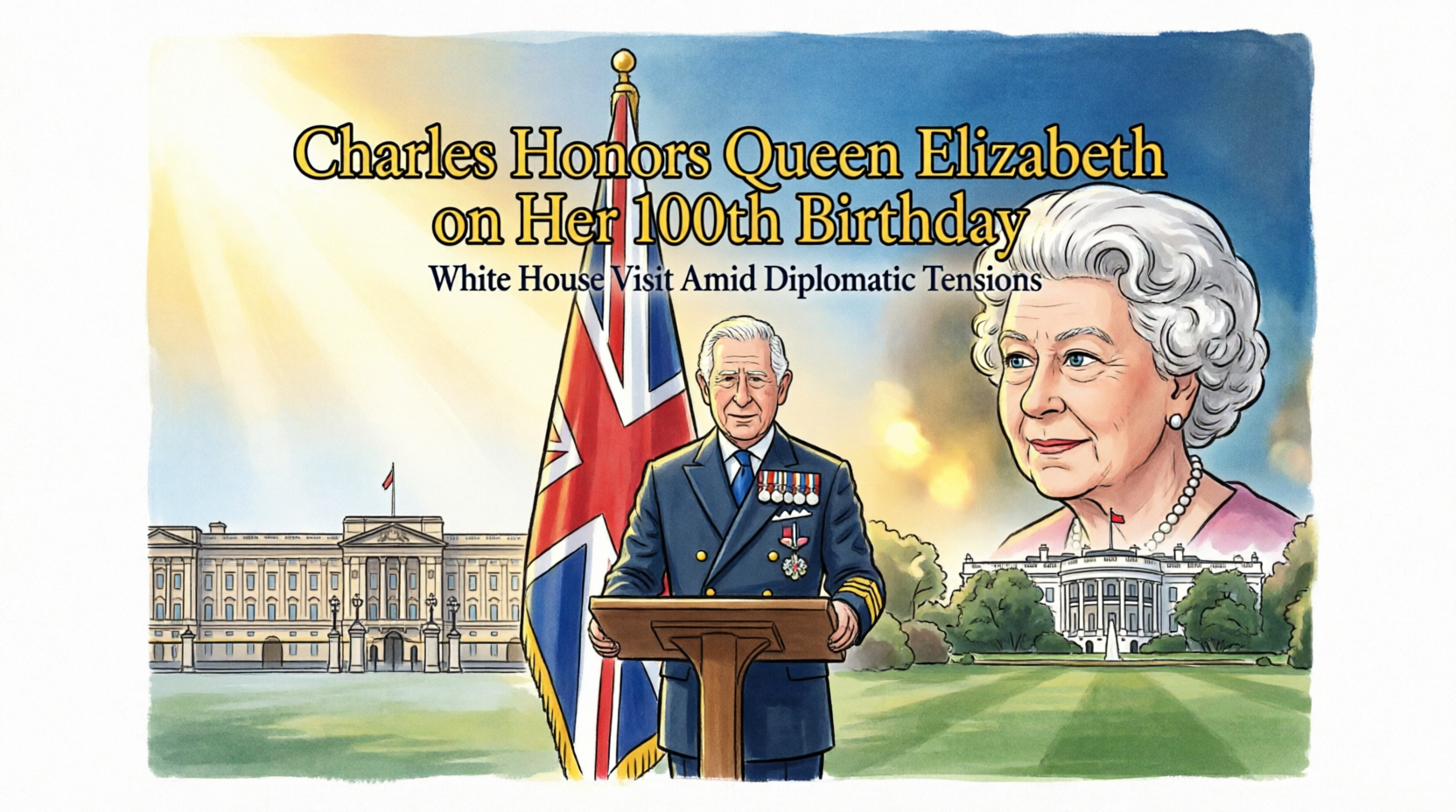
This interpretation emerges at a particularly delicate juncture in transatlantic relations, as Buckingham Palace has officially confirmed that King Charles and Queen Camilla will undertake a highly anticipated state visit to the United States later this month. The trip, scheduled between April 27 and 30, will culminate in a formal reception at the White House on the evening of April 28—a “beautiful Banquet Dinner,” as President Trump himself described it via social media. The visit forms part of broader commemorations surrounding the United States’ 250th Anniversary of independence, an occasion that underscores the enduring “special relationship” between the two nations. Yet, beneath the surface of ceremonial protocol and diplomatic pageantry, observers are closely analyzing every nuance of the Royal Family’s public statements for clues about underlying political sentiments.
A Legacy Remembered: Queen Elizabeth II’s Enduring Impact
Queen Elizabeth II, who ascended to the throne in 1952 at the age of 25, reigned for an unprecedented 70 years before her peaceful passing at Balmoral Castle in September 2022 at the age of 96. Her life spanned nearly an entire century of profound global transformation—from the aftermath of World War II through the dawn of the digital age—and her steady, dutiful presence became a symbol of continuity for millions around the world. In his televised tribute, King Charles reflected not only on his mother’s monumental public service but also on the intimate, human qualities that endeared her to so many.
“Today, as we mark what would have been my beloved mother’s 100th birthday, my family and I pause to reflect on the life and loss of a sovereign who meant so much to us all, and to celebrate anew the many blessings of her memory,” the King began, his voice imbued with emotion. He went on to evoke vivid, personal imagery that resonated deeply with audiences: “Millions will remember her for moments of national significance; many others for a fleeting personal encounter, a smile, a kind word that lifted spirits, or for that marvelous twinkle of the eye when sharing a marmalade sandwich with Paddington Bear in the final months of her life.”
This reference to the now-iconic Platinum Jubilee sketch, in which the Queen shared a lighthearted moment with the beloved children’s character, served as a poignant reminder of her ability to connect with people across generations through warmth, humor, and grace. Yet, as the speech progressed, King Charles shifted toward a more contemplative tone, acknowledging the complex and often turbulent nature of the contemporary world.
“Much about the times we now live in, I suspect, may have troubled her deeply,” he observed, “but I take heart from her belief that goodness will always prevail and that a brighter dawn is never far from the horizon.” He concluded with a tender, personal farewell: “God bless you, darling mama. You remain forever in our hearts and prayers.”
Expert Analysis: Decoding Diplomatic Subtext
It was precisely this acknowledgment of “troubled times” that caught the attention of royal expert Kinsey Schofield, who appeared on Sky News shortly after the broadcast to offer her interpretation. Schofield suggested that the King’s words, while ostensibly a reflection on his mother’s worldview, may have carried a layered diplomatic message—particularly in light of current international tensions involving the United States and Iran.
“I’m going to be honest, maybe I’m just sensitive … but I felt like that was a swipe at what’s going on in the United States between Donald Trump and Iran,” Schofield stated. She elaborated that while the tribute was undoubtedly sincere and personal, the choice to highlight global instability could be read as a gentle, yet deliberate, commentary on leadership approaches to conflict and diplomacy. “When he’s talking about global issues, I don’t think that’s a direct swipe at ex-prince Andrew, but I’d suggest she might be a little bit more worried about what’s going on at her back porch,” she added, implying that Queen Elizabeth, known for her discretion and diplomatic acumen, would have been particularly attentive to matters affecting close allies.
This reading gains additional weight when considered against the backdrop of the upcoming state visit. While the Royal Family maintains strict political neutrality, the monarch’s role as head of state inevitably intersects with matters of international relations. Historically, royal visits to the United States have served not only as ceremonial affirmations of friendship but also as opportunities for subtle diplomatic signaling. Queen Elizabeth II’s own state visit in 2007, during President George W. Bush’s administration, occurred amid the complexities of the Iraq War—a parallel that underscores how royal engagements often unfold within charged political contexts.
The Upcoming White House Visit: Protocol, Pageantry, and Political Nuance
President Trump’s announcement of the Royal visit via social media reflected his characteristic blend of enthusiasm and informality. He expressed that he and First Lady Melania Trump “look forward to spending time with the King, whom I greatly respect,” and confidently predicted the encounter would be “TERRIFIC.” The itinerary, though not yet fully disclosed, is expected to include a formal address by King Charles to a joint session of the U.S. Congress—a rare honor that last occurred during Queen Elizabeth’s 2007 visit, when she spoke before a legislative body led by then-President Barack Obama.
The timing of the visit, however, has not been without controversy. As the BBC has reported, the official announcement was reportedly delayed until after heightened tensions surrounding potential military action involving Iran had somewhat subsided. This caution reflects the delicate balance the UK government must strike: honoring a longstanding alliance while navigating complex geopolitical realities. Visits of this nature, though undertaken by the monarch, are coordinated on behalf of the UK government, meaning that diplomatic strategy and foreign policy considerations inevitably shape their timing and messaging.
Moreover, the visit arrives at a moment of domestic political flux in both nations. In the United States, President Trump faces ongoing scrutiny over his foreign policy decisions, while in the United Kingdom, King Charles continues to define his own reign in the shadow of his mother’s extraordinary legacy. Against this backdrop, every public statement, gesture, and ceremonial detail is subject to intense analysis by media, experts, and the public alike.
Historical Context: Royal Diplomacy and the “Special Relationship”
The bond between the British monarchy and the United States has evolved significantly since the American Revolution. Queen Elizabeth II, during her reign, met with 14 U.S. presidents—from Harry S. Truman to Joseph R. Biden Jr.—and her visits to America were consistently hailed as milestones in Anglo-American relations. Her 1957 state visit, the first by a reigning British monarch since the colonies declared independence, helped cement a postwar alliance that would prove foundational to Western diplomacy throughout the Cold War and beyond.
King Charles, too, has long been engaged in transatlantic dialogue, though his approach often emphasizes environmental stewardship, interfaith understanding, and youth empowerment—themes that may subtly contrast with certain aspects of the current U.S. administration’s priorities. While the monarchy remains constitutionally bound to act on the advice of ministers, the sovereign’s moral authority and global platform afford opportunities for soft-power influence that can complement, or occasionally complicate, official government positions.
Looking Ahead: What to Expect from the Royal Visit
As preparations continue for the King and Queen’s journey across the Atlantic, anticipation builds not only for the ceremonial splendor—military honors, state banquets, cultural exchanges—but also for the quieter, behind-the-scenes diplomatic conversations that such visits facilitate. Will King Charles use his address to Congress to advocate for multilateral cooperation on climate change, a cause he has championed for decades? Might Queen Camilla, a noted advocate for literacy and victims of domestic abuse, highlight humanitarian issues that resonate across borders? And how will the Royal Family navigate the fine line between personal warmth and political neutrality when engaging with a president known for his unconventional diplomatic style?
For now, the focus remains on the profound personal milestone that inspired King Charles’s recent address: the centenary of Queen Elizabeth II’s birth. In honoring her memory, the King has reminded the world of the values she embodied—duty, compassion, resilience, and an unwavering faith in the possibility of a better future. Whether or not his words contained a veiled commentary on contemporary leadership, they undoubtedly reinforced the enduring relevance of her example in an age of uncertainty.
As the Royal Family prepares to embark on this significant journey to the United States, one thing remains clear: the legacy of Queen Elizabeth II continues to shape not only the monarchy but also the broader landscape of global diplomacy. And as King Charles steps onto the world stage in his own right, the world will be watching—not only to see how he honors his mother’s memory, but also how he carries forward her timeless commitment to service, unity, and hope in the face of adversity.