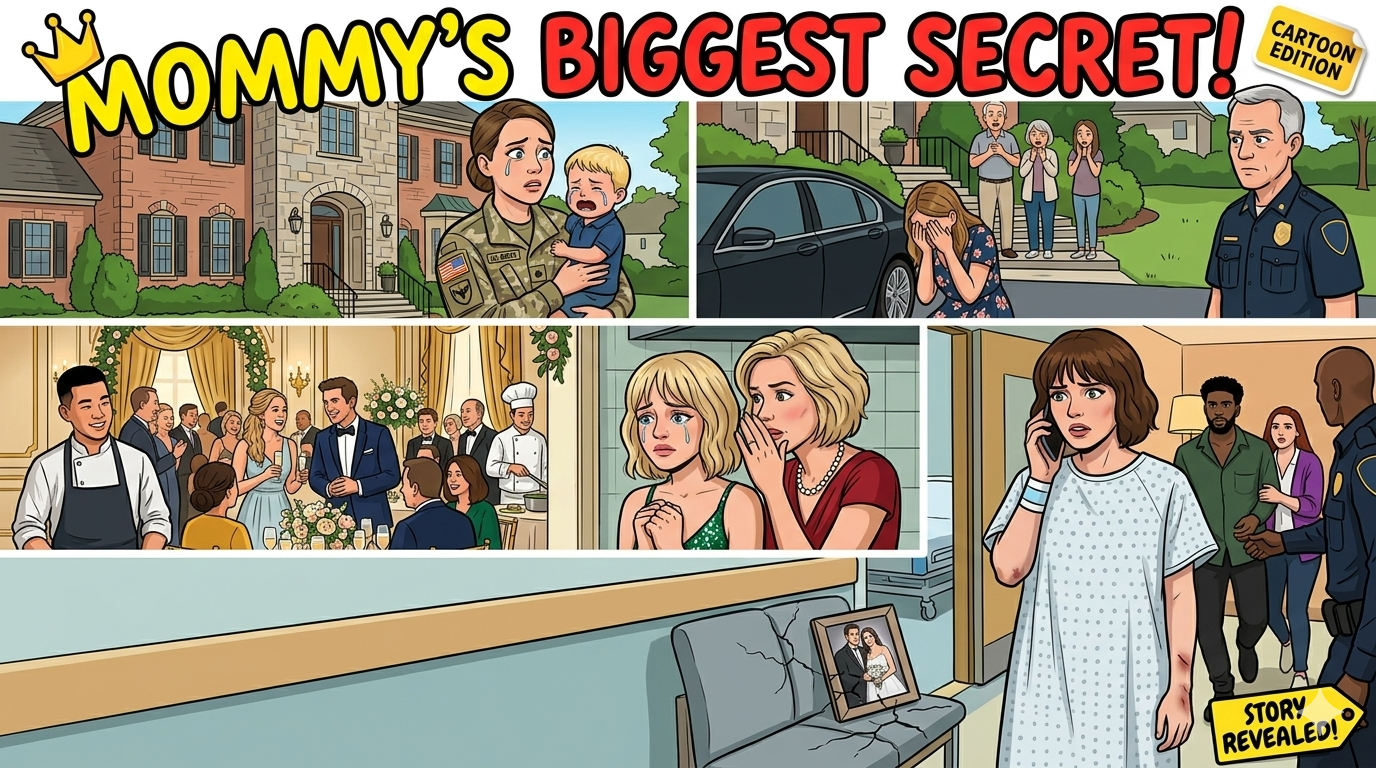
My husband handed me divorce papers while I was still wearing a hospital bracelet — the kind that makes you feel like a case number instead of a person.
I’d been admitted for complications that started as “just dizziness” and turned into hushed conversations between doctors outside my curtain. I was exhausted, scared, and trying to hold my life together with trembling hands.
He walked in smiling like it was a business meeting. No flowers. No concern. Just a phone in his hand and that smug expression he wore when he thought he’d won.
“I filed for divorce,” he announced, loud enough for the nurse to look over. “I’m taking the house and the car, lol.”
He actually laughed. Then he dropped a manila envelope onto my lap. His signature was already in place. He’d highlighted where I needed to sign, as if I were just another document waiting to be processed.
I scanned the pages while my heart pounded. House. Car. Accounts. He’d checked boxes like he was shopping.
The wildest part wasn’t that he wanted everything. It was how sure he was that I couldn’t stop him.
Because he had no idea I earned $130,000 a year.
For years, he treated my career like a side hobby. He preferred the quiet version of me — the one who paid bills, didn’t argue, and never made him feel insecure. I never corrected his assumptions about my income. I didn’t need to.
I kept my salary separate. Built savings quietly. Watched him spend recklessly as if consequences didn’t apply to him.
He leaned closer. “You can’t afford to fight this. Just sign it.”
I didn’t cry. I didn’t beg. I asked one thing: “You’re leaving me here?”
He shrugged. “You’ll be fine. Hospitals fix people.”
Then he walked out.
By the time I was discharged, he had already moved out. Weeks later, mutual friends told me he’d remarried — quickly, extravagantly, like he needed a public celebration to prove he’d upgraded.
People assumed I was heartbroken.
I wasn’t.
I was clear.
Three days after his wedding, at exactly 11:23 p.m., my phone lit up with his name. I almost ignored it. Almost. But I answered.
There was no laughter this time.
Only panic.
“Please,” he said, voice cracking. “Tell me what you did.”
In the background, I could hear a woman crying.
He spiraled fast. The bank had frozen accounts. His cards weren’t working. The mortgage payment failed. The dealership had called. The house title was flagged.
“You’re mad, I get it,” he rushed. “But my wife’s freaking out. Her kids are here. We can’t be homeless.”
Homeless.
The exact outcome he’d casually planned for me.
I sat in my new apartment — quiet, peaceful, mine — and let him unravel.
“You left me in a hospital bed,” I reminded him.
He brushed it off. “You weren’t dying.”
“But you didn’t know that.”
Then he sna:pped, impatient. “Fine, I’m sorry. Can we fix this?”
There it was — my pain, always secondary.
“You want to know what I did?” I asked calmly.
“Yes!”
“You built your whole plan on the belief that I couldn’t afford to defend myself.”
Silence.
I wasn’t alone when he served me those papers. The moment he left that hospital room, my attorney — Denise — was on the phone. She didn’t panic. She built a strategy.
“I protected myself,” I told him.
Two years earlier, when he pushed to refinance the house and shuffle assets “for renovations,” I’d read the paperwork carefully. I refused to sign anything that stripped protections away. The title remained under my name, backed by a trust clause set up long before I married him.
At the time, he mocked it as paranoia.
Now it was the reason he couldn’t sell, borrow against, or claim the house without triggering a legal review — which happened the moment he filed for divorce and tried to seize it.
The joint accounts? Frozen due to suspicious withdrawals during my medical emergency.
The car? Leased under my credit. Insurance in my name. His authorized access revoked.
The letter he received wasn’t revenge. It was enforcement.
Temporary restraining order.
Exclusive occupancy pending divorce.
Account review.
Hearing date scheduled.
“You planned this,” he accused weakly.
“No,” I corrected him. “I prepared for you.”
Behind him, I heard his new wife shouting, “You said she had nothing!”
He lowered his voice. “Please. If you drop this, I’ll give you whatever you want.”
I remembered the hospital bracelet. The envelope. The laugh.
“I already have what I want,” I said.
“What?”
“My life back.”
Two weeks later in court, his performance didn’t work. Timelines, bank records, and hospital dates spoke louder than he ever could. The judge didn’t dramatize. The judge enforced.
By the end, I had exclusive occupancy, financial protection, and legal clarity. His rushed remarriage looked exactly like what it was — a man sprinting away from accountability.
As I walked out of the courthouse, my phone buzzed from an unknown number.
I didn’t answer.
Some people only understand power when it finally stops accommodating them.
I understood it the moment I stopped begging to be treated like a person.
And I never looked back.
