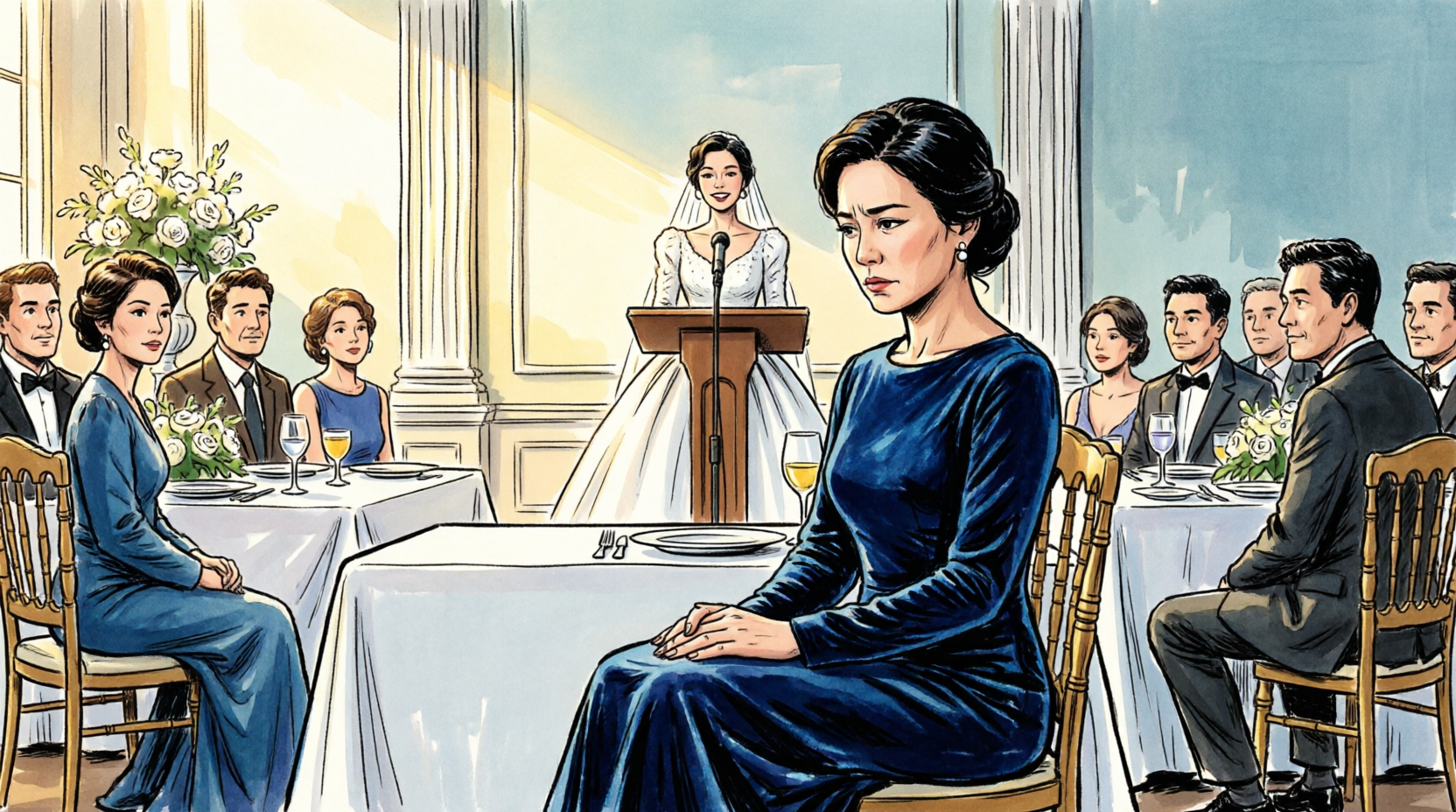
I was twenty-two when my father threw me out. I still remember the suitcase sitting on the porch before I got there. He had not thrown it. That would have been too emotional for him. Too honest. He placed it there neatly, deliberately, like punctuation. “You made your choice,” he said. Three words. That was all it took to end my childhood.
My choice had been the Air Force. Officer training. Rescue aviation. A life where I could pull people out of fire, water, wreckage, mountains, storms. A life that made sense to me after watching my mother die slowly in hospitals while everyone whispered and waited. My father wanted me in the family business. Insurance. Numbers. Boardrooms. Polished shoes. Country clubs. A name on a door. He said he built the company so his daughters would never struggle. I told him I wanted to save people. He never forgave me for that.
By the end of the week, I was off the family insurance. By the end of the month, every photo of me had disappeared from the house. My stepmother Margaret told the neighbors I had run away to “play soldier.” My father told people I had chosen fantasy over family. And I let them.
For fifteen years, I let them tell the story because I was too busy surviving the real one. I became a pilot. Then an officer. Then a commander. Then something my father would have respected if it belonged to anyone else. Major General Evelyn Ulette. Two stars. Two hundred thirty-seven confirmed rescues. A Distinguished Flying Cross. Medals he would never ask about. A career he would never understand.
But none of that mattered when I walked into that wedding. Because in that room, I was not a general. Not a decorated officer. Not the woman who had pulled people out of burning aircraft and black water. I was just the daughter he erased. The charity case. The problem. The non-priority guest.
I folded the place card slowly between my fingers. My mother watched me. “You should just sit where they put you,” she said softly. “It’s Clare’s day.” Clare’s day. That was why I had not turned around immediately. That was why I had driven three hours through October leaves and old memories. That was why the envelope in my purse held a $10,000 check. For my sister. For her new life. For the girl I had loved even when loving her meant watching from far away.
I found the gift table near the entrance to the ballroom. White linen. Crystal bowl for cards. Silver tray. Stacks of embossed envelopes. I reached into the bowl and found mine. Evelyn. Only Evelyn. No last name needed because no one else in that family had dared to use it on me that night. I slipped the envelope back into my purse.
My mother’s eyes widened. “What are you doing?” I looked at the place card in my hand. Then at table one. Then at her. “If I’m just a courtesy,” I said, “so is this.” Her face changed. For the first time that night, she looked genuinely afraid. Not hurt. Afraid. Because money has a way of revealing what people thought they were entitled to.
“Evelyn,” she hissed. “Don’t be dramatic.” Dramatic. That word followed me from childhood like a shadow. When I cried after my mother died. Dramatic. When I said Margaret was cruel. Dramatic. When I told my father I did not want the life he had designed for me. Dramatic. When I left. Dramatic. Apparently, if you are quiet enough while being hurt, people call that maturity. But the moment you stop accepting it, they call it drama.
I walked into the ballroom anyway. Table 22. That was where they placed me. Near the kitchen doors. Beside strangers who smiled politely but avoided asking how I knew the bride. The flowers on our table were not real. Not even good fake ones. Across the room, table one glowed beneath white roses and orchids. My father stood there, glass in hand, king of a room built from money, reputation, and carefully managed lies.
Then Clare saw me. She came toward me so fast her cathedral veil trailed behind her like a white wave. “You came,” she whispered. Then she hugged me. Hard. Too hard. Like she had been holding her breath for fifteen years. She smelled like jasmine perfume and hairspray and panic. “I almost didn’t,” I said.
She pulled back, both hands gripping mine. Her eyes were wet. “Dad doesn’t know I invited you.” That explained the place card. That explained table 22. That explained Margaret’s smile. Clare leaned closer. “Please stay. No matter what he says tonight, please stay.” I studied her face. There was something behind her eyes I could not place. Not fear. Not exactly. Resolve. “Clare, what is going on?” She shook her head. “I have something planned.”
Before I could ask another question, someone called her for photos. She squeezed my hands once. “You’re the reason I’m standing here today,” she whispered. “Tonight everyone will know.” Then she was gone. I stood there, unable to move. The reason she was standing here? I did not understand. Not yet.
At cocktail hour, my father found me. He crossed the room with that expensive, effortless authority of a man used to people stepping aside before he asked. He did not hug me. Did not say my name gently. Did not say it had been too long. He looked me up and down and said: “I didn’t realize Clare’s guest list included charity cases.”
There it was. Fifteen years later. Same man. Same blade. Sharper suit. Older face. No softer heart. “Hello, Dad,” I said. “You look well.” His jaw tightened. “You have some nerve showing up here.” “I’m here for Clare.” “You’re here because she’s sentimental.”
Margaret appeared beside him. Of course she did. She always knew when cruelty needed reinforcement. “Oh, Evelyn,” she said, touching her pearls. “How unexpected. I told Gerald someone from the charity list must have gotten mixed up with the invitations.”
I said nothing. Years in the military teach you many things. How to read weather. How to land under pressure. How to breathe through fear. How to identify hostile territory before the first shot. This was hostile territory. The difference was, in combat, at least people were honest about wanting you gone.
My father leaned closer. “If you embarrass this family tonight, I’ll make sure Clare regrets inviting you.” There was the real threat. Not to me. To her. Always someone else used as leverage.
Fifteen years had passed, and he was still using money like a leash. Clare’s apartment. Her car. Half the wedding. Her trust. His generosity always came with invisible handcuffs. “You don’t control me anymore,” I said. His eyes narrowed. “No,” he said. “But I still control enough.”
Then he walked away. Margaret followed, leaving perfume and old poison behind her. I should have left then. I almost did. My car was in the overflow lot. Three hundred yards away. I could have driven back to the base, hung the dress in the closet, and told myself I had tried. But Clare had said stay. So I stayed.
Dinner began at seven. Two hundred fifty guests filtered into the ballroom, finding their gold-rimmed plates and little handwritten cards. Mine still said non-priority guest. I placed it face down.
At table one, my father stood. Glass of Bordeaux in hand. He tapped it with a fork. The room quieted immediately. Of course it did. Gerald Ulette had spent his life making rooms quiet for him.
“Clare has always been my pride,” he began. The warmth in his voice was practiced. Professional. Believable to people who had never been cut by it. “She understood that family means loyalty.” A pause. “She understood that when you’re given everything, you don’t throw it away chasing fantasy.”
There it was. Not my name. He did not need my name. The room understood. A few guests looked toward me. Some quickly looked away. Others did not bother hiding their curiosity.
My father smiled faintly. He was enjoying this. “She knew her worth,” he continued. “And that is why tonight, we celebrate a daughter who never forgot where she came from.”
The applause rose politely. Controlled. My father lifted his glass toward Clare. But across the ballroom, Clare was not smiling. Her hand was wrapped around David’s under the table. Her knuckles were white. Her eyes found mine. And she gave one tiny nod. Wait. That nod said wait. So I did.
I sat there at table 22, near the kitchen doors, with fake flowers in front of me and my father’s insult still burning in the air. Then he came to me again. Not satisfied with the speech. Men like my father never stop at one wound when the first one lands well.
This time, he had an audience. Margaret beside him. His business partner Richard Hail across from me. A few guests nearby pretending not to listen. My father stood over my chair, glass in hand. “If it wasn’t for pity,” he said, loud enough for three tables to hear, “no one would have invited you.”
The room around us went still. A waiter froze with a basket of bread. Someone at the next table lowered her fork. Margaret’s hand rested lightly on my father’s sleeve, but she did not stop him. Of course she didn’t. She had waited years to see me humiliated properly.
I looked up at my father. The man who threw me out. The man who erased my photographs. The man who told the world I failed because it was easier than admitting I had chosen a life outside his control.
Fifteen years ago, those words would have destroyed me. I would have cried. Run. Begged. Explained. Searched his face for any sign that he regretted hurting me. But I was not twenty-two anymore.
I lifted my wine glass. Took one slow sip. Then said quietly: “Funny thing about pity. The people who give it usually need it most.”
For the first time that night, my father had no answer. None. His mouth opened. Closed. Opened again. Nothing. That silence was worth more than the $10,000 check in my purse.
Then the music stopped.
At the front of the ballroom, Clare stood on the stage. The microphone trembled in her hand. Her wedding dress caught the light like scattered stars.
“Before we cut the cake,” she said, “I need to do something I should have done years ago.”
The room turned toward her. My father smiled at first. He thought she was about to thank him. He thought this was tribute. He thought the whole night still belonged to him.
Clare looked across the tables. Past the orchids. Past the champagne. Past the guests who had whispered my name like a stain. Straight to me.
“I want to honor someone who made this day possible,” she said. My heart began to pound. “Someone this family tried to erase.”
My father’s smile vanished. Margaret’s hand tightened around her glass.
Clare lifted a brown envelope from behind the podium. The seal on it was visible even from table 22. Department of the Air Force.
I stopped breathing.
Because suddenly, I knew.
Seven years earlier. A storm. Milstone Bridge. A car in the river. A woman trapped underwater. A rescue helicopter dispatched into zero visibility. I had jumped before the dive team arrived. Cut the seat belt. Dragged her from black water. Performed CPR on the riverbank in the rain until she coughed water back into the world.
I had not known it was Clare until the floodlight swept over her face. And I had never told anyone. Not my father. Not Margaret. Not even Clare. I filed the report and went back to work because that was what rescue pilots did. We saved people. We did not invoice them for love afterward.
But Clare knew.
Somehow, she knew.
Her voice shook as she opened the envelope. “Seven years ago,” she said, “I died for two minutes.” A gasp moved through the room. “And the woman sitting at table 22 brought me back.”
My father turned slowly toward me.
For the first time in my entire life, I saw fear on his face.
Part 2…
😱 The next part will shock you…
For a long moment after Clare embraced me, the room remained suspended in a kind of fragile stillness, as if everyone present understood that something irreversible had just happened but had not yet decided how to respond to it. Conversations did not resume naturally. Laughter did not return. Even the music, when it slowly started again, felt quieter, almost cautious, like it too was aware that the atmosphere had shifted from celebration into something far more honest. The truth had been placed in the center of the room, and unlike gossip or polite illusion, it could not be redirected or softened once spoken.
My father stood where Clare had left him, still holding his glass, but no longer commanding attention. For years, he had controlled narratives with ease—who was successful, who had failed, who belonged and who did not. But control depends on silence, and Clare had just broken the only silence that mattered. People were no longer looking at him with admiration or expectation. They were looking at him with calculation, reassessing everything they thought they knew. Reputation, I had learned in my career, is not destroyed by accusation. It is undone by contradiction. And tonight, his entire version of the past had been contradicted in front of everyone who mattered to him.
I did not stand to confront him. I did not walk to table one or demand acknowledgment. That part of my life—needing him to see me, to understand me, to regret what he had done—had ended long before I stepped into that ballroom. What Clare had done was not to restore that relationship, but to remove its last illusion. For the first time in fifteen years, I was not being defined in his absence or his approval. I was simply visible, and that was enough.
Clare remained beside me for a while, her hand still holding mine as if she needed to confirm I was real, that I had not disappeared again the way I had all those years ago. There was a quiet urgency in her presence, not panic, but something close to relief, as if she had carried this truth alone for too long and could finally set it down. She did not ask me to move tables. She did not try to repair the seating chart or correct the symbolism of table twenty-two. She understood something important: the problem had never been where I was sitting. It had been what the room believed about why.
Eventually, guests began to move again, but differently now. A few approached our table—carefully at first, then with more certainty—introducing themselves not with the distant politeness reserved for strangers, but with genuine recognition. Not of my rank, not of my career, but of the fact that I had been wronged and had chosen not to retaliate in the way they expected. Respect, I had learned, does not always arrive loudly. Sometimes it arrives as a correction in behavior, subtle but undeniable.
Across the room, my father finally set his glass down. He did not come toward me again. That, more than anything, told me he understood what had changed. There was nothing he could say that would restore the version of me he had spent years maintaining. No dismissal that would work now that the room had seen otherwise. For the first time, he had lost control of the narrative completely, and men like him do not argue when they know they cannot win. They withdraw.
As the evening continued, the wedding returned to its purpose, but it was no longer the same event. It was no longer a stage for hierarchy or quiet exclusion. It had become something simpler, and perhaps more honest—a moment where truth had interrupted tradition and refused to step aside again. When Clare and David cut the cake, the applause felt different, not because of what had been revealed, but because of what had been removed. The performance was gone. What remained was real.
I left before the final dances.
Not out of discomfort, and not out of avoidance, but because I understood that my part in the night had already been completed. Clare walked me to the entrance, her expression softer now, no longer carrying the tension that had followed her down the aisle. She hugged me again, but this time it was not urgent. It was steady.
“Thank you for staying,” she said.
I shook my head slightly.
“You didn’t need me to stay,” I replied. “You needed to speak.”
She smiled at that, the kind of smile that comes when someone finally recognizes their own strength.
Outside, the night air was cool and quiet, a sharp contrast to the brightness and noise inside. As I walked toward my car, I realized something I had not expected to feel: not victory, not satisfaction, but closure. Not because anything had been repaired, but because nothing needed to be anymore. The past had been acknowledged in the only way that mattered—publicly, clearly, and without distortion.
Some families break loudly, with arguments and accusations that echo for years. Others fracture quietly, through absence, silence, and the slow rewriting of truth. Mine had done both. But that night, for the first time, the story had been corrected in the open, and that correction did not require me to fight for it.
It simply required me to stand there long enough for it to be seen.
And once it was seen, it could never be made small again.

