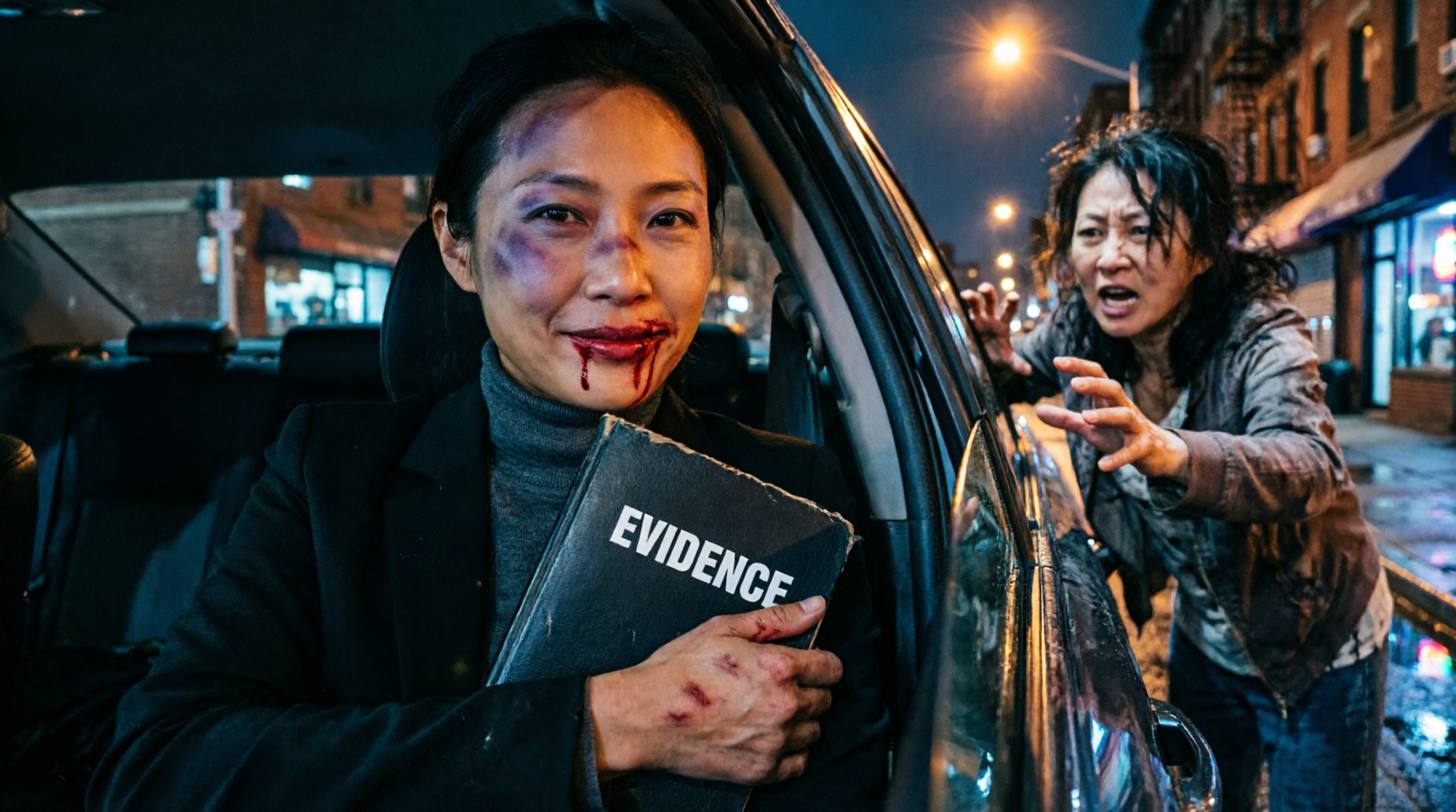
I Walked Into My Daughter’s Room After Noticing Bruises on Her Arms All Week
Part 1
The first bruise showed up on a Tuesday morning, just above my daughter’s wrist, half-hidden under the cuff of a long-sleeved shirt she had no reason to be wearing.
It was late September outside Denver, warm enough that the kitchen windows were open and the maple tree in our backyard had only started to turn gold at the edges. I was packing lunches at the counter, still in my blouse from work because I was running behind, while my six-year-old son, Lucas, drove a plastic dinosaur through spilled cereal.
Emma came downstairs quietly.
That was the first thing that bothered me.
My daughter was eight years old and usually entered rooms like weather. She hummed songs from cartoons. She asked questions before her feet hit the bottom step. She complained about toast crusts, crooked ponytails, and whether Lucas was breathing too close to her backpack.
That morning, she just appeared in the doorway.
Long sleeves. Shoulders tucked in. Eyes on the tile.
“Morning, baby,” I said, trying to keep my voice normal. “Aren’t you hot in that shirt?”
She shook her head too quickly. “I’m cold.”
The thermostat on the wall read seventy-four.
I looked at her face. Pale, tense, waiting.
Nathan had already left for work at Hartley Construction, his family’s company, where the men wore polished boots and talked about loyalty like it was a religion. His mother, Beverly, had taken both kids for the weekend again. She always called it “grandparent time,” but she said it in a way that made it sound less like an invitation and more like a claim.
I handed Emma her orange juice.
Her sleeve shifted when she reached for it.
A thumbprint-shaped bruise sat on the soft inside of her forearm.
My stomach tightened.
“What happened there?”
Emma yanked her sleeve down so fast the juice sloshed.
“I fell.”
“Where?”
“At Grandma’s.”
Lucas looked up from his cereal. “I watched cartoons.”
Emma’s eyes flashed toward him, terrified.
I noticed that too.
“What did you fall on?” I asked.
“The stairs.”
“Which stairs?”
She swallowed. “The basement ones.”
It sounded rehearsed. Not like a lie she had invented, but like one she had practiced until it stopped shaking.
I wanted to pull up her sleeve, inspect every inch of her, call Nathan, call Beverly, call the police, call God. Instead, I crouched in front of her and pushed a loose strand of hair behind her ear.
“Does it hurt?”
“No.”
Her answer came too fast.
I drove the kids to school with both hands locked on the steering wheel. The morning sun flashed across windshields, sprinklers ticked over lawns, and everything in our suburb looked as perfect as it always did. Clean sidewalks. Trimmed hedges. SUVs with school magnets on the back.
From the outside, my life looked like a woman winning.
A nice house in a good neighborhood. A husband from a respected family. Two beautiful children. A job as an accountant at a midsized firm where I was finally being considered for a senior position.
But all morning, while I reconciled vendor accounts and answered emails, I kept seeing that bruise.
By Thursday, there were more.
Emma reached for her backpack, and her sleeve slipped again. This time, the marks circled her arm in dark purple ovals, almost evenly spaced.
My skin went cold.
“Emma.”
She froze.
“Let me see your arm.”
“I have to go to school.”
“Emma.”
Tears filled her eyes before I even touched her.
That was when fear moved from my stomach into my bones.
I did not grab her. I did not force the sleeve up. Something about her face told me that if I moved too quickly, she would leave her body right there in the hallway.
So I called Nathan from the laundry room after school drop-off.
“Did Emma get hurt at your mother’s house?”
His silence lasted half a second too long.
“What are you talking about?”
“She has bruises.”
“Kids bruise, Rachel.”
“Not like this.”
He sighed, the same way he did when I questioned one of his mother’s decisions. “My mom has raised four kids and helped with every cousin in this family. She knows what she’s doing.”
“I didn’t ask if she knows what she’s doing. I asked if Emma got hurt.”
“You’re making something out of nothing.”
His tone had hardened.
That scared me almost as much as the bruises.
“Nathan, she said she fell on the basement stairs.”
“Then she fell.”
“She’s terrified.”
“She’s sensitive. You baby her too much.”
I gripped the dryer door until my knuckles went white. “I’m her mother.”
“And Beverly is her grandmother. Stop acting like my family is dangerous.”
He hung up before I could answer.
By Friday morning, Emma moved like an old woman. She bent carefully to tie her shoes, then winced when her shirt brushed her back.
I knelt beside her. “Baby, does your back hurt?”
Her eyes flooded.
“No.”
“Can I look?”
“No!”
Lucas stopped chewing his toast.
The whole kitchen seemed to freeze.
Emma looked at him, then at me, and whispered, “Please don’t.”
I did not look.
That decision would haunt me later, even though every expert told me I did the right thing by not forcing her in that moment. Trauma has doors. Kick them open too early, and the child inside may run deeper.
But that day, I did not know about trauma.
I only knew something was wrong in my house, and my daughter was carrying it under her clothes.
On Monday, her teacher called me at work.
“Mrs. Hartley,” Mrs. Patterson said gently, “I need to talk to you about Emma.”
My pencil stopped over a spreadsheet.
“What happened?”
“She’s been crying in class. Not loudly. She tries to hide it. Today during reading time, she wet herself.”
For a moment, every sound in the office disappeared. Phones, keyboards, printers, all gone.
“Emma hasn’t done that since preschool.”
“I know. That’s why I’m concerned.”
I left work without shutting down my computer.
Emma sat in the school office with a sweater wrapped around her waist, staring at the floor. Her cheeks were blotchy. When I said her name, she flinched.
I took her home.
I sent Lucas to the neighbor’s house with a made-up excuse about helping Mrs. Alvarez bake cookies. Then I walked upstairs to Emma’s room.
She was on her bed, knees pulled to her chest, shaking so hard the mattress trembled.
I sat beside her, slow and careful.
“Baby,” I said, “you don’t have to protect anyone anymore.”
Her face crumpled.
“I can’t tell you.”
I felt the air leave my lungs.
“Why not?”
She looked toward the window, then the door, as if someone might be listening from inside the walls.
“They said if I tell you,” she whispered, “they’ll hurt you really bad.”
My heart turned to ice.
I kept my voice soft.
“Who said that, Emma?”
She covered her mouth with both hands and began to sob.
And before she said another word, I knew my perfect life was already over.
Part 2
Emma cried without sound at first.
That frightened me more than screaming would have. Her small shoulders jerked, her lips pressed together, her eyes squeezed shut like she was trying to hold herself inside her own skin.
I sat on the bed beside her, close enough for her to feel me but not so close that she would feel trapped. The room smelled like strawberry shampoo, crayons, and the lavender detergent I used on her sheets. Stuffed animals lined the pillows in a careful row. A purple soccer trophy sat on the dresser beside a framed photo of Emma and Lucas at the zoo.
A child’s room.
A safe room.
Or at least it should have been.
“Baby,” I said, “look at me.”
She shook her head.
“Emma. Nobody is going to hurt me for listening to you.”
“They said they would.”
Her voice was barely there.
“Who?”
She pressed her fists into her eyes. “Dad’s family.”
Something inside me went still.
Not calm. Not peaceful.
Still in the way the sky goes green before a tornado.
“Grandma Beverly?” I asked.
Emma nodded.
“Who else?”
“Aunt Kristen.” Her breath hitched. “Uncle Todd.”
I had to bite the inside of my cheek to keep my face from changing.
Beverly Hartley was a woman people made room for. At church events, charity dinners, city council fundraisers, she wore pearls and cream-colored jackets and spoke about family values while younger women rushed to refill her coffee. Kristen, Nathan’s sister, had her mother’s sharp smile and a talent for making insults sound like advice. Todd, Nathan’s older brother, rarely said much, but when he stood in a doorway, people moved.
“What did they say they would do?” I asked.
Emma looked at me then.
Her eyes were not simply afraid. They were old.
“Grandma showed me a knife from the kitchen drawer. She said if I ever told you, she’d use it on you while you were sleeping. Aunt Kristen said they could make it look like a robbery.”
For one second, rage blinded me so completely I saw nothing but white.
I wanted to get in my car, drive to Beverly’s house, and put my hands around her throat.
Instead, I folded my hands in my lap and made my voice a place my daughter could step onto.
“Thank you for telling me that. You are very brave.”
Emma shook her head wildly. “No, I’m bad. Grandma said I’m bad.”
“No.”
“She said girls are expensive and useless, and I make Dad tired, and if I was better, they wouldn’t have to fix me.”
Fix me.
The words entered me like glass.
“What do they do when they say they’re fixing you?”
Emma’s mouth opened, but nothing came out.
I reached for the notebook on her desk, the one with glitter stars on the cover. My hands were steady now. That scared me later, how steady they became.
“I’m going to write down what you tell me,” I said. “Not because you’re in trouble. Because grown-ups who hurt children count on children being too scared to remember clearly. We are going to remember clearly.”
She stared at the notebook.
“Will they go to jail?”
“If they hurt you, yes.”
Her chin trembled. “Even Grandma?”
“Especially Grandma.”
That was the first time I saw a tiny spark of something besides fear in her face.
Hope, maybe.
Or disbelief.
She began with the basement.
Every monthly weekend at Beverly’s house followed the same pattern. Lucas was taken upstairs to the guest room, given cartoons, snacks, and toys. “Boys need confidence,” Beverly told him. “You’re the Hartley future.”
Emma was taken downstairs.
The basement at Beverly’s house had always smelled like concrete dust and old wood. I remembered holiday parties where adults retrieved folding chairs from down there, bottles of wine, bins of Christmas decorations. I had never thought of it as a place to fear.
Emma described it differently.
The bare bulb near the stairs. The green storage shelves. The old workbench. The closet under the basement stairs with a latch on the outside.
And the belt.
“Grandma keeps it in the laundry room,” Emma whispered. “Brown leather. Big silver buckle. She says hands are for love and belts are for lessons.”
My pen stopped.
I made myself write that down exactly.
Hands are for love and belts are for lessons.
“What happens with the belt?”
Emma’s whole body curled inward.
“She makes me take off my shirt.”
I swallowed hard.
“Then?”
“She hits my back. Sometimes my legs. If I move, Uncle Todd holds my wrists. If I cry, Aunt Kristen says I’m being dramatic and Grandma hits harder.”
The room tilted around me.
I wrote down every word.
My daughter gave me dates because children remember pain by the things that should have been happy.
The weekend after her seventh birthday, Beverly hit her because Emma spilled juice on a table runner.
The Fourth of July, Kristen locked her in the closet because Emma asked to go upstairs.
Thanksgiving weekend, Todd held her arms behind her while Beverly struck her ribs and told her grateful children did not complain.
Last weekend, Beverly had hit her ten times because Emma hesitated before saying, “Yes, ma’am.”
Emma showed me without being asked.
She turned slowly and lifted the back of her shirt.
I had thought I was prepared.
I was not.
Across her small back were bruises in different stages of healing. Yellow fading into green. Purple blooming fresh near her ribs. Thin lines where something hard had broken skin and healed badly.
I gripped the notebook so hard the cover bent.
“Mom?” she whispered.
I forced air into my lungs.
“I’m here.”
“She said you wouldn’t believe me.”
“I believe you.”
“She said Dad would choose them.”
That one found a softer place to cut.
I did not answer too quickly.
“I don’t know what your father will do,” I said. “But I know what I’m going to do.”
For two hours, Emma talked.
She told me about being locked in the closet until her legs cramped. About spiders. About Beverly standing outside the door, telling her the dark was where disobedient girls belonged. About Kristen pinching her arms hard enough to bruise so Emma would remember to stay quiet at home. About Todd laughing once when Emma begged to go to the bathroom.
She told me Beverly coached her before every pickup.
If your mother asks, you fell.
If your teacher asks, you bruise easily.
If anyone asks too much, tell me, and I’ll know what to do.
By the time Emma’s voice gave out, my glitter-star notebook was full of names, dates, rooms, words, injuries, threats.
Evidence.
My daughter leaned against me, exhausted beyond crying.
I kissed her forehead.
“You did nothing wrong.”
She closed her eyes.
“I feel wrong.”
“You are not wrong. They are.”
I tucked her under the blanket and waited until her breathing slowed. Then I took photos of the injuries she allowed me to photograph, careful, clear, timestamped. I placed the notebook in my purse.
At the bedroom door, Emma opened her eyes.
“Where are you going?”
“To make sure they never hurt you again.”
Panic slammed into her face.
“Mommy, no. They’ll kill you.”
I walked back and held her hands.
“Listen to me. People who hurt children use fear because they know the truth is stronger than they are.”
She did not understand all of that yet.
But one day she would.
I was halfway down the stairs when my phone rang.
Beverly Hartley’s name glowed on the screen.
I answered without saying hello.
Her voice came through low and venomous.
“If you say one word about family matters,” she said, “I will bury you and that little girl before sunrise.”
My fingers tightened around the phone.
Behind me, upstairs, Emma’s door was cracked open.
Beverly laughed softly.
“Be smart, Rachel. Accidents happen to mothers who forget their place.”
And that was when I smiled.
Because Beverly had just made her first mistake.
Part 3
I did not shout at Beverly.
That would have pleased her. People like Beverly Hartley lived for proof that other women were unstable. She could take a scream, polish it, carry it into court if needed, and say, See? I always worried about Rachel.
So I held the phone close and walked into the kitchen, where the afternoon light lay bright and ordinary over the marble counters she had once called “a generous wedding gift.”
“Was that a threat?” I asked.
“It’s advice.”
“Say it again.”
There was a pause.
Beverly was not stupid.
“I don’t need to repeat myself.”
“No,” I said. “You really don’t.”
I hung up.
Then I forwarded the call log to my email, wrote down her exact words, and checked the back door lock.
My hands were shaking now, but not from fear. Something hotter had taken its place. A clean, narrow rage. The kind that did not want to scream. The kind that wanted forms, signatures, cameras, warrants, consequences.
I called Mrs. Alvarez next door and asked if Lucas could stay a little longer. Then I called my closest friend from work, Jennifer, and told her only this: “If anything happens tonight, I need you to tell police I was documenting child abuse.”
Jennifer went silent.
Then she said, “Where are you?”
“Home.”
“I’m coming.”
“No. Stay available. I need someone outside the house who knows.”
“Rachel—”
“I’ll call you after I get to the station.”
I packed Emma’s photos, my notes, her teacher’s phone call details, and screenshots of every text Nathan had sent dismissing my concerns. I grabbed my keys.
Emma appeared at the top of the stairs, pale and barefoot.
“Mom?”
“I’ll be back soon. Mrs. Alvarez has Lucas. Lock your bedroom door and call me if anyone comes.”
“Don’t go.”
The plea almost broke me.
I climbed halfway up the stairs and looked at my child, who had spent two years believing adults could only be dangerous or useless.
“I am coming back,” I said. “I promise.”
Outside, the air smelled like cut grass and distant rain. I had just opened my car door when headlights swung hard into the driveway.
A white Lexus stopped behind my car, blocking me in.
Kristen got out before the engine died.
She wore black leggings, a tan sweater, and sunglasses pushed into her blonde hair like she had come from brunch instead of whatever hole produces women who help torture children.
“You need to calm down,” she called.
I kept my purse against my side. The notebook was inside it.
“Move your car.”
She walked closer. “Mom called me. You’re confused.”
“I said move your car.”
“You don’t want to do this.”
“Actually, Kristen, I’ve never wanted anything more.”
Her mouth twisted. “Do you know what happens to women who try to take on this family?”
“I’m excited to find out.”
She stepped into my space. I smelled her perfume, sharp and floral, too expensive and too strong.
“You married Nathan because you wanted what we had. The house. The name. The security. Don’t pretend you’re above us now.”
“I married Nathan because I loved him. That mistake is being corrected.”
Her eyes flashed.
Then she punched me.
Hard.
The blow landed on my cheekbone, snapping my head sideways. Pain burst hot across my face. For a second, the driveway blurred. I tasted blood where my tooth cut my lip.
Upstairs, from behind the front window, Emma screamed.
Kristen leaned close.
“Keep your mouth shut, or next weekend Emma learns what a real lesson feels like.”
I slowly turned back to face her.
Blood touched my tongue.
And I smiled.
Kristen’s expression flickered.
Good.
“That was a mistake,” I said.
“You think you’re tough?”
“No. I think you’re recorded.”
Her eyes dropped to my hand.
My phone had been in my palm since Beverly’s call ended.
The camera was on.
Kristen’s face drained of color.
I got into my car, backed across the lawn to get around her Lexus, and drove straight to the police station with one eye swelling and blood drying at the corner of my mouth.
The officer at the front desk stood the moment he saw me.
“Ma’am, are you okay?”
“No,” I said. “I need to report ongoing child abuse, threats against my life, and an assault that happened fifteen minutes ago.”
The station smelled like coffee, printer toner, and wet uniforms. I remember that because shock makes strange details permanent. A bulletin board near the entrance had a flyer for a charity softball game. A vending machine hummed beside plastic chairs. Somewhere behind the counter, a radio crackled with traffic codes.
A female officer photographed my face. Another took my purse and copied the notes. A third officer drove to my house to check on Emma and document visible injuries.
Officer Raymond Callahan took the first statement, then stopped halfway through and said, “I’m bringing in Detective Sanchez.”
Detective Laura Sanchez arrived twenty minutes later.
She was in her forties, with dark hair pulled into a low ponytail and the kind of eyes that did not rush pain but did not flinch from it either. She set a recorder on the table between us.
“Mrs. Hartley,” she said, “I specialize in crimes against children. I need you to start from the first bruise.”
So I did.
I told her everything.
The long sleeves. The rehearsed story. Nathan dismissing me. Mrs. Patterson’s call. Emma shaking on the bed. Beverly’s knife threat. The belt. The closet. Todd holding her down. Kristen pinching her arms. Beverly’s call. Kristen’s punch.
Detective Sanchez listened without interrupting except to ask for exact words, times, locations.
When I said Hartley Construction, Officer Callahan shifted in the doorway.
Sanchez noticed.
“Something to add, Officer?”
He cleared his throat. “Hartleys donate to the police benevolent fund. Big supporters.”
Sanchez’s face did not change.
“Then they can afford good lawyers.”
She turned back to me. “Their money does not change what happens next.”
That was the first time all day I felt air enter my lungs.
“What happens next?”
“Your daughter needs a forensic interview at the child advocacy center. She needs a medical exam by a pediatric specialist. We need your phone, the video, your notes, photos, call logs. We’ll seek warrants if the evidence supports them.”
“It will.”
Sanchez held my gaze.
“Powerful families fight ugly.”
I wiped blood from my lip with the back of my hand.
“I’m counting on it.”
She studied me for a moment, then nodded as if she understood.
At midnight, I returned home with a copy of the police report and an officer following me to make sure Kristen was gone. Emma was curled in my bed with Lucas beside her, both asleep. Mrs. Alvarez sat in the hallway holding a baseball bat and a rosary.
“You okay, mija?” she whispered.
“No.”
She touched my shoulder. “Good. Okay comes later.”
I slept on the floor outside my bedroom door.
At 6:12 the next morning, Nathan called.
I almost let it go to voicemail.
Then I answered.
“What did you do?” he shouted.
Not, Are the kids safe?
Not, Is Emma hurt?
What did you do?
His mother must have called him before police did.
I looked at my sleeping daughter and felt the last thread of my marriage pull tight.
“Nathan,” I said, “your mother, sister, and brother have been abusing our daughter.”
His voice went cold.
“You better pray you can prove that.”
I looked at Emma’s bruised arms above the blanket.
“Oh,” I said softly, “I can.”
And for the first time since I had met him, Nathan Hartley had no answer.
Part 4
The child advocacy center looked nothing like a police station.
That was intentional, Detective Sanchez told me. No metal desks. No buzzing fluorescent lights. No uniforms crowding the halls. The walls were painted soft blue and yellow, with murals of trees and birds. There were bins of stuffed animals, a low bookshelf, and a rug shaped like a pond.
Emma sat beside me on a small couch, clutching a stuffed fox someone had handed her at reception.
“I don’t want to say it again,” she whispered.
“I know.”
“What if I say something wrong?”
“You won’t.”
“But what if I forget?”
I brushed my thumb over her knuckles. “You tell what you remember. That’s all anyone can ask.”
She leaned into my side. “Will Grandma know?”
“Not before the police do.”
That answer steadied her a little.
The forensic interviewer was named Ms. Bell. She had gray curls, kind eyes, and a voice that made even hard questions sound like they could be survived. She explained to Emma that they would talk alone in a room with cameras, not because Emma was in trouble, but because grown-ups needed to hear her story exactly the way she told it.
I watched from behind a one-way mirror with Detective Sanchez and a victim advocate named Monica.
Nothing in my life prepared me for watching my child describe torture.
Emma sat in the chair with her feet not quite touching the floor. She held the fox in her lap, twisting one ear between her fingers.
Ms. Bell never led her.
She asked open questions.
“What happens when you visit Grandma Beverly?”
“Where does Lucas go?”
“What happens in the basement?”
Emma answered.
Not perfectly. Not like an adult. Like a child who remembered fear by sensory detail.
The basement floor was cold.
The closet smelled like dust and Christmas boxes.
The belt made a whistle sound before it hit.
Kristen’s nails were red the day she pinched Emma’s arm and said, “Pretty girls learn quiet early.”
Todd wore work boots and once stepped on Emma’s shoelace while she cried.
Beverly kept peppermints in her pocket and ate one after the beatings.
That detail broke me.
Peppermints.
My mother-in-law had offered me those same candies after Sunday dinners, smiling across her polished table while my daughter sat beside me with bruises under her shirt.
Detective Sanchez stepped out once, jaw tight.
Monica stayed with me.
“Breathe,” she said.
“I am.”
“No,” she said gently. “You’re holding it.”
I forced myself to inhale.
By the time the interview ended, Emma looked smaller than when she went in. She came through the door and walked straight into my arms.
“Did I do okay?”
I held her carefully, aware of every injury.
“You did something extraordinary.”
The medical exam happened that afternoon.
The pediatric specialist, Dr. Lena Ward, spoke to Emma first, explaining every step, asking permission before touching, letting Emma choose whether I stayed in the room. Emma wanted me there, so I stood beside her and held her hand while Dr. Ward documented what Beverly had done.
Bruising in multiple stages of healing.
Linear marks consistent with a belt or strap.
Grip-pattern bruises on upper arms.
Tenderness along the ribs.
Scarring on the back.
Stress response symptoms.
Regression.
Nightmares.
Anxiety.
Dr. Ward’s voice stayed professional, but I saw her eyes change when Emma turned over.
Some injuries silence a room.
Afterward, in the hallway, Dr. Ward handed Detective Sanchez the preliminary report.
“This child has been abused repeatedly,” she said. “Not accidentally. Not once.”
Detective Sanchez nodded.
“How long until warrants?” I asked.
“We move fast,” she said. “But carefully.”
Carefully was torture.
That night, Nathan came home.
I had changed the garage code and locked the deadbolt, but he used his key at the front door. When it did not work, he pounded hard enough to rattle the frame.
“Rachel!”
Emma dropped her fork at the dinner table.
Lucas started crying.
I moved both kids into the laundry room and told Lucas to put on headphones. Then I stepped into the entryway and spoke through the closed door.
“You can’t come in.”
“This is my house.”
“It’s our house, and there is an active police investigation involving your family.”
“You’ve lost your mind.”
“No. I found my daughter.”
Silence.
Then his voice lowered.
“My mother says Emma is making things up because you hate our family.”
I closed my eyes.
Even then, even with police involved, even after hearing the words child abuse, he went to Beverly for truth.
“Did you ask Emma?” I said.
“She’s eight.”
“She’s your daughter.”
“She’s confused.”
The deadbolt between us felt like the only honest thing in our marriage.
“Nathan, your mother beat her. Kristen hurt her. Todd held her down.”
“That is insane.”
“The doctor documented it.”
“Doctors make mistakes.”
“The forensic interview was recorded.”
“You coached her.”
There it was.
The final thread snapped so quietly I almost missed it.
I had spent years translating Nathan’s passivity into gentleness. His mother made decisions, and he let her. His father handled money, and he accepted it. His siblings spoke over him, and he called it family dynamics. I had mistaken weakness for kindness.
But a weak man can still be dangerous when he chooses the wrong side.
“If you come back tonight, I’m calling the police,” I said.
“You’re choosing this?”
“I’m choosing Emma.”
His laugh was bitter. “And what about Lucas?”
“I’m choosing him too. Before they decide girls aren’t the only ones who need lessons.”
He kicked the door.
Emma screamed from the laundry room.
I called 911.
Nathan left before officers arrived, but not before texting me: You are destroying this family.
I saved it.
By Wednesday afternoon, Detective Sanchez called.
“We have enough for warrants.”
I gripped the phone. “For all three?”
“Beverly Hartley, Kristen Hartley, and Todd Hartley. Charges include felony child abuse, assault, terroristic threats, and conspiracy. We execute tomorrow morning.”
I sat down on the kitchen floor because my legs would not hold me.
“Thank you.”
“Rachel,” she said, “this is the beginning, not the end.”
“I know.”
“No, listen to me. They will come after your credibility. Your marriage. Your finances. Your parenting. Everything.”
I looked toward the hallway where Emma was helping Lucas build a block tower, her movements careful but her voice softer than it had been in weeks.
“Let them.”
The arrests happened at dawn.
By noon, the local news had the story.
Prominent Hartley Family Members Arrested in Child Abuse Investigation.
Their mugshots appeared under the headline: Beverly’s pearl earrings still visible, Kristen’s face twisted with outrage, Todd staring blankly like consequences were a language he did not speak.
At 12:43 p.m., my phone rang from a private number.
I answered, expecting a reporter.
Instead, a polished male voice said, “Mrs. Hartley, my name is Martin Sheffield. I represent Beverly Hartley. We are prepared to resolve this unfortunate misunderstanding privately.”
I stood in my kitchen, watching rain begin to streak the window.
“What misunderstanding?”
“Emotions are high. Children misinterpret discipline. Families can be preserved if everyone behaves reasonably.”
I looked at the police report on the counter.
“My daughter was beaten and locked in a closet.”
A pause.
“Name your price.”
For a second, I almost laughed.
Then the back door camera chimed.
Someone was standing on my porch.
Nathan.
And beside him was his father, Gerald Hartley, holding a folder and looking at my house like it was a job site he intended to reclaim.
Part 5
I did not open the door.
That became one of my first rules after Emma told me the truth: doors are choices. For years, I had let the Hartleys walk into my home with casseroles, opinions, checks, holiday plans, and expectations. Beverly used to enter without knocking if Nathan forgot to lock the front door. Kristen once rearranged my pantry because, as she put it, “Hartley homes should look prepared.”
Not anymore.
Nathan stood on the back porch with rain darkening his shirt. Gerald stood beside him, silver hair combed back, jaw square, a man used to crews, contracts, and silence after he spoke.
I watched them through the security camera feed on my phone.
Martin Sheffield was still talking in my ear.
“Mrs. Hartley, are you listening?”
“No.”
I hung up and called Detective Sanchez.
“They’re here.”
“Who?”
“Nathan and Gerald.”
“Don’t open the door. Officers are on the way.”
Gerald knocked once.
Not pounded. Knocked.
That was somehow worse. He knocked like the house was already listening.
“Rachel,” he called, “we need to speak calmly.”
I stood in the kitchen, the smell of leftover coffee sour in the pot, my pulse steady in my throat. Emma and Lucas were upstairs with Mrs. Alvarez, who had come over the moment the news broke and announced she was not leaving until “the devil got bored.”
Nathan leaned toward the camera.
“You need to stop this before it ruins everyone.”
I pressed the talk button.
“It already ruined Emma.”
Nathan flinched, but Gerald’s expression barely moved.
“My wife has been arrested,” Gerald said. “My daughter and son too. Reporters are outside the office. Clients are calling. Three hundred employees depend on us.”
“There it is,” I said.
Nathan frowned. “What?”
“The order of concern.”
Gerald’s eyes narrowed.
I continued, “Your wife. Your daughter. Your son. Reporters. Clients. Employees. Still no Emma.”
Nathan rubbed both hands over his face. “Emma is fine. She’s home. She’s safe.”
“She is covered in bruises.”
Gerald stepped closer to the door. “Beverly believes in discipline. I won’t defend excess, but involving police before speaking to the family was reckless.”
My hand tightened around the phone.
“Excess?”
“Things can be handled privately.”
“Child abuse is not a private inconvenience.”
Gerald’s calm cracked for the first time. “You have no idea what you’re doing to this family name.”
And there it was.
The Hartley name. The god in the room.
Police arrived before I answered.
Nathan backed away, but Gerald stayed still, as if expecting officers to recognize his importance and apologize for the weather.
They did not.
After they left with a formal warning, I filed for a protective order and emergency custody.
My attorney, Richard Chen, had been recommended by a colleague who said, “He looks mild until someone tries to bully his client.” She was right. Richard had round glasses, a soft voice, and the most organized legal mind I had ever seen.
By Friday morning, we were in family court.
Nathan’s attorney tried to frame the situation as a marital conflict worsened by “unverified allegations.”
Richard placed Emma’s medical report on the table.
The room changed.
The judge granted me temporary sole custody, suspended Nathan’s unsupervised visitation, ordered him out of the house, and prohibited all contact between the children and Beverly, Kristen, Todd, or any Hartley family representative.
Nathan stared at me across the courtroom.
His eyes were red.
For one foolish second, I thought grief had finally found him.
Then he mouthed, You’ll pay for this.
I wrote it down.
The preliminary hearing came two weeks later.
The courthouse was packed. Hartleys, reporters, contractors, women from Beverly’s charity board, men in suits from the construction company, people who had eaten barbecue at Gerald’s house and accepted Beverly’s Christmas baskets.
I sat with Richard on one side and Detective Sanchez behind me.
Emma did not have to testify in person. Her forensic interview was admitted for the hearing, along with medical records, photos of her injuries, the video of Kristen punching me, and police photographs from Beverly’s basement.
The storage closet looked smaller in the pictures than Emma had described.
That made it worse.
A child’s fear had not exaggerated it. Reality had.
They found the belt in Beverly’s bedroom closet, exactly where Emma said it would be: brown leather, silver buckle, hanging behind a dry-cleaning bag.
When the prosecutor showed the photo, Beverly looked offended, not ashamed.
Her attorney stood. “Your Honor, my client is a respected grandmother, philanthropist, and lifelong member of this community. These allegations are the product of a bitter daughter-in-law manipulating a troubled child.”
The prosecutor’s voice stayed calm.
“The troubled child accurately identified concealed evidence inside the defendant’s home.”
Bail was set at five hundred thousand dollars each.
Beverly gasped as if the number itself had slapped her.
All three made bail by evening.
Money moves fast when shame needs shelter.
That night, Nathan came to the house drunk.
He stood at the edge of the driveway, swaying, while I watched through the upstairs window. Police had already been called.
“Rachel!” he shouted. “You got what you wanted!”
Emma woke up crying.
I sat beside her bed, rubbing her back gently.
“Is it Dad?”
“Yes.”
“Is he mad at me?”
“No, sweetheart.”
“But I told.”
I held her face in both hands.
“He is mad because the truth cost him something. That is not the same as you doing something wrong.”
Downstairs, Nathan yelled, “My mother could go to prison!”
Emma whispered, “Good.”
The word surprised both of us.
She looked scared of herself.
I kissed her forehead.
“You’re allowed to want to be safe.”
The police removed Nathan from the property. No arrest that night, only another report, another page in a growing file.
The criminal case moved forward.
So did the divorce.
So did the harassment.