THE TURNING POINT
Every Friday at 9 AM, like clockwork, $550 disappeared from my account. It started as love. I told myself that helping family was the right thing to do. When Dad lost hours and Mom’s salon slowed down, I didn’t hesitate. I set up the transfer the same way you set up a promise—quietly, firmly, and with faith behind it. For a while, it felt meaningful. I was the one who stepped up. The responsible daughter. The one who made sure things didn’t fall apart.
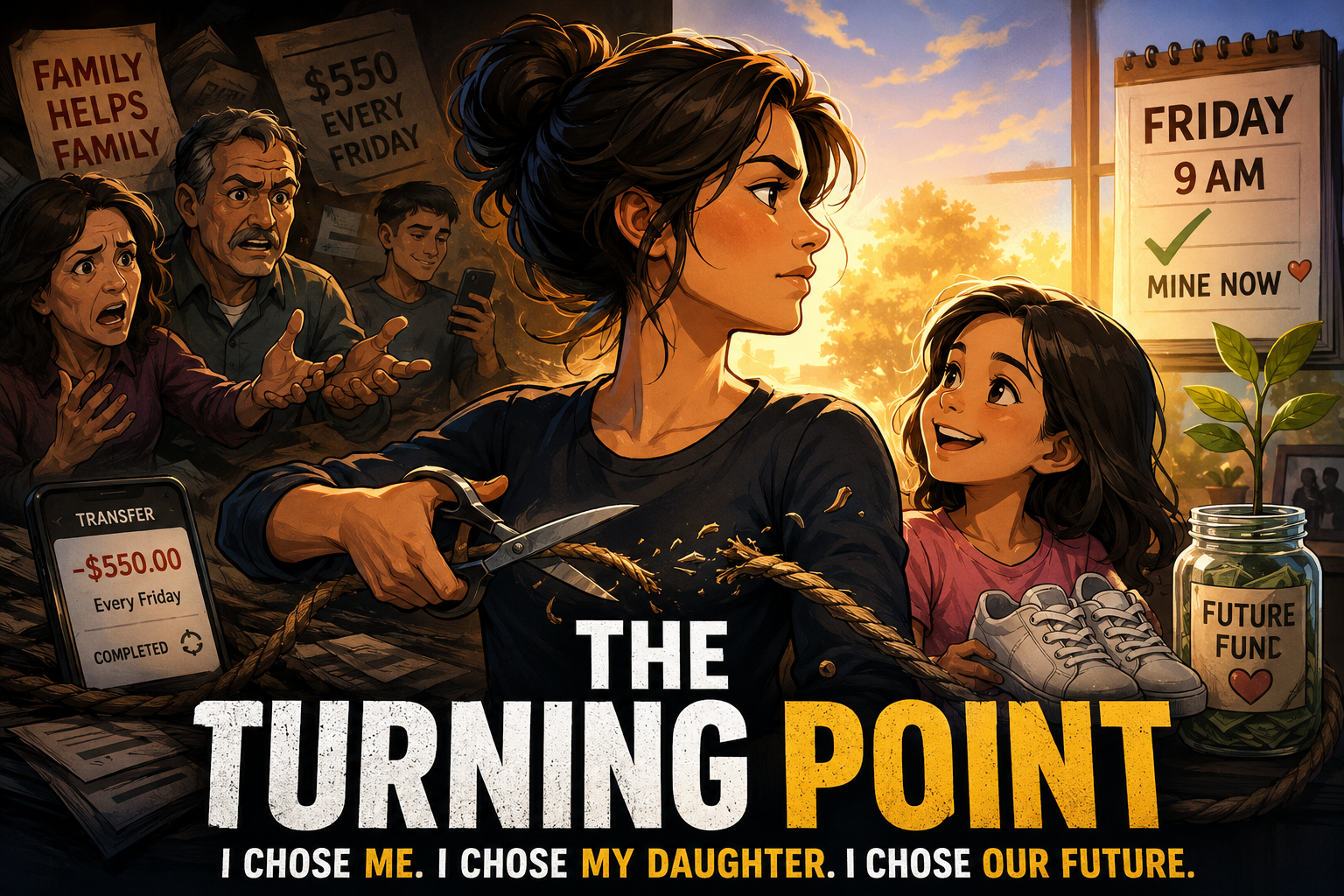
But over time, “help” stopped looking like support—and started looking like dependency. Bills piled up at their house while mine carried the weight. My daughter wore patched shoes while I paid for comforts I never saw. And every time I hinted at reducing the amount, I was reminded: family helps family. Until the day that illusion broke.
THE BIRTHDAY THAT CHANGED EVERYTHING
It was Lily’s birthday.
A simple party. Balloons from the dollar store, homemade cake, small hopes wrapped in a child’s expectations.
We waited.
No grandparents.
No messages.
Later, I called.
“They’re at Danny’s,” my father said casually. “He insisted. It’s just easier there.”
Something in that sentence cracked open everything I had been holding together.
Easier.
Not important. Not equal. Just easier.
That was the moment I understood where I stood in their world.
CUTTING THE LINES
That night, I didn’t cry. I didn’t argue.
I acted.
I canceled the weekly transfer.
Then I removed every financial thread connecting us—phone plans, co-signed loans, emergency cards I had been silently carrying for years.
Fifteen minutes.
That’s all it took to undo three years of obligation.
Then the calls started.
Anger. Confusion. Demands.
“How could you do this?”
But I didn’t answer.
I had already said enough by stopping.
THE BACKLASH
The first week was loud.
Voicemails. Messages. Accusations. Guilt dressed up as concern.
“You’re abandoning your family.”
“You’re selfish.”
But something unexpected happened underneath it all.
Silence in my own life.
No more weekly drain. No more quiet anxiety every Friday morning. No more financial fear disguised as duty.
For the first time, I could see my money—and my life—clearly.
I bought my daughter new shoes. Real ones. Not patched. Not temporary. Just hers.
And she smiled like the world had finally corrected itself.
THE CONFRONTATION
My mother came to my home.
She didn’t come quietly.
She came with accusations, entitlement, and history behind her voice.
“You think you can just cut us off?”
But I didn’t move backward this time.
I didn’t explain. I didn’t soften.
I simply said the truth:
“You said my family doesn’t count the same way. So I adjusted my life accordingly.”
For the first time, she had no response that could reset the old dynamic.
Because the old dynamic was gone.
REBUILDING
Months passed.
Thanksgiving came and went without tension, without travel, without obligation.
We stayed home.
We laughed.
We lived.
My savings grew for the first time in years. My daughter’s future fund replaced the weekly transfer. The money finally stayed where it belonged.
And slowly, something shifted inside me too.
Guilt stopped sounding like truth.
It started sounding like programming.
THE REVERSAL
Eventually, the truth of their situation surfaced.
They struggled.
Bills. Loans. Pressure. The same reality I had been quietly absorbing for years now belonged to them.
But I didn’t return to the role I had escaped.
Because helping someone survive is different from being responsible for their choices.
And I had finally learned the difference.
Even Danny, the “established” one, eventually admitted it:
“We were all just trying to look stable.”
That was the system I had stepped out of.
THE FINAL CALL
Years later, my father called.
My mother was in the hospital.
They needed help again.
But this time, there was no panic in my chest.
No urgency.
No collapse into old patterns.
“I can’t help financially,” I said calmly. “But I can help you find resources.”
And for the first time, that answer stayed final.
A NEW LIFE
Life didn’t become perfect.
But it became mine.
My daughter grew up in a home where stability wasn’t borrowed from sacrifice. Where birthdays were attended. Where love didn’t come with invoices attached.
Friday mornings changed.
Instead of money disappearing, it grew.
Instead of anxiety, there was planning.
Instead of obligation, there was choice.
WHAT REMAINED
My parents are still alive. We speak sometimes. Holidays mostly. Distance now replaces dependency.
There is no anger left—only clarity.
I didn’t destroy the relationship.
I stopped financing it.
And that made all the difference.
THE LESSON
Some ties don’t need repairing.
They need redefining.
Because love without respect becomes obligation.
And obligation disguised as family can cost you years of your own life.
I learned that too late—but not too late for my daughter.