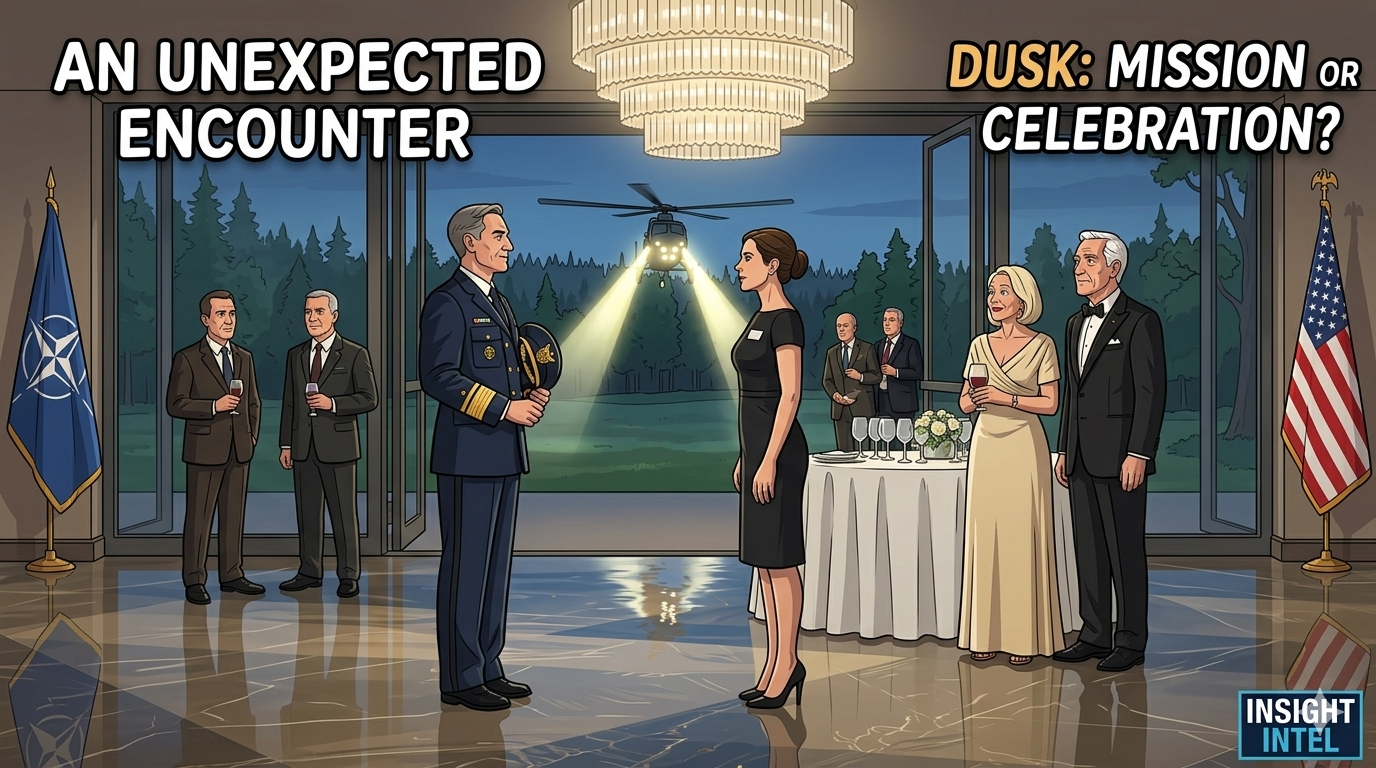
My Parents Mocked Me at the Class Reunion—Until the Helicopter Landed: “Madam General… We Need You.”
They didn’t hug me when I walked in.
My father looked right through me, the way you look through glass when you are more interested in your own reflection than whatever is standing on the other side. My mother leaned toward him and whispered, “You came?” in the same tone someone might use if an uninvited stranger had wandered into a private reception and begun helping herself to the open bar. No one waved me over. No one said my name with surprise or warmth. No one had saved me a seat. I was still their daughter, technically, but standing in the doorway of that ballroom, I felt like a ghost in low heels and navy silk.
Until the sky split open and the helicopter came for me.
This is not one of those stories where someone finally screams and everyone in the room falls silent because the truth is theatrical enough to be believed. It is worse than that. It is one of those stories where silence does the real damage. The kind of silence that gets practiced over years, polished until it looks like dignity, then weaponized so neatly that by the time you notice what it has cost you, half your life has already gone missing.
I arrived at the reunion alone. No aide, no driver, no black sedan with tinted windows. No visible markers of importance. I wore a navy sheath dress I had once worn beneath a military overcoat on a winter briefing day no one in that ballroom would have recognized. My hair was pinned up simply. My jewelry was minimal. The valet barely glanced up when I handed him my keys. To him I was just another middle-aged woman arriving alone to remember things she probably shouldn’t. I preferred it that way. I had spent too many years learning the value of entering a room without announcing what I was capable of.
Inside the Aspen Grove Ballroom, laughter moved in waves over polished marble and gold-lit chandeliers. The room had been dressed for nostalgia the way expensive places dress for everything else—with enough care to make every imperfection look intentional. There were floating candles in tall glass cylinders, old yearbook photographs projected softly across one wall, and a photo backdrop framed with white roses and dark greenery that looked as though it had cost more than a semester at a state school. The DJ had chosen a playlist designed to flatter our generation just enough to keep people smiling at their own youth. Everywhere I looked, there were people I had once known by lockers, electives, lunch tables, debate rankings, chemistry grades, gossip chains, prom rumors.
My heels clicked against the floor as I scanned the crowd for one familiar face even though, if I’m honest, I already knew what I would find.
My mother stood near the photo wall in a silver-gray dress that made her look almost regal under the lights. She had a drink in one hand and the kind of smile she reserved for rooms where appearances mattered more than truth. My father stood beside her, broad-shouldered and pleased with himself in a midnight suit that made him look exactly the way he liked to look—successful, composed, unburdened by anything messy enough to humanize him. They were both looking at a framed graduation portrait of my younger brother Bryce.
The caption beneath the photo read: Bryce Dorsey, Valedictorian, Harvard, Class of 2009.
There was no photo of me. Not one. Not from student council. Not from orchestra. Not from model UN. Not from the class presidency. Not from graduation. Not from the international relations club I had founded because I wanted other kids from our small town to understand that the world was bigger than our county line and more complicated than the stories adults told to keep themselves comfortable. If a stranger had walked into that room and studied the display, they would have assumed my parents had one child, a brilliant son, and perhaps an empty space in the family tree where no one had ever stood long enough to be named.
I took a breath and stepped closer.
My mother saw me first. Her smile dimmed, not entirely, just enough to show that my arrival had disturbed the composition of whatever she wanted the evening to look like.
“Oh,” she said. “You came.”
No hug. No surprise sharpened into tenderness. No “Look at you.” No “It’s been too long.” Just that one small sentence, thin as a pin.
My father turned next. His eyes landed on me, took me in, then moved away almost immediately, as if the sight of me required no more attention than a coat someone had left on the wrong chair. There are people who know how to hurt you without moving any muscle that wasn’t absolutely necessary. My father had always been one of them.
I opened my mouth, then closed it again.
“Where are you sitting?” my mother asked, already distracted by someone waving to her from across the ballroom.
“Table fourteen, I think,” I said.
She blinked. “Near the back?”
I nodded.
“That makes sense,” she said.
Then they drifted away. Just drifted. No offer to walk me in. No question about how I had been. No interest in the years that had passed since they last saw me at a funeral where even grief had not softened them. They simply moved back into the current of people who knew how to admire them in ways that made them feel safe.
I walked alone through the room, past the tables nearest the stage where the name cards included titles that had been carefully printed beneath each guest’s name. Dr. Patel. Senator Ames. CEO Lynn. Judge Carver. Gold-edged cards. Heavy linen stock. People whose identities were to be announced before they ever opened their mouths. Then I found mine.
Anna Dorsey.
No title. No rank. No distinction of any kind. Just the name, plain and naked as though I had never earned a single word after it. The table sat near the exit, half-hidden behind a column and close enough to the service corridor that I could hear kitchen doors thudding open and shut behind the wall. The chair cushion was slightly sunken. The centerpiece was missing two candles. Someone had put me in the part of the room reserved for people who were technically invited but not meant to alter the shape of the evening.
I sat down and looked toward the front again. My mother was laughing with a group of women near the dessert station, one hand raised lightly in the air the way she always did when she wanted to make a sentence sound effortless. Her voice carried farther than she ever realized.
“She always was the quiet one,” she said. “No ambition for the spotlight.”
Someone asked, “Didn’t she join the Army or something?”
My mother sipped her wine before answering. “Something like that. We don’t really keep in touch.”
That one stung in a quieter way than open cruelty. Not because it wasn’t true, but because of how she said it. Like distance had been some mutual weather system neither of us could control. Like I had drifted. Like they had not spent years sanding my edges off the family narrative until even my absence looked intentional.
They hadn’t just forgotten me.
They had erased me.
And for a long time, I had let them.
Not because I lacked courage. People misunderstand silence. They think it means fear. Sometimes silence means discipline. Sometimes it means service. Sometimes it means you are carrying information that doesn’t belong in ordinary rooms. But sometimes, if you keep using it long enough, it can be mistaken for permission. For twenty years I let them think I had vanished into some unremarkable corner of the military nobody important ever thinks about. Let them tell themselves I had chosen obscurity because that story cost them less than admitting what I had actually become.
But I hadn’t disappeared.
I had simply been serving where they never thought to look.
And that night, they were about to learn exactly how wrong they had been.
I barely touched my food. The shrimp cocktail was warm. The bread was stale. Even the wine tasted like regret. The ballroom smelled faintly of lilies and expensive perfume and the kind of hotel carpet that hides too many things under floral patterns. I was folding my napkin for the third time when Melissa Yung appeared beside me, phone in hand, wearing that half-apologetic expression people wear when they are about to hand you a kind of pain they know you didn’t earn.
Melissa had sat behind me in AP Government and beaten me exactly once on a history exam, an event she had referenced every time we ran into each other for the next decade as if I had been the Everest of her academic career. She had gone into journalism, then nonprofit work, then something in education policy that seemed to require both exhaustion and idealism. She still had the same intelligent eyes and the same tendency to hesitate before stepping into someone else’s wound.
“I thought you should see this,” she said.
She tapped her screen, pulled up an old email, and turned the phone toward me. It was dated fifteen years earlier.
The subject line read: Re: Removal Request, Anna Dorsey.
My heart didn’t jump. It dropped. There is a difference.
It was addressed to the Jefferson High Alumni Committee and sent from my father’s office email. My father, who had spent decades teaching his face to look respectable while doing ugly things with tidy language. The body of the message read:
Given Anna’s decision to discontinue her academic path and pursue non-traditional employment, we feel her inclusion in the upcoming alumni honor roll may cause confusion about our family’s values and narrative. Kindly remove her name from any future recognitions. We appreciate your understanding.
I stared at it. Not just the words. The precision. The deliberate elegance of the humiliation. My “non-traditional employment” had included four combat deployments, two intelligence commendations, command authority over operations most civilians would never hear about, and decisions heavy enough to alter whether other people made it home alive. To him, it had been a stain. Something inelegant. Something that disrupted the portrait.
Melissa cleared her throat softly.
“There’s more.”
She swiped again.
Another email. This one to the Medal of Honor nomination board.
From my mother.
Anna Dorsey has expressed her wish for privacy and anonymity. Please withdraw her nomination.
I had never written that. I had never asked for that. I had never once requested anonymity in connection with that nomination. In truth, I had barely known it was being considered until long after the window had passed. My mother had intercepted it, edited reality, and signed my silence for me.
They hadn’t just ignored my accomplishments.
They had stolen them.
I leaned back in my chair and felt the room tilt around me without physically moving. Somewhere to my left the DJ announced something cheerful. People clapped. A fresh slideshow began across the front wall—baby photos, prom night, graduations, college move-ins, wedding highlights, the curated trophies of ordinary public life. No image of me appeared.
I bit the inside of my cheek and remembered being seventeen in the dining room of our house, acceptance letter in hand, telling my parents I had chosen West Point.
My father had said nothing for a full minute. Then, in the driest tone imaginable: “So you’re choosing the barracks over the Ivy League?”
“I’m choosing purpose,” I had said.
He shook his head and left the room.
That had been the pattern ever since. Leave the room. Leave the conversation. Leave the daughter. Every time I chose something they could not display cleanly at a fundraiser or country club dinner, they stepped away and let absence do the rest. My mother had been subtler about it, of course. She didn’t leave rooms. She redecorated them until I no longer matched.
I looked at Melissa. She didn’t say anything else. She didn’t need to. I know some of you reading this are probably clenching your jaw right now, thinking, They did what? Yes. Same. The hardest thing about betrayal is that it doesn’t always arrive with broken glass and shouted words. Sometimes it signs a neat email and hits send.
I wasn’t angry yet. Anger would come later, sharp and clean and useful. Right then, what I felt was older than anger. A numb kind of ache. The kind that whispers, You were never really theirs. Not in the way you thought. And for the first time in years, I let myself believe it.
Dinner had barely settled into its second course when the first toast began. The MC—an old theater kid turned real estate guy with a wireless microphone, a perfect smile, and the unstoppable energy of a man who believes every room improves under his narration—lifted his glass and said, “Here’s to the brightest stars of 2003. Some of us went corporate, some went creative, and hey, did anyone here become a general?”
Laughter rolled across the room, light and harmless on its face, the kind that only hurts if it lands where the speaker didn’t intend it to.
My father leaned back in his chair near the front. Without even glancing in my direction, he said loud enough for half the ballroom to hear, “If my daughter’s a general, then I’m a ballerina.”
People laughed harder.
Someone at his table added, “Didn’t she join the military for a semester or something? Or was it a summer program?”
My mother sipped her wine and said, with that familiar frost-edged tone, “She always did have a flair for dramatics. She’s probably still on some base peeling potatoes.”
That one landed.
It landed because it was so specific in its contempt, so relaxed in its certainty. The table howled. Even the DJ, who had no reason to know anything, smiled reflexively because contempt in a room full of confident people often gets mistaken for humor.
And I sat there at Table 14, near the exit, facing a room full of people who had once borrowed my debate outlines and asked to copy my chemistry lab answers and watched me win elections without ever understanding what it cost me to keep smiling at home afterward.
No one corrected them.
No one said, Actually, she led missions you will never be cleared to read about.
No one stood.
Even Melissa, two tables away, looked over at me and then back down at her plate, unable to hold my eyes for more than a second at a time. Not because she agreed. Because rooms like that train people quickly. They teach you where power is seated and how expensive it can feel to interrupt it.
The laughter went on, and I stayed very still. Still and small and carefully arranged, because training teaches you strange things. It teaches you how to move toward gunfire. It teaches you how to read a room before anyone else realizes it has turned. It teaches you how to absorb pressure without showing where it entered. So I sat there with my hands folded in my lap and my face composed and let the bomb go off exactly where it had been aimed.
It wasn’t just the laughter that hurt. It was the ease of it. The comfort. The way they erased my story as if it had no edges, no weight, no blood inside it.
Then the slideshow changed again.
Prom. Homecoming. College move-ins. Harvard. Law school. Graduate fellowships. Weddings. Babies.
No Anna.
And when my name finally appeared in the corner of a group photograph from model UN, someone behind me muttered, “Didn’t she drop out right after that?”
I stared at the screen. My face was barely visible, back row, slightly blurred. I remembered that day clearly because I had given the closing speech. But the image had been cropped to center Bryce in the lower corner, wearing a blazer two sizes too big and looking thrilled to be adjacent to something he hadn’t actually earned.
That was when it really sank in.
I had been written out.
Not forgotten. Not misplaced.
Rewritten.
My parents had done it with such care, such consistency, that it had worked. No one in that room knew who I was anymore. Worse, none of them cared enough to ask.
The night air felt different when I stepped out onto the balcony. Inside, they were cutting the reunion cake. My mother still had her champagne flute in hand. My father was mid-laugh. Bryce was surrounded by a circle of Ivy League smiles that had followed him since adolescence like devoted satellites. From where I stood, through the thick glass and reflected ballroom light, it all looked like a movie I had once belonged to and then been edited out of in postproduction.
I did not cry.
I was past crying.
Somewhere over the years I had traded tears for stillness, that hard quiet you build when the people who are supposed to love you teach you how to live without their approval. I rested my hands on the balcony railing and looked out at the resort lawn, the black sheet of the lake beyond it, the distant sweep of lights along the water. Then my phone vibrated in my palm.
No name. Just a secure notification.
MERLIN status updated. Threat level three increasing. Requesting eyes.
I stepped back from the railing, crossed the hall, and went up to my suite. I had booked the room without telling anyone. Not because I expected drama. Because habit had long ago replaced hope, and habit told me that if I was going to stand in a room full of people determined not to know me, I should at least give myself somewhere private to recover afterward.
Inside the suite, I shut the door, locked it, and drew the curtains. The hotel room shifted immediately from reunion overflow to command space. There is a certain kind of transition military life teaches you—one in which the personal disappears the moment the mission re-enters the room.
I crossed to the wardrobe, reached beneath the hem of the hanging dress bag, and pulled out the matte-black case hidden there. Fingerprint. Voice. Retinal ID. The lid released with a quiet mechanical click. The interface booted with a soft chime, and the glow of classified intel filled the silence like an old hymn.
MERLIN wasn’t theoretical anymore.
A live breach had occurred.
Multivector. International implications. Embedded signal traces inside a NATO archive. The kind of thing that sounds abstract if you have never worked inside modern conflict. The kind of thing that becomes very concrete when you understand how quickly one corrupted door becomes ten opened at once.
It wasn’t just noise.
It was war in code.
And they still needed me.
While my family toasted to the versions of success they could photograph, a cyber operations unit three time zones away was waiting on my instruction tree. Somewhere across the world, people whose names would never reach a ballroom slideshow were sitting beneath fluorescent lights trying to stop the kind of breach that starts in one data corridor and ends in a funeral.
I sat on the edge of the bed and took off my heels. Then I reached beneath the false panel in my suitcase and unfolded the uniform.
Dress blues.
Polished insignia.
Silver stars.
I didn’t put it on. Not yet. Instead I stared at it and thought about the Medal of Honor nomination my mother had intercepted with a fabricated email. How easy it had been for her to say I wanted privacy. To say I preferred anonymity. To speak over me because I never made noise.
Because I did not ask to be seen.
Silence had protected me for years.
But it had also made me invisible.
And that night, after watching them laugh, erase me, rewrite the narrative in real time, silence no longer felt like a shield.
It felt like consent.
I stood and walked back to the window. Below me the ballroom glittered through the glass, everyone so sure of their roles, so confident in the story they had built without me. But the truth was that I had been running operations larger than anything anyone in that room could imagine. I had signed off on missions whose failure rates would have broken the sleep of every financier and politician at those front tables. I had answered calls that rearranged continents faster than class reunions rearranged name cards.
I was still the fulcrum.
The pivot.
The story no one saw coming.
My phone pinged again. Encrypted voice message. Colonel Ellison’s voice came through low and sharp.
“Ma’am, requesting extraction window. MERLIN escalation confirmed. Pentagon needs your presence in D.C. by 0600.”
I didn’t hesitate.
“Confirmed,” I said.
The world still called for me, even if my family never would.
And in that moment, something inside me settled.
Not peace.
Clarity.
They didn’t need to know who I was.
But they were about to find out.
The music downstairs had shifted into something jazzy and self-congratulatory by the time I returned to the ballroom. The MC was back with the microphone, grinning as if the evening were following exactly the arc he had imagined.
“And now,” he said, “our final toast. Mr. and Mrs. Dorsey, proud parents of Bryce Dorsey, Harvard grad and rising star in venture capital.”
People clapped. My mother stood with both arms opened slightly like she was accepting an award. My father raised his glass like a field commander surveying a well-managed campaign. Bryce flashed the polished smile you only develop after being told your whole life that the room was already yours.
“And of course,” the MC added with a chuckle, “shout-out to the Dorsey family’s other child, wherever she ended up.”
Laughter rippled across the room like static.
Then it hit.
A sound.
Low. Rumbling. Sharp.
The chandeliers trembled. Napkins fluttered. Water glasses rang softly against silverware. Outside, beyond the ballroom windows, the sky seemed to crack open with the heavy, unmistakable thump of helicopter blades.
It wasn’t subtle.
The lights flickered as a matte-black military chopper descended over the lawn, stealth paint swallowing and reflecting the floodlights in shifting dark planes. Rotor wash tore across the grass. Guests surged toward the windows, phones already raised, voices spilling into confused panic and excitement.
My father frowned. “What in the world—”
The front doors blew open with wind and noise.
Two figures entered first, uniforms immaculate, boots striking the marble in sharp synchronized steps. One of them was Colonel Ellison. The other was a younger officer carrying a locked case and wearing the kind of expression that says he has neither the time nor the patience for civilian confusion.
Ellison scanned the room the way precision weapons acquire a target.
Then he saw me.
He walked straight past the CEOs, the senators, the alumni committee donors, the golden tables nearest the stage. Past Bryce. Past my parents. Past the smiling people who had laughed while my life was reduced to a joke.
He stopped three feet in front of me, squared his shoulders, and saluted.
“Lieutenant General Dorsey, ma’am. The Pentagon requires your immediate presence.”
The room froze.
Not metaphorically. Actually froze. Chairs stopped creaking. Forks hung midair. People who had spent the evening performing their lives forgot, all at once, what expression was supposed to come next.
My mother’s smile slid off her face like wax melting under heat. My father’s wine glass tilted so sharply I expected it to spill. Bryce sat there blinking in tiny stunned delays, as if his brain needed extra time to reconcile the words Lieutenant General with the sister he had learned to ignore on cue.
Someone whispered, “Lieutenant what?”
Ellison didn’t flinch.
“Ma’am, intelligence confirms active movement on MERLIN. Immediate extraction authorized.”
I nodded once.
Across the room, the MC lowered his microphone. The DJ did not even think to kill the music; he simply stood there staring. And then, because reality had not yet finished humiliating everyone who had mistaken it for fiction, another voice broke through.
A reporter invited to cover the reunion stepped forward with a trembling sheet of paper in hand.
“I’ve just received this,” she said. “An internal leak from the Jefferson High Board. An email from the Dorseys in 2010 requesting the removal of General Dorsey’s name from the alumni wall to avoid confusion over their family legacy.”
A gasp moved through the room, deep and involuntary, the kind that takes all the air with it.
I turned to face my parents.
My voice was steady.
“You didn’t just reject me. You tried to erase me.”
My mother opened her mouth, then closed it. My father took one step forward.
“Anna, we—”
“No.”
I didn’t raise my voice. I didn’t need to.
“You don’t get to speak now.”
Then I turned back to Ellison.
“Let’s go.”
He handed me the classified folder. “Chopper’s ready, ma’am.”
I walked past my mother. Past my father’s stunned silence. Past Bryce’s broken stare. Past the table I had never been meant to matter at. As I stepped into the cool night air with the rotor wash whipping my hair loose from its pins, I could hear the whispers building behind me.
“She’s a general.”
“Wait—that’s the daughter?”
“They lied about her.”
“Why would her own parents—”
Some truths do not need a microphone.
Just a moment loud enough to shake the sky.
Inside the helicopter, noise became structure. Headset. Harness. Secure tablet. The night below the aircraft turned into black water and stringed lights and roads like veins. Ellison sat opposite me, braced and unreadable.
“We have two possibilities,” he said once we were airborne and the cabin seal had stabilized. “Either MERLIN is a distraction wrapped around a secondary insertion, or this is the insertion and they want us looking at the wrong archive first.”
I took the tablet he handed me and began reading while the reunion fell away beneath us like a set piece somebody else had built.
There are moments when the body tries to insist on feeling everything at once—betrayal, humiliation, vindication, grief, anger—but training doesn’t eliminate feeling. It orders it. Files it. Tells it when it may return. By the time we crossed the state line, the daughter had been set aside and the general was fully present.
MERLIN had originated as a low-confidence pattern: fragmented signal traffic embedded across routine archive maintenance logs, a cluster of anomalies too elegant to be amateur and too patient to be random. Over six weeks it had evolved into something worse—a lattice of permissions moving between allied systems without tripping legacy alarms. Whoever built it understood not just code, but habit. Bureaucratic habit. Military habit. The human laziness that causes people to trust the familiar shape of their own procedures.
By 0300 I had spoken to three units, rerouted an authorization chain, and approved a lock on two compromised corridors that would have caused an international incident if we had moved six hours earlier without proof. By 0450 we were in D.C. By 0525 I was in a secure conference room under white light and flags, still smelling faintly of rotor fuel and reunion perfume.
Someone set a garment bag beside me.
Dress blues.
The ceremony had already been scheduled. It was not theatrics. It was timing. The Medal of Honor citation had finally been pushed through after a buried chain of recommendations resurfaced under a congressional review of classified service recognitions. My mother’s false email had delayed it. It had not erased it forever.
By dawn, the South Lawn was full.
Press. Cadets. Military brass. Senators. Cabinet officials. Even the President, who looked more solemn than triumphant as he read the citation for acts of service beyond visibility, for protecting not only the mission but the dignity of the invisible. When the ribbon settled around my neck, it did not feel heavy.
Not like silence did.
Not like two decades of being rewritten by the people who were supposed to know me best.
I did not smile for the cameras. I stood straight, shoulders back, because this was never about spectacle. It was about truth.
Somewhere in the third row sat my mother with perfect posture, pearl earrings catching the morning sun. My father stared straight ahead as if he could out-discipline the reality in front of him by refusing to look ashamed. I did not turn toward them. They did not cry. They did not clap. But Melissa did. And so did Colonel Ellison, standing just behind the cameras, chin lifted with a pride too disciplined to become sentimentality.
Later that day I visited Jefferson High.
The Hall of Legacy had been redone in stone and bronze, all school colors and donor plaques and that particular brand of local reverence small towns reserve for the stories that flatter them most. My name had been restored. Not in gold. Not in marble. Just in a clean bronze plaque with simple words:
Anna Dorsey
Led in silence. Served without needing to be seen.
A few cadets gathered nearby, whispering to one another the way the young do when they are standing near the idea of a future they want to claim without quite knowing how. One of them stepped forward. Freckles. Nervous shoulders. About the age I had been when I left for West Point with a duffel bag and a father who couldn’t imagine ambition unless it wore a familiar suit.
“Ma’am,” she said, voice shaking, “you’re the reason I enlisted.”
I nodded once.
That was enough.
I do not know if my parents stayed long enough to see the plaque. I don’t need to know.
That is the thing about being abandoned, properly abandoned, not in the dramatic sense but in the daily civic one—the kind where your existence becomes inconvenient to the family version of itself. Once you stop trying to be welcomed back, you get to choose what you carry forward and what you finally lay down.
For years I thought what I was laying down was anger. It wasn’t. It was hope. Hope that they would someday look up and see me clearly on their own. Hope that silence, if carried nobly enough, would be rewarded with recognition. Hope that parents who once loved the child in you cannot fully extinguish the adult you become.
I know better now.
Some people do not stop loving you. They simply stop loving any version of you that does not reflect well on them.
Bryce called two weeks after the reunion.
I almost didn’t answer. Not out of bitterness. Out of economy. There are some conversations you only accept once you are sure they will not reopen a wound you have already finished stitching. But I answered because curiosity, unlike hope, can survive almost anything.
He sounded smaller than I remembered.
“Anna?”
I hadn’t heard my brother say my name that way in years. Without irony. Without indifference. Without the strange lazy distance he developed once he understood he was the child who would be publicly kept.
“Yes.”
He exhaled, and I could hear how carefully he had been rehearsing whatever came next.
“I didn’t know,” he said.
That sentence almost made me laugh, not because it was funny, but because it was the most Bryce thing he could have said. He had spent a lifetime not knowing what he didn’t need to know. Not out of malice. Out of design.
“I believe you,” I said.
He was quiet a moment.
“That somehow makes it worse.”
I said nothing.
He went on. “Mom’s been calling people. Trying to say she was protecting your privacy. Dad says the school overreacted. He’s talking about legal options.”
“That sounds like him.”
“He asked me to back him up.”
“And?”
Another long silence.
“And I told him if he says your name like it belongs to him again, I’m done.”
That caught me off guard. Not because I wanted it to. Because I hadn’t realized there was anything in me still capable of being caught by family.
Bryce kept talking, and for the first time in our adult lives he sounded less like the son they built and more like a man hearing his own inheritance crack in half.
“I found other stuff,” he said. “Folders. Drafts. Notes. Mom kept everything. She has copies of letters from West Point she never gave you. Congratulations letters. Recommendations. One from your civics teacher.”
I closed my eyes.
“That one I’d like.”
“I’ll send everything.”
And he did.
A box arrived four days later. Inside were twenty years of curation and interception. Commendation notices. Nomination letters. School records. Newspaper clippings with my face cut out. A district award certificate that had never been displayed. A printed email chain in which my mother explained to a relative that my “government work” should not be mentioned at Bryce’s graduation party because “the attention ought to remain where it belongs.”
I spent an entire night going through that box.
There is a special exhaustion that comes from learning your disappearance was administrative.
Not emotional. Not impulsive.
Systematic.
The next month, I testified quietly before a congressional committee reviewing recognition interference in classified service cases. No cameras in the room. No dramatic speech. Just facts. Dates. Names. Evidence. The committee didn’t care about my family wound. They cared that a civilian had successfully manipulated a recognition process tied to national service.
That was fine with me. Truth does not become less true because the people hearing it are interested in different consequences.
Meanwhile, Jefferson High restored my record publicly. The alumni board issued a formal correction. The local paper ran a profile under a headline so earnest it made me wince: The Daughter They Tried to Hide. Messages began arriving from classmates, teachers, neighbors, people who had once smiled vaguely at my parents and accepted the story because it was easier than asking for another. Some apologized. Some defended themselves. Some said nothing about the past and just wanted to tell me they were proud now, which is another kind of cowardice but at least a quieter one.
Melissa remained the only one who understood the real shape of it.
She called me one evening while I was still at the Pentagon, her voice softened by that strange combination of affection and fury she had perfected since high school.
“Have you seen your mother’s statement?”
“No.”
“She says she was trying to protect you from public scrutiny.”
I closed the secure file in front of me and leaned back in my chair.
“Of course she does.”
“And your father says the reunion moment was an orchestrated embarrassment designed to damage the family.”
I let out a breath that wasn’t quite a laugh.
“They always think reality is theater when it stops obeying them.”
Melissa was quiet for a second. Then she said, “For what it’s worth, the room turned on them the second Ellison saluted.”
I could picture it. The shifting body language. The invisible transaction by which admiration leaves one person and lands on another. I should tell you that felt satisfying. Parts of it did. But satisfaction is rarely as clean as people imagine. When humiliation happens to strangers, it can look like justice. When it happens to your parents, it also looks like inheritance curdling in real time.
I didn’t want them destroyed.
I wanted them unable to pretend anymore.
There is a difference.
Summer passed. MERLIN resolved into three linked operations and one arrest so quiet it never reached the papers. My days filled again with the kind of work that consumes entire moral vocabularies without ever becoming public language. Briefings. Approvals. Visits to units whose names I cannot put on paper. The Medal lived in a drawer. The bronze plaque at Jefferson gathered fingerprints from cadets on field trips. Life did what it always does after revelation.
It kept going.
In September, I went back to the reunion hotel for a defense-adjacent conference and stood for a full minute in the same ballroom where they had laughed.
The room looked smaller without memory inflating it.
No chandeliers trembling. No helicopter. Just hotel carpeting, stacked banquet chairs, staff laying linens. I stood near where Table 14 had been and realized something I should probably have known sooner.
The room had never contained my humiliation.
I had.
And because I had, I was also the one who got to decide when it stopped containing me.
That night, back in my room, I called the one person I hadn’t spoken about the reunion with in any honest detail.
Colonel Ellison picked up on the second ring.
“You never call socially, ma’am,” he said.
“That’s not true.”
“It is, but continue.”
I stood by the window, looking down at the same lawn where the helicopter had landed months earlier.
“Do you know what bothered me most?” I asked.
“The emails?”
“No.”
“The jokes?”
“No.”
He waited.
“It was how easy it was for them.”
That silence on the line was the respectful kind. The kind good officers learn when they understand something cannot be solved but can still be witnessed.
After a moment he said, “People tend to believe the stories that cost them the least.”
“Yes.”
“But they also tend to collapse when the cost changes.”
I thought about the ballroom. The salute. The moment the room recalculated my existence in front of me.
“That part,” I said, “was almost worse.”
“How so?”
“Because I realized most of them didn’t need truth. They needed permission to respect me.”
Ellison was quiet again.
Then he said, “You know what I respect about you?”
I waited.
“You never asked for theirs.”
That stayed with me.
Not because it healed anything. Because it named something I had not fully understood. My silence had not always been surrender. Sometimes it had been refusal. Refusal to perform myself into legitimacy for people determined not to grant it.
The trouble is, refusal and erasure can look similar from the outside.
Which is why the helicopter mattered.
Not because it rescued me.
Because it translated me.
It told a room that had only ever trusted spectacle that I had always been substantial, even when they lacked the literacy to see it.
Months later, on a cold morning in January, I received a short handwritten note in the mail. No return address. My mother’s stationery. Cream paper. Narrow blue border.
Anna,
I hope one day you understand we did what we thought was best. Some lives are easier carried privately. I’m sorry the reunion became unpleasant. Your father is not handling things well.
Love,
Mother
I read it once. Then again.
No admission.
No ownership.
No daughter.
Just posture.
I burned it in a small metal bowl on my back patio that evening while the air smelled like cedar and distant rain.
Not out of rage.
Out of completion.
Bryce came to see me in March.
He had lost some of the sleekness that came from living inside other people’s expectations and looked, for the first time in his life, unfinished in a way I trusted. We had coffee. Then lunch. Then a second lunch three weeks later. Siblings are strange when the family system that arranged them begins to fail. We were not suddenly close. That would have been false. But we had begun, at least, to speak without performing our assigned roles.
At one point he said, “Do you think they ever loved you?”
I thought about that for a long time.
“Yes,” I said finally. “Just not enough to let me become inconvenient.”
He looked at the table.
“That sounds worse.”
“It is worse,” I said. “Because it means the love was real. It just wasn’t brave.”
He sat with that for a long moment.
Then he nodded.
I think that was the first truly adult conversation we ever had.
By spring, the Hall of Legacy at Jefferson had become a minor pilgrimage point for cadets and civic groups. I was invited back to speak. I declined twice. Accepted the third time. When I stood at the podium in the auditorium, I did not talk about my parents. I did not talk about betrayal, or erasure, or helicopter blades. I talked about service. About invisibility. About the danger of confusing recognition with worth.
At the end, a teacher asked whether I regretted not correcting the record sooner.
“Yes,” I said. “And no.”
The room waited.
“I regret the years I spent believing silence was always the more honorable choice. But I don’t regret the life I built while other people were misunderstanding it. I did not lose those years. They did.”
That was true enough to end on.
If you have ever felt erased by your own family, by the very people who were supposed to know how to say your name without cutting it smaller, then you already understand what I learned too late: being unseen is not the same as being unreal. And the day the world catches up to the truth of you is not the day you become important.
It is only the day other people lose the right to pretend you never were.
If you’ve ever been written out, drop a 1 in the comments. If you made it out stronger, even in silence, drop a 2. Not for the algorithm. Not for attention. Just so the people still sitting at their own Table 14 know they are not alone.