PART 3
Pierce didn’t answer.
He entered the third account.
Then the fourth.
Then the fifth.
Every single one returned the same result.
Empty.
Closed.
Transferred.
My father’s face began turning red.
“Stop,” he ordered.
Pierce froze.
“What are you doing? These accounts held millions of dollars. You’re telling me they’re all empty?”
“I am telling you what the financial institution’s verification system is reporting.”
“Then call the bank!”
Pierce picked up his phone.
I remained seated, quietly watching the scene unfold.
Desmond finally put his phone away.
“Preston, what did you do?”
I looked at him.
“What do you mean?”
“Where’s the money?”
I almost laughed.
For six months, my family had treated me like a careless child who couldn’t be trusted with his own inheritance.
Now, suddenly, I was responsible for explaining every dollar.
I folded my hands.
“That’s an interesting question, Desmond.”
Dad turned toward me.
“Don’t play games with us.”
“I’m not playing anything.”
“You knew this was going to happen!”
I looked directly into his eyes.
“Actually, Dad, I knew something was going to happen. I just wasn’t sure how desperate you would become.”
The room fell silent.
Pierce slowly lowered his phone.
My mother looked between us.
“Preston, honey, what is your father talking about?”
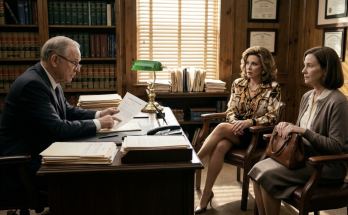
I stood up and adjusted the sleeves of my navy-blue suit.
“Maybe we should start with a different question.”
I pointed toward the monitor.
“Why were you planning to take control of my inheritance?”
Dad’s expression changed.
For the first time that morning, he looked genuinely uncomfortable.
“This is a family matter.”
“No. It became a legal matter when you hired an attorney to prepare documents transferring control of my entire estate without my permission.”
Pierce cleared his throat.
“Preston, I think there may be some misunderstanding regarding the purpose of this agreement.”
I turned toward him.
“Then let’s remove the misunderstanding.”
I reached into my briefcase and placed a thin folder on the table.
It contained copies of everything I had discovered during the previous six months.
Bank security notifications.
Unsuccessful login attempts.
Device information.
Emails.
Legal correspondence.
And one particularly interesting document.
I slid the first page toward Pierce.
“Do you recognize this?”
He looked down.
His face went pale.
My father grabbed the document.
“What is this supposed to be?”
“An access request submitted to one of my investment institutions six months ago.”
Dad barely glanced at it.
“So?”
I pointed to the bottom of the page.
“The request was submitted using your office’s internet connection.”
My mother covered her mouth.
Desmond looked at Dad.
“Wait. What?”
I continued.
“The request also included my date of birth, my grandmother’s estate information, and several account details that weren’t publicly available.”
Pierce adjusted his glasses.
“Those records could have been obtained through several legitimate channels.”
“Perhaps.”
I opened the second folder.
“But I also have the security department’s report identifying the device used to submit the request.”
I turned another page.
“It’s registered to your firm, Mr. Pierce.”
Nobody spoke.
My father slowly placed the document on the table.
“Preston, you’re making a terrible mistake.”
“Am I?”
“You’re accusing your own family of stealing from you.”
“No, Dad. I’m asking why someone tried to access my accounts without authorization.”
He stepped closer.
“Because we were trying to protect you!”
I looked at him for several seconds.
Then I asked the question I had been waiting to ask.
“Protect me from what?”
He opened his mouth.
Nothing came out.
I pulled another document from the folder.
This time, it was a copy of the lawsuit against Desmond’s real estate company.
I placed it directly in front of my brother.
“Maybe you can explain this.”
Desmond stared at the paper.
His lips parted.
“Where did you get that?”
“Public court records.”
He snatched the document and began reading.
His hands started shaking.
My father immediately stepped between us.
“This has nothing to do with the inheritance.”
I raised an eyebrow.
“Really?”
I turned to the page showing the amount investors were seeking.
$9.5 million.
Then I looked at Desmond.
“That’s a very expensive problem.”
Desmond threw the document onto the table.
“It’s a business dispute!”
“Is that what you call it?”
“You don’t understand anything about real estate!”
“Then help me understand.”
He looked toward our father.
Dad gave him a warning glance.
That was enough to tell me I had touched something they desperately wanted to keep hidden.
I sat down again.
“Go ahead. I’m listening.”
Desmond rubbed his forehead.
“The development was supposed to be profitable. We had investors. We had construction contracts. We had buyers waiting to purchase the properties.”
“And what happened?”
“The market changed.”
“That’s unfortunate.”
“You think this is funny?”
“No. I think the people who invested their savings into your company deserve an explanation.”
He slammed his fist against the table.
“You have ten million dollars sitting around while I’m dealing with this disaster!”
There it was.
The truth.
Not protection.
Not family responsibility.
Not concern about my move to London.
They believed my inheritance belonged to them whenever they needed it.
I slowly stood up.
“That’s why you wanted me to sign?”
My father stepped forward.
“Desmond is your brother.”
“I know.”
“Family helps family.”
“I agree.”
“Then why are you doing this?”
I looked at him.
“Because helping someone is different from letting them steal from you.”
My mother began crying.
“Please, boys. Stop this. We can work everything out.”
I turned toward her.
“Mom, did you know about the lawsuit?”
She didn’t answer.
“Did you know Dad was planning to use my inheritance to cover Desmond’s debts?”
Her eyes filled with tears.
“Your father told me everything would be temporary.”
“Temporary?”
I looked at the forty-page agreement.
“Did he tell you I would lose control of my entire inheritance?”
She lowered her head.
That silence hurt more than anything else.
Because my mother had always been the person I thought would protect me.
Even when Dad was angry, even when Desmond received everything, I believed she loved me enough to stand up for me.
But she had been standing beside him the entire time.
I looked away.
“Pierce, may I see the original agreement?”
He hesitated.
Then he pushed the document toward me.
I opened it to page twenty-eight.
The highlighted section was exactly where I expected it to be.
Under the proposed arrangement, my father would become the sole authorized manager of the inheritance.
He would have the power to move funds, sell investments, approve transactions, establish new financial arrangements, and appoint additional representatives.
There was also a clause granting him broad authority over future distributions.
I turned to the final pages.
“There’s something interesting here.”
Pierce looked uncomfortable.
“What is it?”
I tapped a paragraph.
“This document gives my father authority to manage the estate for my benefit. But it also allows him to transfer funds into affiliated entities under certain circumstances.”
Dad crossed his arms.
“That’s standard language.”
“Perhaps. But who owns the affiliated entities?”
Nobody answered.
I took another sheet from my folder.
It showed the ownership structure of several companies connected to my father’s business interests.
One of them had the same registered business address as a company listed in Desmond’s lawsuit.
I looked at Pierce.
“Would you like to explain why my inheritance was supposed to be transferred through a company connected to my brother’s failed development?”
Pierce leaned back.
My father suddenly looked furious.
“That’s enough!”
“No, Dad. I think we’re finally getting somewhere.”
He pointed toward the door.
“Get out.”
I smiled faintly.
“I was actually planning to leave.”
I began collecting my documents.
But before I could close my briefcase, Pierce spoke.
“Preston, wait.”
I stopped.
He looked at my father, then at the papers scattered across the table.
“I think we need to discuss one more thing.”
Dad’s expression hardened.
“Pierce, don’t.”
The attorney ignored him.
“There is an additional document attached to the estate restructuring agreement.”
I looked at him.
“What document?”
He opened the leather folio and pulled out a sealed envelope.
“Your grandmother’s original estate instructions.”
My heart skipped.
I hadn’t expected that.
My grandmother had died four years earlier, leaving me her investment portfolio, several properties, and other assets.
She had always been careful about her financial arrangements.
When I was younger, she used to tell me something I never completely understood.
“Preston, money can make people show you who they really are. Never let someone confuse inheritance with ownership.”
I had remembered those words when I first discovered my father’s plans.
Now Pierce was holding something that had apparently been included in the agreement without my knowledge.
“Why is that attached?” I asked.
He looked uncomfortable.
“Your father requested it.”
I turned toward Dad.
“Why?”
Dad said nothing.
Pierce opened the envelope.
Inside was a document bearing my grandmother’s signature.
He read the first paragraph.
Then he stopped.
My father immediately reached for it.
“Give me that.”
Pierce pulled it away.
“Conrad, I don’t think you understand what this says.”
My mother stepped forward.
“What is it?”
Pierce looked at me.
“Your grandmother established a protective provision in her estate plan. It specifically addresses situations where another person attempts to obtain control of your inheritance through pressure, deception, or unauthorized financial activity.”
I felt my stomach tighten.
“What does the provision say?”
Pierce looked down again.
“It states that if evidence of such conduct is established, certain management powers and financial protections are activated through the independent estate administrator.”
I stared at him.
“Who is the independent estate administrator?”
Pierce hesitated.
Then he gave me an answer I hadn’t expected.
“Silas.”
I slowly exhaled.
Silas.
The same man I had visited several days earlier.
The man who had worked with my grandmother for decades.
My father looked like someone had just pulled the floor from beneath him.
“You knew about this?” he demanded.
I didn’t answer.
Pierce continued reading.
“The provision also states that no family member, including the deceased’s son, may override the beneficiary’s independent financial authority without proper legal authorization.”
Dad’s face turned crimson.
“This is ridiculous!”
Pierce placed the document on the table.
“Conrad, your mother specifically anticipated this possibility.”
My mother suddenly swayed.
“I’m not feeling well.”
She reached for the back of a chair.
Then her knees buckled.
Desmond rushed toward her.
“Mom!”
Pierce stood up.
I immediately moved around the table and caught her before she hit the floor.
Someone called emergency services.
For a few minutes, the conference room became chaotic.
Desmond knelt beside her, repeatedly calling her name.
My father paced near the window.
I remained beside my mother until the paramedics arrived.
They examined her and explained that she appeared to have experienced a fainting episode, possibly triggered by stress.
She was conscious again when they helped her sit up.
I asked if she wanted me to accompany her to the hospital.
She looked at me with tears running down her cheeks.
“Preston, please don’t leave.”
For a moment, I was eighteen again.
I remembered sitting in my grandmother’s kitchen after discovering that my college savings had disappeared.
I remembered asking Mom why she had allowed Dad to use the money for Desmond’s Porsche.
She had hugged me and promised everything would eventually be made right.
It never was.
And now, after all these years, she was asking me not to leave again.
I gently placed my hand over hers.
“Mom, I’m not going anywhere until you’re safe.”
Her fingers tightened around mine.
“Your father didn’t tell me everything,” she whispered.
I looked at her.
“What do you mean?”
She glanced toward Conrad.
Then she leaned closer.
“There’s something else. Something about your grandmother’s estate.”
Before she could continue, my father approached.
“That’s enough. She needs rest.”
I stood up.
“Let her speak.”
“Preston, this is not the time.”
“Then when is the right time?”
He stared at me.
For the first time in my life, I didn’t look away.
The paramedics eventually decided my mother should be taken to the hospital for further evaluation.
Desmond went with her.
My father remained behind.
So did Pierce.
Once the conference room door closed, Dad turned toward me.
His voice was suddenly much quieter.
“Listen carefully. Whatever you think you’ve discovered, you don’t understand the bigger picture.”
I picked up my briefcase.
“Then explain it.”
He rubbed his forehead.
“Desmond’s business is in trouble. We made some decisions based on information that turned out to be incorrect.”
“That’s what happens in business.”
“He could lose everything.”
“Then he needs to face the consequences.”
“He’s your brother!”
“And I’m your son.”
The words came out more sharply than I intended.
My father went silent.
I continued.
“Where were you when I worked overnight shifts to pay for my education? Where were you when Desmond received a Porsche while I couldn’t afford my textbooks? Where were you when Grandma left me her inheritance because she knew I needed a chance to build something of my own?”
He looked away.
“You always bring up the past.”
“Because you never fixed it.”
I closed my briefcase.
“I’m leaving for London in three days. I have a career, a future, and responsibilities that don’t involve paying for someone else’s mistakes.”
Dad stepped toward me.
“You cannot just walk away from your family.”
I looked at him for a long moment.
“Watch me.”
Then I walked toward the door.
But just as I reached the handle, Pierce spoke again.
“Preston.”
I turned.
He looked at me with an expression I couldn’t quite understand.
“There is one more thing you should know before you leave.”
I waited.
Pierce glanced toward my father to make sure he wasn’t listening.
Then he lowered his voice.
“Your grandmother’s estate wasn’t worth ten million dollars when she died.”
I frowned.
“What?”
He opened his leather folio and removed a separate financial statement.
“The valuation at the time of her death was approximately $10 million. But the estate included several investments that were placed into a long-term trust.”
He turned the document toward me.
“According to the latest valuation, those assets are now worth considerably more.”
I looked down.
The number was almost impossible to believe.
I read it twice.
Then a third time.
$18,740,000.
I slowly raised my eyes.
“Why wasn’t I told?”
Pierce swallowed.
“Because your grandmother instructed Silas to provide the updated valuation only after certain conditions were met.”
“What conditions?”
Pierce looked toward the closed door.
Then he said something that made my blood run cold.
“Your father wasn’t trying to get access to ten million dollars, Preston.”
He paused.
“He was trying to get access to nearly nineteen million.”
I stood completely still.
But Pierce wasn’t finished.
He opened another section of the folio.
“This is the reason your father wanted the restructuring completed before your flight.”
I looked at the document.
It was a proposed transfer authorization dated two weeks earlier.
And beneath the proposed transaction details was a name I recognized immediately.
Not my father’s.
Not Desmond’s.
Someone else.
Someone who had been involved in my grandmother’s estate from the beginning.
I read the name again.
Then I looked at Pierce.
“Who authorized this?”
His face went pale.
“That’s what I was hoping you could help me understand.”
Because the signature at the bottom looked almost exactly like mine.
And I had never signed it.
PART 4
I stared at the document.
My name was printed beneath the signature.
Preston William Carter.
The signature looked convincing at first glance. The same slant, the same capital P, and even the small curve I always made at the end of my last name.
But I had never signed it.
I slowly placed the document on the table.
“Pierce, when was this submitted?”
“Two weeks ago.”
“By whom?”
He hesitated.
“The transfer request was submitted through a legal representative acting on behalf of the proposed beneficiary.”
“Who was the proposed beneficiary?”
Pierce looked at my father.
Conrad didn’t move.
“Dad?”
He stared out the window.
“Answer me.”
Finally, Pierce spoke.
“Desmond’s company.”
I felt something tighten in my chest.
My brother’s company was facing a $9.5 million lawsuit, its assets were frozen, and now someone had attempted to transfer nearly nineteen million dollars from my grandmother’s trust into an entity connected to him.
I looked at my father.
“You were going to use my grandmother’s money to save Desmond’s company.”
He turned around.
“It was supposed to be temporary.”
I couldn’t believe what I was hearing.
“Temporary?”
“We would have returned the money once the development was stabilized.”
“You forged my signature!”
“Lower your voice.”
“No.”
My voice echoed through the conference room.
“You don’t get to tell me to lower my voice after what you’ve done.”
Pierce quietly closed the folio.
“Preston, I strongly recommend that no one makes any further statements until independent legal counsel has reviewed these documents.”
I nodded.
“That sounds reasonable.”
I reached into my briefcase and took out my phone.
I called Silas.
He answered after the second ring.
“Preston?”
“Silas, I’m looking at a transfer authorization bearing my signature. It appears someone attempted to move the trust assets into Desmond’s company.”
There was a long silence.
Then Silas asked one question.
“Did Pierce show you the grandmother’s protective provision?”
“Yes.”
“Good. Then listen carefully. Don’t sign anything. Don’t agree to any settlement. And don’t let your father persuade you to have a private discussion about this.”
I looked at Conrad.
“I understand.”
Silas continued.
“I’ve already received an alert from the trust administrator. The attempted transaction triggered the protection mechanism we discussed.”
“What happens now?”
“The transfer is suspended. The relevant records have been preserved. An independent review is being initiated.”
I exhaled.
“Can you come to the office?”
“I’m already on my way.”
The call ended.
My father shook his head.
“You’ve gone too far.”
I almost smiled.
“Dad, I haven’t done anything yet.”
He looked at Pierce.
“Tell him this can be resolved privately.”
Pierce didn’t respond.
“Pierce!”
The attorney slowly removed his glasses.
“Conrad, I cannot promise that.”
For the first time, my father appeared frightened.
Not angry.
Not disappointed.
Frightened.
And I realized something.
He had spent years believing that everyone around him could be controlled with money, pressure, or family obligations.
He had never imagined that one day someone would simply refuse.
Twenty-five minutes later, Silas entered the conference room.
He carried a black leather briefcase and wore the same gray suit I remembered from my grandmother’s memorial service.
He greeted me first.
Then he looked at my father.
“Conrad.”
“Silas.”
There was no warmth between them.
Silas placed his briefcase on the table and removed several documents.
“I’ve reviewed the attempted transfer.”
My father folded his arms.
“This is a family disagreement. I don’t see why you need to be involved.”
Silas looked at him calmly.
“Because your mother appointed me to protect the estate from precisely this kind of situation.”
“She trusted me!”
Silas paused.
“No, Conrad. She loved you. Those are not the same thing.”
My father looked away.
Silas continued.
“Your mother was very specific in her instructions. She wanted Preston to have financial independence, professional support, and protection from anyone who might attempt to influence his inheritance.”
I looked down at the documents.
Silas opened the first one.
“This is the original trust agreement.”
He showed us the relevant section.
My grandmother had established a structure in which I was the sole primary beneficiary. The assets were managed independently, and no family member had authority to redirect funds simply because of their relationship to me.
The protective provision also required independent verification before any major transfer.
That was why the attempted transaction had been suspended.
My father leaned forward.
“So what happens now?”
Silas looked at him.
“Now the attempted transaction is investigated.”
“Investigated by whom?”
“The relevant financial institutions and independent legal professionals.”
Dad laughed bitterly.
“You’re making this sound like a criminal investigation.”
Silas didn’t blink.
“Conrad, a signature was submitted in Preston’s name without his authorization. That is a serious matter.”
My father turned toward me.
“Tell them you authorized it.”
I stared at him.
“What?”
“You heard me. Tell them you authorized the preliminary paperwork.”
I slowly shook my head.
“No.”
He stepped closer.
“Preston, think about your mother. Think about your brother. Do you really want to destroy this family over paperwork?”
I looked at him.
“You tried to take nineteen million dollars from me.”
“We were going to pay it back!”
“With what?”
He had no answer.
Silas closed the folder.
“I believe this meeting is over.”
But before anyone could leave, my phone vibrated.
It was a message from Desmond.
Preston, call me. Mom is asking for you. Something happened at the hospital.
My heart immediately dropped.
I called him.
He answered almost immediately.
“Preston?”
“What happened?”
“Mom is okay. She’s awake. But she wants to talk to you.”
“Is she all right?”
“The doctors say she’s stable. But there’s something else.”
“What?”
Desmond took a breath.
“Dad called her before we left the office. They argued. She told me she knew about the forged signature.”
I looked toward my father.
He was watching me.
“What did she say?”
Desmond lowered his voice.
“She said Dad had been hiding something from both of us.”
“What?”
“She said the money wasn’t just for my company.”
I frowned.
“What do you mean?”
“I don’t know. She started crying. Then she asked me whether I remembered the summer Grandma visited us before she died.”
I remembered it.
My grandmother had spent a week at our house.
She had seemed unusually quiet.
She had taken me for a walk one afternoon and asked about my career.
At the time, I thought she was simply being a loving grandmother.
Now I wondered whether she had been trying to tell me something.
Desmond continued.
“Mom wants you to come to the hospital. She says she has something to give you.”
“I’ll be there.”
I ended the call.
Silas looked at me.
“Go see your mother. I’ll handle the immediate trust matters with the independent professionals.”
I nodded.
Before leaving, I looked at Pierce.
“Please preserve every document, email, and record connected to the attempted transfer.”
He nodded.
“I will.”
Then I looked at my father.
“I hope you understand that whatever happens next is because of the choices you made.”
He didn’t answer.
I walked out.
The hospital room was quiet when I arrived.
My mother was sitting upright in bed, wearing a pale blue hospital gown.
Desmond sat beside her.
His expensive watch was lying on the bedside table, and for once, he looked nothing like the confident businessman who had complained about being hungry during our meeting.
He looked exhausted.
“Preston,” Mom whispered.
I approached her.
“I’m here.”
She reached for my hand.
“I’m sorry.”
I pulled a chair closer.
“Let’s talk about what happened.”
She looked at Desmond.
“Your brother should hear this too.”
Desmond shifted in his seat.
Mom took a deep breath.
“Your grandmother came to see me several months before she died.”
I waited.
“She knew your father was having financial problems. He had invested in several businesses that were failing, and he was borrowing money to maintain the appearance that everything was fine.”
I frowned.
“Why didn’t anyone tell me?”
“Because your father made me promise not to.”
She wiped her eyes.
“Your grandmother asked me whether I thought your father would respect her wishes regarding the inheritance. I told her he would.”
She paused.
“But she didn’t believe me.”
Desmond looked confused.
“Grandma never told me any of this.”
Mom shook her head.
“She was worried about both of you.”
I leaned forward.
“What did she say?”
Mom looked directly at me.
“She said she wanted you to have a future that wasn’t controlled by your father or your brother.”
My throat tightened.
“She also told me that your father had once asked her to change her will so that Desmond would receive the larger share.”
Desmond’s expression changed.
“What?”
Mom nodded.
“He told her that you were too young, too inexperienced, and too focused on your career to manage that kind of money.”
I stared at the floor.
That sounded exactly like my father.
“He told her that Desmond had business ambitions and needed capital to grow.”
Desmond lowered his head.
Mom continued.
“Your grandmother refused. She said she had already watched one grandson receive everything while the other learned to survive without help.”
I felt my eyes sting.
I remembered those words from my grandmother.
She had never made me feel inferior.
She had never compared my achievements to Desmond’s.
She simply believed I could build something worthwhile.
Mom reached beneath her pillow.
“I’ve kept this for years.”
She pulled out a small envelope.
My name was written on the front in my grandmother’s handwriting.
Preston.
My hands trembled as I took it.
“Mom, what is this?”
“She gave it to me before she died. She told me to give it to you when the time was right.”
I opened the envelope.
Inside was a handwritten letter.
I recognized the handwriting immediately.
I began reading.
My dear Preston,
If you are reading this, I hope you have already built a life that makes you proud.
I know your father loves his family, but I also know he sometimes confuses love with control. I have tried to help him understand that money cannot repair every mistake.
I am leaving you the inheritance because I believe you will understand that money is a responsibility, not a weapon.
You have always been the one who worked quietly, who never demanded attention, and who kept moving even when things were unfair.
Please don’t spend your life trying to earn the approval of people who should have loved you without conditions.
Build something of your own. Travel. Learn. Make mistakes. Help people when you can.
And remember that you are allowed to say no, even to family.
I love you more than you will ever know.
Grandma.
I stopped reading.
For several seconds, I couldn’t speak.
My mother was crying quietly.
Desmond looked at the floor.
I folded the letter carefully and placed it back into the envelope.
“Why didn’t you give this to me earlier?”
Mom closed her eyes.
“Because I was afraid of your father.”
That answer hurt.
But at least it was honest.
I sat beside her.
“Mom, I don’t know what happens after this. But I need you to understand something. I won’t pretend this didn’t happen.”
She nodded.
“I understand.”
“And I won’t give Dad control over my inheritance.”
“I know.”
She squeezed my hand.
“I don’t expect you to.”
For the first time in years, I believed she was speaking to me as my mother rather than as my father’s representative.
Two days later, the independent review began.
Silas and my newly appointed legal counsel worked with the financial institutions to secure the trust and preserve the relevant records.
The results were worse than I had expected.
The attempted transfer wasn’t an isolated event.
There had been several efforts to obtain financial access over a period of months.
Some requests had been submitted through legal channels.
Others had involved password resets and attempts to verify personal information.
The investigation also uncovered communications between my father’s business office and representatives associated with Desmond’s company.
The documents showed that they had discussed using my inheritance as collateral for emergency financing.
In one email, my father had written:
Once Preston signs the restructuring agreement, we will have sufficient authority to stabilize the situation. He won’t need to know the details of the transactions.
I read that sentence several times.
He hadn’t simply wanted to manage my money.
He had planned to hide the transactions from me.
There was also evidence that Desmond had known about the proposed arrangement.
His name appeared in several communications.
I asked Silas to arrange a meeting with him.
Desmond arrived at my apartment that afternoon.
He looked different.
His usual designer jacket had been replaced by a plain sweater, and he hadn’t bothered styling his hair.
He sat across from me.
For almost a minute, neither of us spoke.
Finally, he said, “I know you hate me.”
“I don’t hate you.”
He looked surprised.
“Really?”
“I don’t have the energy to hate you, Desmond.”
He lowered his eyes.
“I knew Dad was trying to get access to your money.”
I waited.
“I didn’t know about the forged signature at first.”
“But you knew about the agreement.”
He nodded.
“Dad told me it was a family arrangement. He said you were going to approve it.”
“And you believed him?”
Desmond rubbed his face.
“I wanted to believe him.”
“Why?”
“Because my company was collapsing.”
He took a long breath.
“The investors were threatening legal action. The construction costs had increased. Some of the partners withdrew. I had already borrowed money from people I shouldn’t have borrowed from.”
I remained quiet.
He continued.
“I thought if we could get the inheritance temporarily, I could save the company and repay everything.”
“Did you ever consider asking me honestly?”
He didn’t answer.
I leaned forward.
“You could have called me and told me the truth. You could have said you were in trouble. You could have asked for advice.”
“I know.”
“But instead, you helped Dad prepare a plan to take my inheritance.”
Desmond’s eyes became wet.
“I know.”
I looked at him for a long time.
Then I asked something I had wanted to know since we were children.
“Why was it always like this?”
He frowned.
“What?”
“Why did you always get everything while I was expected to understand?”
He stared at me.
I continued.
“When we were eighteen, Dad took my college savings and bought you a Porsche. I worked nights to pay for school. When you wanted to start your company, Dad helped you financially. When I got promoted, he immediately asked for access to my investments.”
Desmond swallowed.
“I know.”
“No, I don’t think you do.”
I paused.
“I never wanted your life. I never wanted your money. I just wanted to feel like my parents were proud of me.”
He looked down.
“I was jealous of you.”
That caught me off guard.
“Jealous?”
“You worked hard. You got promoted. Grandma trusted you. People respected you because you earned it. I had money, connections, and opportunities, but I was always afraid I wasn’t good enough.”
He rubbed his eyes.
“So when my company started failing, I couldn’t admit it. I couldn’t accept that I had made a terrible mistake.”
I sat quietly.
For the first time, I saw something behind my brother’s arrogance.
Insecurity.
It didn’t excuse what he had done.
But it explained some of it.
“Desmond, I hope you take responsibility for your business. I hope you find a way to repay the investors. But I won’t rescue you with Grandma’s inheritance.”
He nodded slowly.
“I understand.”
“And if you want to rebuild your life, do it honestly.”
He stood up.
Before leaving, he turned around.
“Preston?”
“Yes?”
“Grandma was right about you.”
I didn’t respond.
He opened the door.
“I should have treated you better.”
Then he left.
The legal consequences unfolded over the following months.
The independent review confirmed that the proposed transfer had never been authorized by me.
The financial institutions maintained the protective restrictions on the trust while the relevant authorities reviewed the suspected forged documents and attempted unauthorized access.
Pierce provided records and communications from his office.
He also cooperated with the investigation into how the transfer authorization had been prepared and submitted.
My father was required to answer questions about his involvement.
Several business relationships were suspended.
His reputation, which he had spent decades carefully building, began to collapse.
Desmond’s company eventually entered formal restructuring.
The investors continued pursuing their claims, and Desmond had to sell several personal assets to help satisfy legitimate obligations.
His luxury apartment in Miami was sold.
His expensive car collection disappeared.
The lifestyle he had once believed was permanent suddenly became something he could no longer afford.
My father also sold one of his investment properties.
For years, he had insisted that his properties represented his success.
Now they were being used to address financial problems he had helped create.
I didn’t celebrate any of it.
I didn’t feel victorious watching my family struggle.
But I also refused to feel guilty for protecting myself.
The most difficult part was accepting that the family I had wanted to believe in wasn’t the family I actually had.
My mother and I began speaking more regularly.
She apologized repeatedly.
Sometimes she cried.
Sometimes I did too.
I told her that forgiveness would take time.
She didn’t argue.
She simply accepted it.
And that was a beginning.
Three days later, I boarded my flight to London.
I stood near the airport window, watching the aircraft move slowly across the runway.
My phone vibrated.
A message from Silas.
The trust is secure. The latest independent valuation is confirmed at $18,740,000. Your grandmother would be pleased that you protected what she worked so hard to build.
I smiled faintly.
Then another message appeared.
It was from my mother.
Have a safe flight, sweetheart. Your grandmother would be so proud of you. I love you.
I read it twice.
Then I replied.
Thank you, Mom. I’ll call you when I land.
A few seconds later, my phone vibrated again.
This time, it was a message from my father.
We need to talk. You cannot leave things this way. I’m still your father.
I stared at the screen.
For years, those words would have made me feel guilty.
I would have called immediately.
I would have apologized, even when I had done nothing wrong.
I would have tried to repair something that I hadn’t broken.
But that morning, I simply placed the phone in my pocket.
I didn’t block him.
I didn’t send an angry response.
I just decided that I didn’t have to answer every demand.
Then I boarded the plane.
As the aircraft climbed above Boston, I looked out at the city where I had grown up.
The streets became smaller.
The buildings became distant.
And for the first time, leaving didn’t feel like running away.
It felt like moving forward.
Six months later, I was settling into my new life in London.
My position was everything I had hoped it would be.
I worked with talented engineers, traveled across Europe, and helped oversee major cybersecurity infrastructure projects.
I rented a beautiful apartment overlooking the Thames.
It wasn’t enormous.
It wasn’t extravagant.
But every corner belonged to me.
I furnished it slowly, choosing things I actually liked instead of things designed to impress other people.
I also established a charitable education fund in my grandmother’s name.
The first contribution was $500,000.
Its purpose was to help students from low-income families pay for university tuition, textbooks, and essential living expenses.
I remembered working nights at the data center.
I remembered counting every dollar.
And I remembered how different my life might have been if someone had helped me when I needed it.
The fund was one small way of making sure someone else didn’t have to face the same struggle alone.
Silas helped oversee the financial structure.
He also reminded me that my grandmother would have appreciated the decision.
One afternoon, I received a call from Desmond.
I almost didn’t answer.
But something made me pick up.
“Hey.”
“Hey, Preston.”
His voice sounded different.
Less confident.
More genuine.
“How are you?”
“I’m good. How are you?”
“I’m working.”
I smiled.
“Working?”
“Yeah. I got a job with a property management company. Nothing impressive.”
“That’s good.”
He laughed softly.
“Trust me, after everything that’s happened, I’m just happy to have a paycheck.”
We spoke for nearly twenty minutes.
He told me that he was living in a smaller apartment and working to resolve his remaining business obligations.
He had also started attending counseling to understand why he had spent so many years measuring his worth through money and status.
Before hanging up, he said something unexpected.
“I visited Grandma’s grave last weekend.”
I remained quiet.
“I told her I was sorry.”
My throat tightened.
“What did you say?”
“That I should have listened to her. That I should have treated you like a brother instead of someone I was competing against.”
I looked through the window at the London skyline.
“Thank you for telling me.”
He paused.
“Do you think we can ever be close again?”
I thought about it.
“I think we can try. But we have to start with honesty.”
“I understand.”
“And no more secrets.”
“Agreed.”
We ended the call.
It wasn’t a perfect reconciliation.
But it was real.
And sometimes, real beginnings are more valuable than perfect apologies.
Almost a year after the meeting in Boston, I returned home for a short visit.
My mother invited me to dinner.
This time, there was no expensive restaurant, no business discussion, and no stack of legal documents.
She cooked one of my grandmother’s favorite meals.
Desmond came too.
My father was not there.
He had sent an invitation through my mother, but I had declined.
I wasn’t ready.
And I had finally learned that being ready mattered more than satisfying someone else’s expectations.
During dinner, my mother brought out an old photograph.
It showed my grandmother sitting between Desmond and me in her garden.
I was about twelve.
Desmond was fifteen.
Both of us were laughing.
Mom placed the photograph on the table.
“She always said you boys were different, but equally important to her.”
Desmond looked at the picture.
“I wish I had understood that earlier.”
I smiled faintly.
“Me too.”
After dinner, I took the photograph home.
I placed it on a shelf in my London apartment beside my grandmother’s letter.
Sometimes, when work became stressful or life felt uncertain, I read that letter again.
Especially the final sentence.
You are allowed to say no, even to family.
It took me nearly thirty years to understand how important those words were.
I used to believe that being a good son meant sacrificing whatever I had to keep everyone happy.
I believed that being a good brother meant accepting unfair treatment without complaint.
I believed that family loyalty meant never walking away.
But I had confused love with obligation.
And I had confused forgiveness with allowing people to hurt me repeatedly.
My grandmother had understood something I hadn’t.
Money doesn’t reveal someone’s character by itself.
It simply gives people more opportunities to demonstrate the character they already have.
My parents had seen my inheritance as an opportunity.
My brother had seen it as a solution to his problems.
My grandmother had seen it as a chance for me to build a life without being controlled by anyone.
And eventually, I chose to honor her intention.
I never gave my father control over the inheritance.
I never paid Desmond’s business debts.
I never signed the agreement Pierce had placed in front of me that morning.
The $18.74 million remained protected under the independent trust structure, managed according to the estate documents and my grandmother’s wishes.
I continued building my career.
I continued helping students.
I continued living.
And slowly, I learned to build relationships based on respect rather than fear.
My mother and I rebuilt some of our relationship.
Desmond and I began speaking again.
My father and I remained distant.
Perhaps one day that would change.
Perhaps it wouldn’t.
But I finally understood that I didn’t need his approval to have a meaningful life.
On my thirty-first birthday, I received a small package from my mother.
Inside was my grandmother’s old fountain pen.
The same kind she used to sign her letters.
There was a note.
For Preston, who finally learned that his signature belongs to him.
I held the pen for a long time.
Then I placed it beside her photograph.
I thought about that morning in the Boston law office.
My father’s hand striking the table.
My mother’s trembling fingers.
Desmond complaining about lunch.
Pierce typing account numbers into his computer.
And that moment when the screen showed nothing but zeros.
They had entered that room believing I was about to surrender my future.
They had prepared forty pages of paperwork.
They had brought a gold fountain pen.
They had even arranged a celebratory lunch.
But they had forgotten one important thing.
I wasn’t the eighteen-year-old boy who had silently accepted losing his college savings anymore.
I was an adult who had worked for everything he had.
And I finally understood the difference between being someone’s son and being someone’s possession.
That morning, my parents thought they were taking control of my $10 million inheritance.
Instead, they lost control of the one thing they had always relied on.
Me.
And that was the most valuable thing I ever reclaimed.