PART 2
I. The Door
The key turned on its own.
I didn’t have to throw my shoulder into it. I didn’t have to lift the handle and pull toward me, the way I had every day since August. The bolt slid back with a small, clean click, and the door swung open without a sound.
I stood frozen on the welcome mat, the key still in my hand.
Liam tugged at my sleeve. “Mom? Why aren’t we going in?”
Because the smell of bread was coming from our apartment.
Because it was warm. Really warm. Not that damp, clammy lukewarm that had forced us to sleep in two sweaters since November, but a dry, gentle heat that wrapped around my face like a towel fresh out of the dryer.
I stepped inside.
The kitchen faucet had stopped dripping. The silence was so strange that I noticed it before anything else. The counters had been wiped down. Last night’s dishes were put away. The linoleum shone. And on the stovetop, set on a wire rack, sat two golden loaves of bread, still warm, their crusts split down the middle.
Marcus was sitting at the kitchen table.
He was still wearing my ex’s gray sweatshirt. His black brace sat on the chair beside him, and his right leg was stretched out, the knee wrapped in a dish towel with ice in it.
In front of him on the table were papers. My papers. Stacked in neat piles. And in the middle of them, a yellow sheet with a red stamp across the top.
I recognized that sheet before I could even read it. I had seen one once, taped to the door of my neighbor on the third floor, just before she vanished with her kids one Tuesday without saying goodbye to anyone.
FIVE-DAY NOTICE.
I felt the blood drain from my face.
Marcus looked up at me. He didn’t smile.
“I’m sorry, Chloe,” he said. “I think we need to talk.”
II. The Notice
“Liam, go to your room,” I said.
“But—”
“Now.”
He went. Slowly. Looking back three times. I waited until I heard his door close, then turned to Marcus. My voice shook with anger.
“You went through my things.”
“No.”
“Those are my bills on that table!”
“They were on the counter. I moved them so I could clean. I didn’t open a single one. Look.” He pushed the stack toward me.
The gas bill was still sealed. So was the electric. So was the letter from Liam’s school. Every one of them closed.
He tapped the yellow sheet. “This one wasn’t in an envelope. Somebody slid it under the door at ten this morning, folded in half. It fell open.”
My legs gave out and I sat down. I read the notice.
Unpaid rent: $1,450. Failure to pay in full within five days will result in termination of the lease. Kessler Residential Management.
“There was a man with it,” Marcus said quietly. “Big guy, fifties, wearing a work jacket with the management company’s logo. He knocked before he slid it under. I opened the door because I thought it might be you.”
“Dwayne. The building manager.”
“He asked who I was. I said a friend. He laughed. He said, ‘Tell your girlfriend she’s got until the first. After that, her stuff’s on the curb.’”
I closed my eyes. Three weeks behind. I’d thought I had a little more time. I’d thought I could pay half at the end of the month and the rest from my next paycheck. That was what I’d done in October. It had worked in October.
“I shouldn’t have read it,” Marcus said. “I know. But I did. And I couldn’t leave it on your mat like I hadn’t seen it.”
I opened my eyes and looked around. The clean kitchen. The quiet faucet. The bread. The warmth.
“What did you do to my apartment?”
He shrugged. “The faucet was just a washer. Forty cents at the hardware store down the street. The door frame had shifted, so I shimmed the strike plate and tightened the hinges. The living room radiator was full of air, so I bled it. Liam’s too.” He hesitated. “And the flour and yeast cost three dollars. I didn’t see any bread in your house.”
“You paid for all of this? With what?”
“I had twenty-three dollars.”
“Twenty-three dollars total?”
He didn’t answer. He just slid a crumpled receipt across the table.
Ace Hardware, Western Avenue. A washer. A bag of plastic shims. A box of screws. And a carbon monoxide detector. Nineteen ninety-nine.
I looked up. “A carbon monoxide detector?”
Marcus’s face turned grave. “That’s the real reason I’m still here, Chloe. It isn’t the notice. It’s the boiler.”
III. The Thermometer
He got up with difficulty, leaning on the table, and strapped his brace back on without hurrying. Then he motioned for me to follow him into the hallway.
On the wall just outside Liam’s bedroom, he had taped up a little plastic thermometer. I hadn’t even known we owned one.
“It was in your junk drawer,” he said. “With the rubber bands and the dead batteries.”
Next to it, on a strip of masking tape, he’d written numbers in marker.
6 a.m.: 59°. 9 a.m.: 61°. Noon: 61°. 3 p.m.: 63°.
“It’s seventy now,” he said, “because I bled the radiators and left the oven on for two hours for the bread. But this morning, in your son’s room, it was fifty-nine degrees.”
“I know it’s cold. I put him in two pairs of pajamas.”
“Chloe, in Chicago the law requires a landlord to provide at least sixty-eight degrees during the day and sixty-six at night. From mid-September through the end of May. That’s not a suggestion. It’s a city ordinance.”
I stared at him. “How do you know that?”
He hesitated. When he answered, there was something different in his voice. Something proud, and very far away.
“Because for fourteen years I was a boiler mechanic. Licensed by the city. Union. I maintained boilers in office towers in the Loop. Boilers the size of your living room.” He pointed at the floor with his thumb. “This morning, after you left, I heard the building’s boiler kick on and shut off. On and off. Every four minutes. That’s not normal. So I went down to the basement. The boiler room door wasn’t even locked.”
“You went into the boiler room?”
“I just wanted to look.”
He leaned against the wall. “The building’s thermostat is set to the minimum and locked in a plastic box with a padlock. Somebody’s saving money on heat for forty apartments in the dead of winter. But that’s not the worst of it.”
He looked me straight in the eye. “The flue is rusted and badly connected. There’s soot around the joint, and black condensation streaks on the wall. That means some of the combustion gases aren’t going up the chimney. They’re staying in the building.”
“What gases?”
“Carbon monoxide.”
I said nothing. I was thinking about Liam’s headaches. The ones he’d had in the mornings since Christmas. I’d blamed school. Screens. Not enough sleep.
“I looked for a detector in your apartment,” Marcus said. “There isn’t one. In Illinois, the law requires a carbon monoxide detector within fifteen feet of every bedroom in any home with gas heat. Installing it is the landlord’s job.”
He pointed to the hallway ceiling. A small white box, brand new, with a green light blinking.
“So I put one in. With my last nineteen dollars. It’s not picking anything up right now. The level’s low up here on the third floor. But in the basement it’s surely higher. And that boiler hasn’t been serviced in years. If the flue lets go completely…”
He didn’t finish the sentence. He didn’t have to.
“I couldn’t leave without telling you,” he said. “I’m sorry about the door. About your papers. I know I had no right. If you want me to go, I’ll go right now.”
IV. The Name on the Notice
I didn’t ask him to leave. I asked him to stay for dinner.
While I reheated the leftover spaghetti, while Liam sliced the bread with solemn concentration and Marcus showed him how to hold the knife, I kept thinking about what Dwayne had said. Tell your girlfriend she’s got until the first.
After dinner, once Liam was asleep, I made coffee. Marcus and I sat down at the kitchen table.
“Tell me about your accident,” I said.
He looked into his cup for a long time.
“Almost three years ago,” he said at last, “the union didn’t have much work. The big towers had moved their boilers over to maintenance companies that hired cheaper. An old coworker told me about a job. A twenty-two-story residential tower in the West Loop. They needed someone to install the heating system. Good pay. Cash. No paperwork.”
He gave a short, bitter laugh. “I should have known better than to trust ‘no paperwork.’”
“What happened?”
“The fourteenth floor. There was a guardrail missing on a slab. We’d been reporting it for three days. The foreman said the supplier was late. One morning there was frost on the slab. I slipped. Fell onto the scaffolding, thirteen feet down. My knee took all of it. Two surgeries. Pins. A third surgery I needed and nobody paid for.”
“What about workers’ comp?”
“They denied it. Said I wasn’t an employee. Said I was an independent contractor, responsible for my own insurance. They sent me a self-employment tax form for the year. I’d never signed a single one.”
He took a sip of coffee. “After that it all went fast. I couldn’t work. I couldn’t pay rent. My wife had died four years earlier, I had no kids, and my savings were gone in eight months. My union dues lapsed. I slept in my car. Then the car got repossessed.”
I looked at him. This man who had fixed my door in a single morning. Who had found a deadly leak in a boiler just by going downstairs to look. Who slept against the wall of a grocery store.
“Who was the developer?” I asked.
“A big company. They build all over the North Side. Luxury towers. And they own a bunch of old buildings they rent out while they wait to tear them down.”
He set down his cup. Then he reached across the table and turned the yellow notice over, and put his finger on the logo at the bottom of the page.
“Kessler,” he said. “The developer was Kessler Development. The boss is Grant Kessler. I saw him once, on the site, in a suit and a spotless white hard hat. He walked within ten feet of that missing guardrail and never looked at it.”
I looked at the logo. Kessler Residential Management. The same stylized K. The same navy blue.
“Your landlord, Chloe,” Marcus said softly, “is the man who broke my knee.”
V. Dwayne
I didn’t sleep much that night. Neither did Marcus. I heard him get up twice to check the detector in the hallway. The green light kept blinking.
The next morning I called the nursing home and took the day off. It was the first time in two years.
At eight o’clock, someone knocked on the door. Three heavy knocks. Dwayne.
He didn’t give me time to say good morning. He looked over my shoulder and saw Marcus standing by the kitchen table, the brace on his knee. He saw the clean kitchen. The bread on the stove. And he saw the door, the door that had opened without a sound.
He ran his hand along the frame, right where Marcus had set the shims. “Who touched this?”
“I did,” Marcus said. “The frame had shifted. The bolt wasn’t going into the strike plate. The tenant’s been reporting it since August.”
Dwayne looked him up and down. The brace. The oversized sweatshirt. The worn-out boots.
“You,” he said. “You’re the bum from yesterday.”
“My name is Marcus.”
Dwayne turned to me. “You’ve got an unauthorized occupant in this unit. That’s a lease violation. On top of the rent. I’m putting it in your file. And tenants aren’t allowed to do work on building systems. You’re going to pay for the damage.”
“What damage?” I said. “My door closes. My faucet doesn’t leak. My son’s room is warm for the first time since November.”
“That’s not your concern.”
“It’s exactly her concern,” Marcus said calmly. “Sir, the thermostat in the boiler room is locked at minimum. It was fifty-nine degrees in this apartment at six yesterday morning. And the boiler’s flue is leaking. There’s soot all around the connection. This building doesn’t have a single carbon monoxide detector in the common areas, and I’d bet half the apartments don’t have one either.”
Dwayne stopped smiling. “You went down into the boiler room?”
“The door was open.”
“That’s trespassing.”
“That’s a boiler poisoning forty families,” Marcus said.
He hadn’t raised his voice. But something in the way he said it made Dwayne take a step back.
Dwayne looked at me. “You’ve got until the first,” he said. “And on the first, if this guy’s still here, I’m calling the cops.”
He left. I shut the door. It closed on the first try.
Marcus was staring at the floor. “I’m sorry,” he said. “I just made things worse for you.”
I thought about Liam. His morning headaches. The two pairs of pajamas.
“No,” I said. “You just gave me a reason to fight.”
I picked up my phone.
“Who are you calling?”
“311. The city. And after that, I’m finding a lawyer.”
VI. Three in the Morning
The city gave me a case number. An inspector would come “within three to five business days.”
I didn’t ask Marcus to leave that night. He slept on the couch, his brace propped on the armrest. I didn’t lock my bedroom door.
At 3:07 in the morning, the detector screamed.
A high, piercing shriek that dragged me out of sleep like a hand on my shoulder. Four beeps. A pause. Four beeps.
I sat up in bed. My head was spinning. There was a dull, heavy ache right behind my eyes, like a hangover. It took me a second to understand what I was hearing.
Then I heard Marcus’s voice in the hall. “Chloe! Get up! Grab Liam! Get out! Now!”
I ran to Liam’s room. He was asleep. Deeply. Too deeply. I shook him. He half opened his eyes.
“Mom… my head hurts…”
I picked him up. He was nine years old and weighed sixty-six pounds, and I don’t know how I carried him, but I did.
Marcus had already opened the front door. He’d thrown open the living room windows, and the January cold poured into the apartment.
“The stairs,” he said. “Not the elevator. Go down. Don’t stop.”
“What about you?”
“There are forty apartments in this building.”
He started pounding on doors. Every door. With his fist. With his palm. Shouting. “Carbon monoxide! Get out! Everybody out!”
I went down the stairs with Liam in my arms. Behind me, doors were opening. People in pajamas. Crying kids. Mr. Petrovic from the fourth floor with his dog. The Nguyen family with their twins.
On the ground floor I shoved the front door open with my shoulder and stepped out into the snow. The icy air slapped me in the face. I set Liam down on the sidewalk, tucked against me under my coat. I called 911. My voice shook so badly the dispatcher made me repeat the address three times.
Tenants kept coming out, one after another. Twenty. Thirty. I was counting without realizing it.
Then Mr. Petrovic looked around. “Where’s Mrs. Alvarez?”
Esperanza Alvarez. Eighty-one years old. First floor, apartment 1B. Right above the boiler room. She lived alone. She was deaf in one ear, and she took out her hearing aid to sleep.
“Marcus is still inside!” someone shouted.
VII. Apartment 1B
I saw him through the glass of the front door.
Marcus, in the ground-floor hallway, in front of the door to 1B. Pounding. Shouting. No one answered.
He stepped back. He looked down at his knee. The black brace.
Then he planted his weight on his left leg and threw his shoulder into the door.
It didn’t give. He tried again. I saw his face twist with pain. On the third hit, the frame splintered. The door flew open. He disappeared inside.
I couldn’t breathe. Liam clung to my coat. “Mom, is he coming back? Is he coming back?”
I don’t know how long it lasted. A minute. Two. An eternity.
Then he reappeared in the hallway. He was carrying Mrs. Alvarez in his arms. So small, so light, in her flowered nightgown, her head fallen back against his shoulder. He limped so badly he had to brace himself against the wall with every step.
He pushed the front door open with his back and came out into the snow. And his right knee gave out.
He dropped to his knees on the sidewalk. But he didn’t let go of Mrs. Alvarez. He laid her down gently in the snow, on his own coat, which he’d torn off with one hand.
She wasn’t moving. Her lips were an odd color. Too red.
Marcus pressed two fingers to her neck. “She’s breathing,” he said. “She’s breathing.”
The sirens arrived at 3:21. Two fire engines. An ambulance. Then a second one. Firefighters went into the building with handheld meters and came back out four minutes later. The captain, a tall man with a red face, pulled off his mask.
“Three hundred forty parts per million on the first floor,” he told his colleague. “Six hundred in the boiler room hallway.”
I didn’t know what that meant. But I saw Marcus’s face, and I understood.
The paramedics put Mrs. Alvarez on oxygen. They put Liam on oxygen. They put me on oxygen. They tried to put Marcus on oxygen, but he refused until they were done with the kids.
The fire captain crouched down in front of him in the snow. He looked at the brace. At the smashed door of 1B.
“You’re the one who raised the alarm?”
“The detector,” Marcus said. “I put it in yesterday.”
“The landlord hadn’t installed any?”
“Not one.”
The captain looked at the building. Then at Marcus.
“Sir,” he said, “in twenty minutes, that woman would have been dead. And probably a few others.”
VIII. The Hospital
Mrs. Alvarez was transferred to a hyperbaric chamber at the University Medical Center. She spent two days in intensive care. She survived.
Liam’s carboxyhemoglobin level was elevated. Not dangerous, but elevated. The ER doctor asked how long he’d been having morning headaches.
“Since Christmas,” I said.
And I started crying in the hospital hallway, in front of the coffee machine, because for three weeks I had been giving my son Tylenol and sending him to school with instructions to spend less time on his tablet.
Marcus was sitting on a plastic chair in the same hallway. They’d X-rayed his knee. One of the pins had shifted. He would need another surgery. He already knew it. He didn’t complain.
He got up, wincing, and came over and handed me a cup of hot chocolate from the vending machine.
“I don’t have money for coffee,” he said. “A nurse gave me some change.”
I laughed through my tears. “You saved his life. My son’s. Mrs. Alvarez’s. The whole building.”
“It was the detector that saved them.”
“With your nineteen dollars.”
He shrugged. “Best investment I ever made.”
Liam was asleep in an ER bay with a little clip on his finger. Marcus watched him through the gap in the curtain.
“You know why I stopped working on boilers?” he said quietly. “Because of one job site. Because boilers are invisible. Nobody sees them. Nobody thinks about them. As long as it’s warm, nobody goes down to the basement. People like me, we’re there so nobody ever has to think about it.”
He looked at his hands. “For three years, I believed I wasn’t good for anything anymore.”
“Marcus.”
He looked up.
“You were good for something last night,” I said.
At eight that morning, an inspector from the City of Chicago’s Department of Buildings arrived at our building. Not in three to five business days. The same day. The boiler was red-tagged. The building was declared temporarily uninhabitable. The Red Cross put up all forty families in two hotels near the airport.
And that evening, the story of the man in the leg brace who broke down a door to save an old woman led the six o’clock news.
IX. Ms. Desai
The free tenants’ rights clinic was on the second floor of an office building in Uptown. A waiting room full of mismatched chairs. Posters in four languages about tenants’ rights. A water cooler gurgling in the corner.
The attorney’s name was Priya Desai. Thirty-five. Sneakers with her suit. The energy of someone who sleeps four hours a night and has decided that’s enough.
She read the five-day notice. My lease. The temperature log on the masking tape, which I’d peeled off the wall and brought in a plastic bag. The fire department’s report. The city inspector’s report. Then she laid both hands flat on the desk.
“Ma’am,” she said, “your landlord just made the biggest mistake of his life.”
She picked up a pen.
“First. Chicago’s Residential Landlord and Tenant Ordinance requires a landlord to keep the unit habitable and provide adequate heat. When he doesn’t, the tenant has remedies. She can make the repairs herself and deduct the cost. She can claim a rent reduction equal to the loss in value of the unit. And when the unit becomes uninhabitable because of the landlord, she doesn’t owe rent for the period she can’t live there.”
“But I already owed the rent before that.”
“You owed rent on an apartment that was fifty-nine degrees at six in the morning and was poisoning your son with carbon monoxide. I’m going to ask for a retroactive reduction going back to November. I guarantee it’ll be bigger than your three weeks of back rent.”
She tapped the yellow notice.
“Second. The same ordinance forbids a landlord from retaliating against a tenant who complains to the city. You called 311. The inspection happened. If Kessler tries to evict you now, that’s retaliatory eviction. It’s prohibited. And he’ll be paying damages and your attorney’s fees.”
She turned to Marcus, who sat in the corner with his brace stretched out, silent.
“And you, sir. Ms. Chloe told me on the phone you were injured on a Kessler job site. How long ago, exactly?”
Marcus thought. “March third. Almost three years ago.”
Priya Desai went pale. She looked at the calendar on the wall.
“Sir, in Illinois a workers’ compensation claim has to be filed within three years of the accident. Today is January fourteenth. You have seven weeks.”
Silence fell over the little office.
“They told me I wasn’t an employee,” Marcus said. “That I was independent.”
“Did they tell you what time to show up? What work to do? Did they provide your equipment? Did you wear their logo?”
“All of it.”
“Then listen carefully. Illinois has a special law for the construction industry. The Employee Classification Act. It presumes that anyone working on a job site for a contractor is an employee. The burden is on the contractor to prove otherwise. And that is very hard to do. Kessler paid dozens of workers in cash to avoid paying workers’ comp premiums. That’s illegal.”
She was already reaching for the phone.
“I’m calling Tom Brennan. He’s the best workers’ comp attorney in the city. He owes me a favor. And he’s going to love this one.”
X. Grant Kessler
Grant Kessler came to the airport hotel on the fourth day.
He didn’t come to see the forty families. He came to see me. He had a staff member page me to the front desk.
He was waiting in the little lounge next to the breakfast waffle machine, in a camel cashmere coat that cost more than everything I owned. Around fifty. Temples carefully graying. A magazine-cover smile.
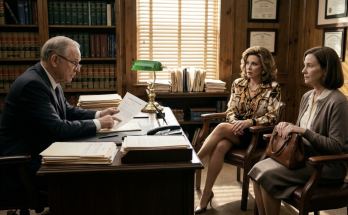
He shook my hand. “Ma’am, I’m truly sorry about what happened. We had a maintenance company under contract, and apparently they didn’t do their job. We’ll be taking that up with them, of course.”
He took an envelope from his inside pocket. “I know you’re going through a hard time. I also understand you were behind on rent. I’d like to propose we turn the page. There’s five thousand dollars in this envelope. Cash. We forget the back rent. You sign this little document, you collect your belongings when the building reopens, and you find a new apartment. A fresh start.”
He set a two-page document on the table next to the envelope. Mutual Termination Agreement and Release of All Claims.
I didn’t need to read it all the way through. I already knew what Priya Desai would have told me. Don’t sign anything. Ever.
“What about the other families?” I asked. “Are they getting five thousand dollars too?”
His smile froze for an instant. “We handle each situation individually.”
That was when Marcus walked into the lounge. He was coming back from the hotel pharmacy with a bag of painkillers, limping worse than ever.
Grant Kessler turned to him with mild irritation. Then he narrowed his eyes. “Have we met? You’re the hero from the news. The man in the brace.”
“We’ve met, Mr. Kessler,” Marcus said. “Almost three years ago.”
Kessler smiled politely. “I don’t think so.”
“The Randolph Street site. The twenty-two-story tower. You came by one morning in a white hard hat. You stayed ten minutes.”
Marcus stepped up to the table. “On the fourteenth floor, there was a guardrail missing. We’d been reporting it for three days. You walked within ten feet of the spot. The next morning, I slipped on the frost right there.”
He tapped his brace. “Your insurers said I wasn’t your employee.”
Grant Kessler wasn’t smiling anymore. He looked at Marcus. Then at me. Then at the envelope on the table. He picked it up and put it back in his pocket.
“I see,” he said, in a very different voice. “Ma’am, I’d advise you to think carefully about who you trust. This man lives on the street. He entered my building’s boiler room without authorization. He tampered with the door to your apartment. If that building had a problem, I honestly wonder who caused it.”
I looked at him. For a second, I had trouble believing what I was hearing.
“The fire captain wrote in his report that your flue has been rusted out for years,” I said. “And that your building had no detectors. Not one. The only detector in that building is the one he bought. With his last nineteen dollars.”
Kessler buttoned his cashmere coat. “My attorney will be in touch,” he said. And he left.
Marcus sank heavily into a chair. His face was gray.
“He’s going to try to pin it on me,” he said. “He’s done it before.”
“He’s going to try,” I said.
I glanced at the next table. Mr. Petrovic had been sitting there the whole time, his dog curled at his feet, a paper cup of coffee in his hand. Beside him, Mrs. Nguyen held one of her twins on her lap. They had heard everything. The envelope. The five thousand dollars. The “we handle each situation individually.”
Mr. Petrovic raised his cup to me. “My English isn’t very good,” he said. “But my memory is excellent.”
Mrs. Nguyen nodded. “So is mine. And I’m going to tell the other thirty-eight families before tonight.”
I looked at Marcus. “He’s going to try,” I repeated. “But this time, we’re not alone.”
XI. The Foreman
Tom Brennan was a sixty-year-old Irishman with white hair and a baritone voice who had spent thirty-five years suing contractors on behalf of injured workers. He met with Marcus the following Monday in an office stacked to the ceiling with file boxes.
I was there. So was Liam. He didn’t have school, and he hadn’t let Marcus out of his sight since the night of the alarm.
Brennan listened to the whole story without taking a single note. Then he folded his hands over his stomach.
“Sir,” he said, “I’m going to need three things. Proof that Kessler controlled your work. Proof that he knew about the guardrail. And a witness. You’ve got seven weeks. I need five to build the case right. So I need all of it in two weeks.”
Marcus pulled a plastic sleeve out of his battered duffel bag. I’d never seen it before. Inside were folded papers, a little damp but legible. His time sheets. With the Kessler Development logo at the top. Filled out and signed every day by the foreman.
“I kept them,” Marcus said. “I don’t know why. Habit. At the union they always told us to keep our time sheets.”
Brennan took them and studied them for a long time. Then he smiled. “Your union gave you the best advice of your life.”
There was also an orange safety vest, folded at the bottom of the bag, with KESSLER DEVELOPMENT printed across the back in reflective letters.
“They handed them out the first day,” Marcus said. “You weren’t allowed to work without one.”
“And the foreman?”
Marcus hesitated. “Sal Moretti. He got fired two weeks after my accident. I don’t know where he is.”
That night at the hotel, Marcus searched for Sal Moretti on the lobby computer for two hours. Liam helped. It was Liam who found him, on the website of a small kitchen remodeling company in Cicero. A photo of Sal smiling in front of a white van.
Marcus called the next morning. I heard him talking in the hotel hallway, low. At first it sounded difficult. Then there was a long silence. Then I heard Marcus say, “No, Sal. It wasn’t your fault. You reported it three times.”
The day after that, Sal Moretti came to Tom Brennan’s office. A short, stocky man with enormous hands and tired, shadowed eyes. He held Marcus in a long embrace. Then he set his phone down on Brennan’s desk.
“I took a picture that morning,” he said. “Six-forty. Before the guys went up. The fourteenth-floor slab. The missing guardrail. The frost.”
He opened the photo. It was exactly that. A gray concrete slab, glistening with frost. An edge with nothing on it. Open air.
“I emailed it to Kessler’s project manager. At six forty-two. With the message: We can’t have the guys working on fourteen until the guardrail’s in.”
He scrolled down. The project manager’s reply had come at 7:03. A single line.
Put the guys to work. Mr. Kessler wants the heating done by Friday. Delays cost more than insurance.
Tom Brennan read the line three times. Then he took off his glasses.
“‘Delays cost more than insurance,’” he repeated. “Mr. Moretti, I’m going to frame that email and hang it over my desk.”
XII. One Hundred Twelve Violations
The city’s inspection report came at the end of January. Priya Desai read it to me over the phone.
One hundred twelve building code violations. A boiler not serviced in six years. A corroded, improperly connected flue. No carbon monoxide detectors in thirty-four of the forty units or in any of the common areas. A central thermostat locked below the legal minimum temperature. Defective fire doors. A rusted fire escape. Unrepaired water leaks in nineteen apartments.
“And that’s just one building,” Priya said. “The city has launched inspections at the eleven other buildings Kessler Residential owns on the North Side.”
“What happens now?”
“The city has gone to housing court. They’re asking for fines. A lot of fines. And they’re asking for something else. Receivership.”
“What’s that?”
“When a landlord lets a building become dangerous, the court can appoint an independent receiver to take control of it. Collect the rents, make the repairs, hire the staff. The owner is still the owner on paper. But he’s not allowed to touch it.”
I looked out the hotel window at the planes taking off from the airport, one after another, into the gray sky.
“What about the five-day notice?”
Priya laughed. “I filed our response yesterday. Retaliatory eviction. A retroactive rent reduction back to November for failure to provide heat. And a counterclaim for damages over your son’s exposure to carbon monoxide. Kessler’s lawyer called me this morning. He wanted to know if you’d drop your complaint for ten thousand dollars.”
“What did you tell him?”
“That you weren’t for sale. And that half the building was now represented by my clinic.”
XIII. The Association
It was Mrs. Nguyen’s idea.
The first Sunday in February, in the hotel dining room after breakfast, she tapped a glass with a spoon. All thirty-eight families from the building were there. The ones staying at our hotel, and the ones the Red Cross had put up at the other, across the highway, who had come over by bus.
“We need to speak with one voice,” Mrs. Nguyen said. “Otherwise Kessler will buy us off one by one. He’s already tried with several of us.”
Heads lifted. People looked at each other. I wasn’t the only one who’d been offered an envelope. Mr. Petrovic had been offered three thousand dollars. The Okafors, on the second floor, four thousand. No one had signed. Not after watching Marcus carry Mrs. Alvarez through the snow.
“We need a tenants’ association,” Mrs. Nguyen said. “With a president. I nominate Chloe.”
I nearly spilled my coffee. “Me? I don’t know anything about this. I’m a nursing assistant.”
“You called the city,” Mr. Petrovic said. “You turned down the money. You brought in the lawyer. You let in the man who saved us.” He shrugged. “That’s enough qualifications.”
They voted by show of hands. Thirty-seven hands went up. The thirty-eighth was mine. I didn’t dare raise it. Liam raised it for me.
That day, Marcus stood at the back of the room, leaning against the wall, his brace on his knee. When Mrs. Nguyen asked him to explain to the families what had happened in the boiler room, he talked for twenty minutes. Simply. Clearly. Like a man who’d spent fourteen years explaining to property managers why a boiler is not a piece of furniture.
He explained what carbon monoxide is. Why you can’t smell it. Why it gives you a headache in the morning and not at night. Why the elderly and children are hit first.
When he finished, a young mother from the second floor raised her hand. “My daughter’s had headaches since October,” she said. “The pediatrician said it was growing pains.”
Marcus nodded gently. “Tell her it wasn’t growing pains,” he said.
XIV. The Commission
The hearing before the Illinois Workers’ Compensation Commission took place on April 26. The claim had been filed on February 21. Nine days before the deadline.
It was a small room on the twelfth floor of an office building in the Loop. No jury. One arbitrator, a woman in her sixties named Ms. Hargrove, seated behind a table with a tape recorder.
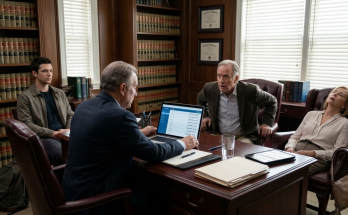
The attorney for Kessler’s insurer went first. Marcus was an independent contractor. He’d been paid in cash. There was no employment contract. He’d been free to work for others. He was responsible for his own safety.
Tom Brennan stood. He didn’t give a grand speech. He simply set down on the table the time sheets with the Kessler logo, signed every day by the foreman. The orange vest. The schedules assigned by text message. The Employee Classification Act, which presumes that every worker on a construction site is an employee.
And then he called Sal Moretti.
Sal described the missing guardrail. The three reports. The six-forty photo. The email. And the reply. Brennan read the reply aloud, very slowly. “Put the guys to work. Mr. Kessler wants the heating done by Friday. Delays cost more than insurance.”
The insurer’s attorney asked for a ten-minute recess. He came back after forty.
The arbitrator issued her decision in writing three weeks later. Marcus had been an employee of Kessler Development at the time of the accident. The accident had arisen out of and in the course of his work. Kessler and its insurer were to pay all past and future medical expenses related to the knee, including the surgery that had never been performed. They were to pay Marcus temporary total disability benefits for the entire period he’d been unable to work. Nearly three years. With back pay. And because the insurer’s initial denial was found unreasonable and without basis, the arbitrator added an additional penalty.
The same day, the Illinois Department of Labor opened an investigation into Kessler Development for worker misclassification. There were forty-seven others. Forty-seven workers paid in cash. Uninsured. Across six job sites.
When Tom Brennan called to read Marcus the decision, Marcus was sitting on the hotel bed next to Liam, who was doing his homework. He listened without a word. Then he put the phone down. He looked at his hands.
“Marcus?” I asked.
He couldn’t speak.
Liam set down his pencil. He climbed onto the bed and wrapped both arms around Marcus’s neck, the way he used to do with me when he was little.
“Did you win?” he whispered.
Marcus nodded. He put his big hand on my son’s back.
And he cried.
XV. Housing Court
Chicago’s housing court issued its ruling in May.
I’ll never forget that courtroom. The wooden benches packed to bursting. The thirty-eight families from the building, sitting together, wearing cardboard badges Liam had made, on which he’d written in marker: 1840 NORTH TENANTS’ ASSOCIATION. Mrs. Alvarez in the front row, in a wheelchair, with her hearing aid and a red scarf.
Grant Kessler didn’t come. He sent three attorneys. It did him no good.
The judge read her ruling for forty minutes. The eviction action against me was dismissed. It was prohibited retaliation under the city ordinance. My rent was reduced by sixty percent for the entire period from November through January, for failure to provide heat. Which meant I no longer owed Kessler money. Kessler owed me.
Kessler Residential was fined for each of the one hundred twelve violations, for every day they had persisted. The total made the room murmur. And the building at 1840 North was placed in receivership. An independent receiver was appointed, charged with bringing the building up to code, at the owner’s expense, before the tenants could return.
When the judge finished, she looked out at the room.
“I’d like to add one thing,” she said. “This court hears a lot of cases involving dangerous buildings. Most often, we hear them after the funerals.” She looked at Marcus, seated at the end of the bench. “This time, we’re hearing it before. Thanks to a man who had nineteen dollars and spent it on strangers.”
Nobody applauded. It isn’t the kind of room where people applaud. But Mrs. Alvarez reached out from her wheelchair and took Marcus’s hand. And she didn’t let go until the judge had left the room.
XVI. The Invisible Monster
Liam’s fourth-grade science project was due in March. At the start of the year, he’d planned a volcano. A papier-mâché volcano with baking soda and vinegar, like everybody else. After the night of the alarm, he changed everything.
He called his project The Invisible Monster.
He spent weeks on it, first at the hotel, then in our temporary apartment. Marcus helped in the evenings when he got back from physical therapy. Together they built a cardboard model of our building, with a little boiler in the basement made from a soup can painted gray. A straw for the flue. And pink cotton batting rising from the basement through the floors to show the path of the gas.
They printed graphs. What carbon monoxide does to the blood. Why it takes the place of oxygen. The first symptoms. Headache. Nausea. Fatigue. Confusion. And across a big yellow poster board, Liam had written:
IT HAS NO SMELL.
IT HAS NO COLOR.
THE ONLY WAY TO SEE IT IS A DETECTOR.
DO YOU HAVE ONE?
On the day of the science fair, Liam stood at his table for three hours. He explained it to every parent who walked by. Every teacher. Every kid. He never stopped.
He won first prize at his school. Then at the district level. But it wasn’t the prizes that made me cry. It was the little slip of paper the principal showed me a week later. After the fair, the school had sent a notice to every family asking whether they had carbon monoxide detectors at home. Sixty-three families had answered no.
The neighborhood fire station came out and installed them for free. In two of those apartments, the detectors went off within the first week. Two defective furnaces. Two families who hadn’t known.
“Your son probably saved lives,” the principal told me. “At nine years old.”
I looked over at Liam, who was explaining for the hundredth time to a kindergartner how a flue works.
“He learned from the best,” I said.
XVII. Mrs. Alvarez’s Tamales
Mrs. Alvarez got out of rehab in April. Her daughter, who lived in San Antonio, wanted to take her to Texas. Mrs. Alvarez refused.
“I’ve lived at 1840 North for thirty-one years,” she said. “I raised four children there. I buried my husband from there. I’m not leaving because some man in a cashmere coat didn’t want to fix a pipe.”
While the building was closed, she stayed with a niece in Pilsen. One Saturday in May, she invited us to lunch. Marcus, Liam, and me. She’d spent two days making tamales. Dozens. Pork, chicken, cheese and jalapeño. Sweet pineapple tamales. Her niece’s kitchen table was covered with them.
She sat Marcus at the head of the table. She served him herself. She waited for him to take a bite.
“Well?”
“Ma’am,” Marcus said, “these are the best tamales I’ve ever had in my life.”
“Of course. It’s my mother’s recipe.”
She sat down next to him and laid her wrinkled hand on his arm.
“Mr. Marcus, I don’t remember anything. The doctors say that’s normal. I went to bed with my rosary in my hand and I woke up in a chamber at the hospital. Nothing in between.”
She squeezed his arm.
“My granddaughter showed me the video. The one Mr. Petrovic filmed on his phone, out on the sidewalk. Where you come out of the building with me in your arms. Where your leg gives out. Where you fall. And where you don’t let go of me.”
Her eyes filled with tears.
“My husband died eleven years ago. He always used to say, ‘Esperanza, when I’m gone, God will send someone to carry you.’ I thought he was talking about heaven.”
She laughed through her tears.
“I didn’t think he meant a man in a leg brace and boots with holes in them.”
Marcus said nothing. He couldn’t.
Mrs. Alvarez got up, went to her niece’s sideboard, and came back with a small wooden rosary.
“This is the one I had in my hand that night. The firefighters gave it back to me at the hospital. I want you to have it.”
“Ma’am, I can’t—”
“You carried me,” she said. “Now I’m the one carrying you a little. Take it.”
He took it. He keeps it in his shirt pocket. Every day.
XVIII. The Surgery
Marcus had his knee surgery in June. At the University Medical Center, the same hospital where Mrs. Alvarez had spent two days in intensive care. An orthopedic surgeon removed the old pins, rebuilt the ligament, and replaced part of the destroyed cartilage. Three and a half hours in the OR.
Kessler’s insurer paid for it. Down to the last penny.
I sat in the waiting room for the entire operation. I had no official connection to him. I wasn’t his wife, or his sister, or his guardian. When the nurse asked who I was, it took me a second to answer.
“A friend,” I said. “He slept on my couch one night.”
She looked puzzled. I didn’t try to explain.
Liam came the next day after school. He’d made a drawing. A brick building with forty little windows. In front of it, in the snow, a man in a black brace carrying an old woman in a flowered nightgown. In the sky above, he’d drawn a giant carbon monoxide detector with rays all around it, like a sun. And at the bottom, in capital letters:
NINETEEN DOLLARS.
Marcus looked at the drawing for a long time. “Why nineteen dollars?” he asked.
“Because Mom says that’s the price of saving forty families,” Liam said. “She tells everybody. Even the dentist.”
Marcus laughed. Then he winced, because laughing hurt his knee.
“You’re missing the ninety-nine cents,” he said.
Liam took a pencil from his jacket pocket, fixed the drawing, and taped it to the hospital room wall.
NINETEEN DOLLARS AND NINETY-NINE CENTS.
The nurses started calling it “the nineteen-dollar room.”
XIX. The Receiver
The court-appointed receiver was named Gerald Wu. A thin, precise man in a plaid shirt who had rehabilitated some thirty abandoned buildings in Chicago over twenty years. He called Marcus and me into a temporary office in a construction trailer parked on the sidewalk in front of 1840 North.
Through the trailer window, we could see workers going in and out of the building. They were ripping out the old boiler. Replacing the fire escape. Installing detectors in every apartment, every hallway, every stairwell.
“I’ve read all the reports,” Gerald Wu said. “The fire department’s. The inspection. The court ruling.” He looked at Marcus. “I also called your old union. They told me you were one of the best boiler mechanics in the city. That they’d be glad to reinstate your card the moment you ask.”
Marcus looked down. “I haven’t worked in three years, sir.”
“I know. Your knee will be back in working order in a few weeks, according to your surgeon. And I’m putting a new high-efficiency boiler in this building. I need someone to commission it, maintain it, look after all forty units, and train the tenants’ association to spot problems.”
He pushed a sheet of paper across to Marcus. An employment contract. A real one. With a salary, health insurance, workers’ compensation coverage, and a clearly identified employer.
“Boiler mechanic and building technical manager,” Gerald Wu said. “The position comes with on-site housing. The ground-floor apartment next to the boiler room. 1A.”
Marcus looked at the paper. He didn’t move.
“1A,” he repeated. “Right across from 1B.”
“Mrs. Alvarez asked that it be you,” Gerald Wu said. “In fact, she said she’d refuse to move back if it wasn’t. The whole tenants’ association signed a letter. Thirty-eight signatures. Your friend here delivered it in person.”
Marcus turned to me. I hadn’t said a word. I hadn’t told him. I wanted it to be a surprise.
“Chloe,” he said. “Why didn’t you tell me?”
“Because you would have said no before you even read the contract,” I said. “You’d have said you didn’t want to be a bother. That you’d already done enough.”
He looked at the contract again. Then he picked up the pen and signed. His hand shook a little.
Gerald Wu slid the paper into a folder. “Welcome aboard, Mr. Marcus. You start September first.”
XX. The Bread
1840 North reopened on September 15. The exact day on which, under Chicago law, landlords must begin heating their buildings. It was no coincidence. Marcus had asked for it.
The forty families came back. Thirty-eight, actually. Two had found other places in the meantime. Two new families took their spots.
The first thing Marcus gave them when they arrived was a brand-new carbon monoxide detector, on top of the ones already installed. “One more never hurts,” he’d say.
And a loaf of bread. He had stayed up all night baking forty of them, in the kitchen of 1A, using his mother’s recipe, which he knew by heart. The same bread as that first day. Crust split down the middle. Still warm. The building smelled of yeast from the basement to the roof.
Our apartment got its furniture back. The old couch was still there. I never wanted to replace it. It’s seventy degrees in Liam’s room all year round. Liam hasn’t had a morning headache since. The door opens on its own. The faucet doesn’t drip. My rent is paid. With the retroactive reduction, Kessler owed me nineteen hundred dollars. I bought Liam new sneakers. And I put the rest aside. For the first time in my life, I have money in savings.
Grant Kessler sold off all his North Side buildings the following spring. The fines, the lawsuits, the Department of Labor investigation, the forty-seven workers who filed their own claims with Tom Brennan. He hasn’t built another tower in Chicago.
Sal Moretti was hired by Gerald Wu to supervise the renovation of two other buildings in receivership. He tells every worker that not one of them will ever set foot on a slab without a guardrail. Ever. Even if delays cost more than insurance. Especially if delays cost more than insurance.
On the first night of hard cold in December, it was zero degrees in Chicago. Liam and I went grocery shopping at the same store. The same brick wall next to the automatic doors. There was no one against the wall that night. Liam looked at it for a long time anyway. Then he looked up at me.
“Mom, remember what I asked you, that first time?”
“Where he was going to sleep.”
“And you said you didn’t know.”
“I didn’t.”
He smiled. “Now we do.”
When we got home, the front door opened on the first try. The lobby was warm. It smelled like bread. On the ground floor, the door to 1A was ajar, as always. Marcus was sitting in his kitchen, no brace, with Mrs. Alvarez across from him, teaching him to make tamales and slapping his fingers whenever he folded the corn husks wrong.
He looked up as we passed. “Everything okay up there?” he asked. “No headaches?”
“All good,” I said. “Seventy degrees.”
“The detector?”
“Green.”
He nodded, satisfied, and went back to his corn husks.
Liam ran ahead to the elevator. I lingered a second in the doorway of 1A. I thought about that night in January. About a man sitting against a brick wall, hands tucked under his arms to keep them from shaking. Who asked for nothing. Who said, “I’m not asking for anything.” And about what I would have lost if my nine-year-old son hadn’t stopped to look at him.
People say you shouldn’t let strangers into your home. And it’s true. You should be careful. You should lock your door.
But sometimes the stranger you let in for a single night is precisely the one who knows what’s hiding in the walls. The one who goes down to the basement when no one else wants to look. The one who spends his last nineteen dollars and ninety-nine cents so that people he doesn’t know will wake up the next morning.
I offered him a couch for one night.
He gave us everything else.
THE END